









The debate over President Joe Biden issuing preemptive pardons to Donald Trump’s potential political targets has clearly reached a new phase. A Politico report this week helped get the ball rolling, drawing attention to a “vigorous internal debate” inside the White House.
By all accounts, that conversation is intensifying. The Washington Post published a front-page, above-the-fold report on the deliberations, noting, “The effort is being led by White House chief of staff Jeff Zients and White House counsel Ed Siskel, the people said, suggesting that the issue is being treated seriously at the highest levels of the administration.”
The Associated Press ran a related report, noting that the outgoing president has personally “discussed the topic with some senior aides,” and The New York Times’ report on the developments said the same thing.
Not surprisingly, there’s an increasingly public component to the conversation, as well, as some members of Congress and leading commentators — such as the Times’ Michelle Goldberg — voice support for the provocative idea.
The debate is new, but straightforward: As regular readers know, the idea behind preemptive pardons is to shield innocent people from potential — by some measures, likely — prosecutorial abuses before they happen. In other words, people close to Biden believe Trump and his loyalists, hellbent on revenge and fueled by retaliatory ambitions, will probably pursue illegitimate investigations into perceived foes — and the outgoing Democratic president can prevent that from happening by issuing a sweeping set of pardons now, before exiting the White House.
For a variety of reasons, it’s not an easy call, but for many Republicans watching the discussion unfold, all of this is wildly unnecessary.
Republican Rep. Dan Meuser of Pennsylvania, for example, described prospective preemptive pardons as “nonsense,” because “nobody” intends to go after people such as former House Republican Conference Chair Liz Cheney. What the congressman might not remember, however, was an online message that Trump amplified in June, which accused the former Wyoming congresswoman of “treason” and raised the prospect of “televised military tribunals.”
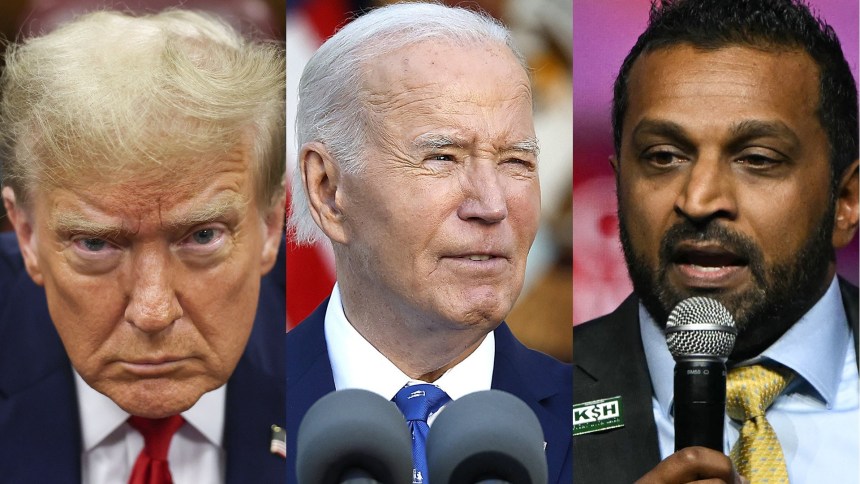
Similarly, Republican Rep. Tom Tiffany of Wisconsin asked online, “If Anthony Fauci and Liz Cheney didn’t commit any crimes, then why are Democrats asking Joe Biden to pardon them?” The answer, of course, is that Trump and his sycophantic allies — including Kash Patel, the president-elect’s choice to lead the FBI, who has already compiled a literal enemies list — might very well try to prosecute Fauci and Cheney, among others, whether or not they’ve done anything wrong.
But the pièce de resistance came from Republican Rep. Jim Jordan. HuffPost noted the Ohioan’s head-shaking on-air comments to Fox Business host Larry Kudlow:
Rep. Jim Jordan (R-Ohio) said Thursday Donald Trump has ‘never been about retribution’ as the White House weighs the idea of preemptive pardons for people that have long been in the president-elect’s crosshairs.
The far-right House Judiciary Committee chairman began by calling the idea of preemptive pardons “ridiculous,” before telling the television audience, in apparent seriousness, “Donald Trump has never been about retribution.”
Perhaps he was referring to a different Donald Trump?
I can appreciate why preemptive pardons would be controversial, but to pretend that the president-elect has little interest in seeking revenge against his perceived foes is to deny what is plainly true. In the recent past, Trump was in the White House, where he spent an outlandish amount of time and energy retaliating against perceived political foes — both in the political and private sectors — seeking meritless prosecutions against opponents. All of this has been thoroughly documented, and confirmed by officials who worked closely with him during his tenure. In the run-up to Election Day 2024, Trump was a private citizen who lacked access to governmental power, but he nevertheless tried to use his political influence to seek revenge — even against members of his own party. As for the near future, the president-elect effectively ran on a retaliatory platform: Trump said he wanted to pursue his perceived domestic political enemies, and he didn’t seem especially interested in hiding his intentions. On the contrary, he talked about his desire to abuse presidential powers all the time. Reasonable people can disagree about the merits of preemptive pardons, but the question of whether or not Trump has unprecedented vengeful ambitions has already been answered. This post updates our related earlier coverage.
Steve Benen is a producer for "The Rachel Maddow Show," the editor of MaddowBlog and an MS NOW political contributor. He's also the bestselling author of "Ministry of Truth: Democracy, Reality, and the Republicans' War on the Recent Past."
Latest Post
Recommended


