









In an unexpected series of events in mid-November, Congress easily approved the Epstein Files Transparency Act, giving the Justice Department just 30 days to disclose voluminous evidence related to the Jeffrey Epstein case. The intended goal was to force full transparency by Friday, December 19.
As the deadline arrived, proponents had reason to be disappointed: Donald Trump’s DOJ, facing accusations of a systemic cover-up, released a variety of documents late last week, but the disclosures were incomplete; the materials were heavily redacted; and then the Justice Department subsequently removed a handful of photos from its online collection, including one showing Trump with unidentified women.
Among the many questions on the table is what the authors of the Epstein Files Transparency Act intend to do next. The answer is quickly coming into focus. NBC News reported:
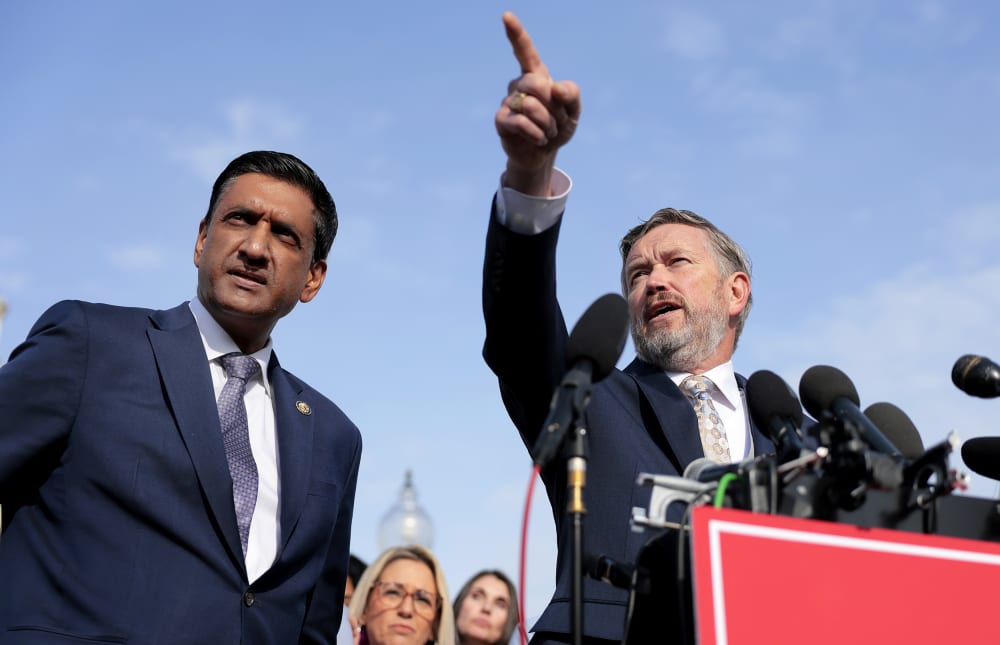
Reps. Ro Khanna, D-Calif., and Thomas Massie, R-Ky., said Sunday they are committed to holding Justice Department officials accountable for their failure to release all eligible Jeffrey Epstein files by Friday’s deadline, saying they’re speaking with members of Congress about holding Attorney General Pam Bondi in contempt.
“The quickest way, and I think most expeditious way, to get justice for these victims is to bring inherent contempt against Pam Bondi,” the Kentucky Republican said on CBS’ “Face the Nation.”
While there’s some recent precedent for people facing contempt of Congress charges (see Steve Bannon and Peter Navarro, for example), “inherent contempt” isn’t quite the same thing.
In theory, Khanna and Massie could try pushing a resolution to hold the attorney general in contempt of Congress, but in practice, such an effort would almost certainly end in failure: Not only would the measure need approval from the Senate, but it would also go to the Justice Department for possible prosecution. The idea that Bondi would allow her own team to prosecute her is unrealistic.
Inherent contempt proceedings in the House, however, can be approved by majority rule in the chamber; they would not need the Senate’s or the president’s approval; and, perhaps most importantly, they wouldn’t require the administration for enforcement.
Instead, under this approach, Khanna and Massie are eyeing a plan in which House members would vote to punish the attorney general themselves. It’s theoretically possible that their resolution could call on the House sergeant at arms to try to arrest Bondi, but it’s far more likely that it will seek to impose financial penalties on the attorney general unless and until she agrees to full transparency on the Epstein files.
If inherent contempt resolutions sound unfamiliar, it’s because they’re quite rare. There was some talk among GOP lawmakers last year about targeting then-Attorney General Merrick Garland with such a measure — they wanted audio recordings of Joe Biden they could use in the presidential race — but the effort fell short. To find an example of the House actually pulling the trigger on this maneuver, one has to go back to 1934, when the Senate sergeant at arms arrested William MacCracken, the first federal aviation regulator, who refused to participate in a congressional investigation. (It’s kind of a long story.) As for whether the GOP-led House in the coming weeks might actually pass such a resolution against Trump’s attorney general, it’s too soon to say with confidence. Four House Republicans broke ranks on the discharge petition on the Epstein Files Transparency Act, but one (Georgia’s Marjorie Taylor Greene) is set to resign in two weeks, and it’s far from clear whether any GOP members, other than Massie, will endorse such a bold move against Bondi. Watch this space.
Steve Benen is a producer for "The Rachel Maddow Show," the editor of MaddowBlog and an MS NOW political contributor. He's also the bestselling author of "Ministry of Truth: Democracy, Reality, and the Republicans' War on the Recent Past."
Latest Post
Recommended


