










More than three decades ago, the nation watched — both riveted and horrified — as a woman who was testifying during a presidential nominee’s Senate confirmation hearing was grilled in graphic detail about the nominee’s alleged sexual misconduct. The committee, according to the accounts of multiple people involved in the process, failed to “seriously investigate” her accusations, declined to call other witnesses who could have corroborated her testimony, and even — despite the fact that she was the accuser — allowed the nominee to testify first. So flawed were those hearings that in 2019, the person who had been committee chair publicly remarked, “To this day, I regret I couldn’t come up with a way to get her the kind of hearing she deserved.”
That chairman was, of course, then-Sen. Joe Biden, whose oversight — or lack thereof — of Supreme Court Justice Clarence Thomas’ 1991 confirmation hearings has been much maligned, even by his allies. Even more regrettable is that nearly 34 years later, as evidenced by Justice Brett Kavanaugh’s own confirmation process, the Senate still lacks any standardized (much less sensitive or transparent) process for handling sexual misconduct allegations against those presidential nominees over whom the Senate must exercise its constitutional “advise and consent” powers.
And, of course, there is the Trump of it all. Because we also now know that Trump’s White House exercised “tight control” over the FBI’s investigation of the allegations against Kavanaugh, refusing to authorize any independent probe of those accusations, despite Trump’s public insistence that the FBI had carte blanche to do so.
Presumably, the FBI’s involvement in any confirmation process for former Rep. Matt Gaetz after the inauguration would have been similarly unhelpful — and stymied by the 47th president.
But thanks to Gaetz’s withdrawal from consideration to serve as Trump’s attorney general, we have narrowly escaped another confirmation hearing spectacle.
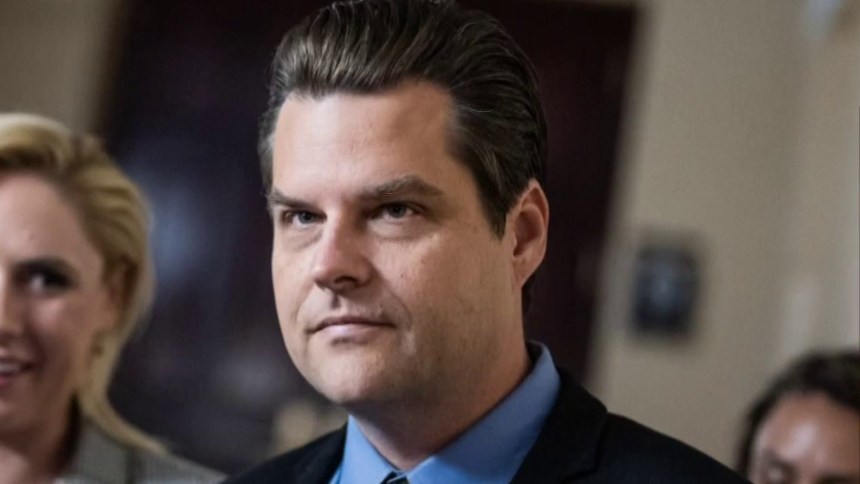
Gaetz not only was a subject of a now-closed sex trafficking investigation initiated by Trump’s own Justice Department in late 2020, he was also under investigation by the House Ethics Committee for a variety of issues, including “sexual misconduct and illicit drug use.” (Gaetz’s resignation from Congress is expected to end that investigation, and the report may never see the light of day.)
According to NBC News, among the evidence received by the committee was testimony from a woman who said she had two sexual encounters with Gaetz at a 2017 party when she was 17. Gaetz has vigorously denied the allegations, and the DOJ’s investigation was closed without any charges against him.
Prior to Gaetz’s withdrawal, Republican and Democratic senators both called for the release — or at least their review — of the Ethics Committee report and/or its related investigative materials; most of the Democrats on the Senate Judiciary Committee also have asked the FBI to provide them with its “complete evidentiary file,” including transcripts of witness interviews. But, at least until Thursday, there was no indication that senators would have obtained either type of records.
There was a real possibility that several women who already testified would be forced under subpoena to do it all over again.
As a result, there was a real possibility that several women who already testified — before a federal grand jury, the House Ethics Committee or both, with respect to their involvement with Gaetz — would be forced under subpoena to do it all over again.
But based on the limited amount we know about these women and how we’ve seen the Senate respond to accusers and victims in the past, that third time would have been no charm.
Consider what Joel Leppard, a lawyer for two women who testified they were paid for sex by Gaetz, told NBC News in an interview earlier this week. Leppard explained that, based on his conversations with his clients and his own observations, the women: And that’s to say nothing of what the then-17-year-old, who no doubt would have been even more central to any confirmation hearings, already has endured and would have gone through. And that’s to say nothing of what the then-17-year-old already has endured and would have gone through. On Thursday, after Gaetz withdrew, Leppard told NBC News: “My clients are relieved to have this chapter behind them and eager to move forward with their lives. We’re hopeful this brings final closure for all parties involved.” But as they move forward, Pete Hegseth is still poised to be nominated as defense secretary in spite of a sexual assault allegation documented in a now-public police report and an admitted payout to his accuser. (Hegseth denies any wrongdoing, and he was not charged.) Will anyone in the Senate have the fortitude to look back on the Thomas and Kavanaugh hearings — and learn from them — before another woman becomes this generation’s Anita Hill or Christine Blasey Ford?
Lisa Rubin is MS NOW's senior legal reporter and a former litigator.
Latest Post
Recommended


