









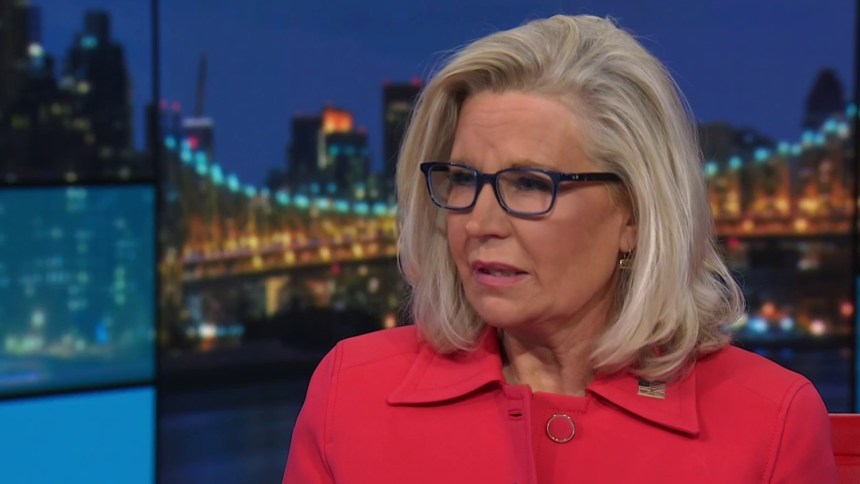

Former House Republican Conference Chair Liz Cheney caused quite a stir earlier this month when the former Wyoming congresswoman, who’s never voted for a Democrat in her life, announced, “Because of the danger that Donald Trump poses, not only am I not voting for Donald Trump, but I will be voting for Kamala Harris.”
Soon after, Cheney also threw her support behind Rep. Colin Allred’s Democratic Senate campaign against Texas’ Ted Cruz, making clear that she’s focused not only on defeating Trump, but also those who’ve helped enable the former president’s assault on democracy.
As the election season progresses, however, the former House GOP leader continues to reflect publicly on Republican politics and its future in increasingly provocative ways. The New York Times reported:
Former Representative Liz Cheney, who has emerged as perhaps the most vocal and visible conservative critic of former President Donald J. Trump, suggested on Friday night that a new political party might need to be created to replace the Republican Party if he is defeated.
“Whether it’s organizing a new party — look, it’s hard for me to see how the Republican Party, given what it has done, can make the argument convincingly or credibly that people ought to vote for Republican candidates until it really recognizes what it’s done,” Cheney said at an event in Wisconsin.
“There is certainly going to be a big shift, I think, in how our politics work,” she continued. “I don’t know exactly what that will look like. I don’t think it will just simply be, well, the Republican Party is going to put up a new slate of candidates and off to the races. I think far too much has happened that’s too damaging.”
As a historical matter, American political parties tend to change when voters tell them they must. Or put another way, after a party suffers serious and sustained electoral setbacks, its leaders tend to pause, take stock, overhaul their vision, and move forward with a reformed entity, assuring voters that it’s both new and responsive to the electorate’s criticisms.
What Cheney appeared to describe late last week was a qualitatively different approach: The former Wyoming congresswoman seemed to suggest that the Republican Party is so fundamentally broken, and is so corrupt at its core, that reforming the contemporary GOP might not be sufficient.
Perhaps, the argument goes, she and her like-minded allies need to consider an altogether new entity.
If this rhetoric seems at all familiar, it’s because chatter like this does pop up from time to time.
The month after Trump’s 2020 defeat, for example, former Secretary of Defense William Cohen, a lifelong Republican who served in the Clinton administration, told CNN, “Maybe it’s time for a new party. One that abides by the rule of law, abides by balanced budget opportunities, fiscal responsibility, but also faithful to the people of this country who vote to elect them.”
A couple of months later, Reuters reported that dozens of former Republican officials, “who view the party as unwilling to stand up to former President Donald Trump and his attempts to undermine U.S. democracy,” began some preliminary discussions about creating a new center-right party.
As we discussed at the time, the talks reportedly included former officials from Republican administrations, party strategists, and even some former GOP elected officials, including former Rep. Charlie Dent, who’s made little effort to express his discomfort with the direction of his party.
Co-hosting the discussion was Evan McMullin, the former chief policy director for the House Republican Conference, perhaps best known for running an independent presidential campaign in 2016. (McMullin received about 0.5% of the popular vote nationwide, though he topped 20% in his native Utah.) “Large portions of the Republican Party are radicalizing and threatening American democracy,” McMullin told Reuters. “The party needs to recommit to truth, reason and founding ideals or there clearly needs to be something new.” Reuters’ report quoted one unnamed Republican, interested in creating a new center-right party, acknowledging that the landscape is littered with the remains of previous failed attempts at national third parties, “but there is a far greater hunger for a new political party out there than I have ever experienced in my lifetime.” That, however, was in February 2021. There’s been little follow-through since. I’m not unsympathetic to the scope of the challenges. Plenty of new political parties have tried to get off the ground over the generations, and some have managed to get some candidates elected. But successful and enduring ventures require an enormous amount of money, organizing strength, a compelling vision, and most importantly, electoral demand. After Trump’s 2020 loss, there were some meaningful conversations — among sincere people with credible backgrounds — along these lines, though little appears to have come from those discussions. If, however, Trump loses again in the fall, I wouldn’t be surprised if that conversation begins anew, and this time, Liz Cheney will likely be a participant.
Steve Benen is a producer for "The Rachel Maddow Show," the editor of MaddowBlog and an MS NOW political contributor. He's also the bestselling author of "Ministry of Truth: Democracy, Reality, and the Republicans' War on the Recent Past."
Latest Post
Recommended


