









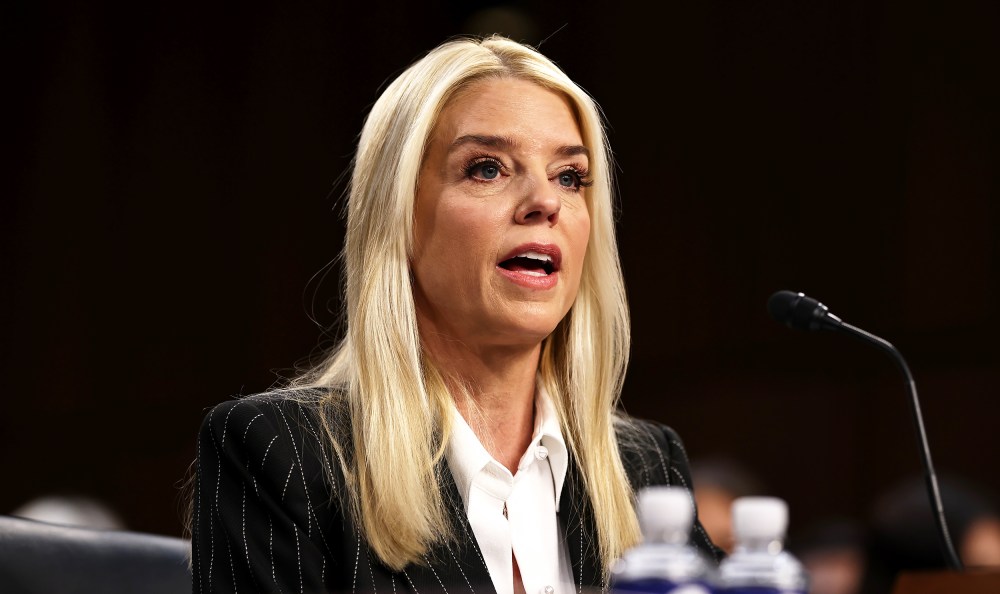

In April, Attorney General Pam Bondi established a Second Amendment Enforcement Task Force within the Department of Justice, which proposed, among things, to make it easier for former prisoners to own firearms.
Nine months later, the Trump DOJ is taking another step in the same direction. The Washington Times reported:
The Department of Justice is opening a new office that will focus exclusively on gun ownership rights, bolstering the Trump administration’s effort to appease disgruntled Second Amendment proponents.
The office, named the Second Amendment Rights Section, will be part of the Civil Rights Division and dedicated to upholding the right to bear arms, according to Harmeet Dhillon, who heads the division.
“As I said soon after taking office, the Second Amendment is not a second-class right,” Bondi said in a statement. “My Justice Department will continue to be the most pro-Second Amendment Justice Department in history.”
As an abstraction, such rhetoric might appear meaningless, but it’s worth emphasizing the practical implications of Bondi’s boast.
Over the summer, for example, The New York Times reported that the Bondi-led Justice Department was moving forward with plans to slash the number of inspectors who monitor federally licensed gun dealers by two-thirds, “sharply limiting the government’s already crimped capacity to identify businesses that sell guns to criminals.”
A month earlier, the Trump administration had also decided it would permit the sale of “forced reset triggers,” which can turn semiautomatic weapons into guns that can fire more bullets, more quickly and easily. Bondi said the move would “enhance public safety,” which seemed to turn reality on its head.
Alas, we can keep going. After the 2022 massacre at an elementary school in Uvalde, Texas, there was bipartisan support for significant new investments in improving mental health support for students as part of an effort to make future mass shootings less likely. The Trump administration, however, decided to block $1 billion in grants for student mental health programs, concluding that the programs to reduce gun violence in schools were no longer in “the best interest of the federal government.”
A week before these revelations came to light, The Washington Post reported that Donald Trump’s Justice Department had canceled hundreds of grants to community organizations and local governments, “including funding for gun-violence prevention programs.”
Now a new Justice Department office will focus “exclusively” on the interests of gun owners.
When thinking about the differences between the president’s first term and his second, this issue is high on the list. As I noted in my first book (see Chapter 8), it was in the wake of a mass school shooting in February 2018 when Trump held an hourlong televised discussion with a group of lawmakers from both parties about gun violence. As part of the conversation, then-Vice President Mike Pence raised the prospect of empowering law enforcement to take weapons away from those who have been reported to be potentially dangerous, though he added that he expected to see “due process so no one’s rights are trampled.”
“Take the firearms first and then go to court,” Trump interjected. At the same event, the president endorsed a law enforcement model in which police officers confiscated some Americans’ guns “whether they had the right or not.” When Republicans derailed those negotiations and nothing passed, there was another mass shooting a year later, at which point Trump again wanted a gun bill, including restrictions on assault rifles — which, according to multiple accounts, was one of his long-sought goals. In other words, as recently as his first term, the president at least briefly sought ambitious gun reforms, up to and including extrajudicial gun confiscations. Earlier this year, after a deadly on-campus shooting at Florida State University, Trump said: “I have an obligation to protect the Second Amendment.” But in the recent past, he had those same responsibilities, and it didn’t stop him from endorsing measures that might have saved lives. Now the Republican and his administration not only don’t want to bother, they’re also moving aggressively in the opposite direction. This post updates our related earlier coverage.
Steve Benen is a producer for "The Rachel Maddow Show," the editor of MaddowBlog and an MS NOW political contributor. He's also the bestselling author of "Ministry of Truth: Democracy, Reality, and the Republicans' War on the Recent Past."
Latest Post
Recommended


