








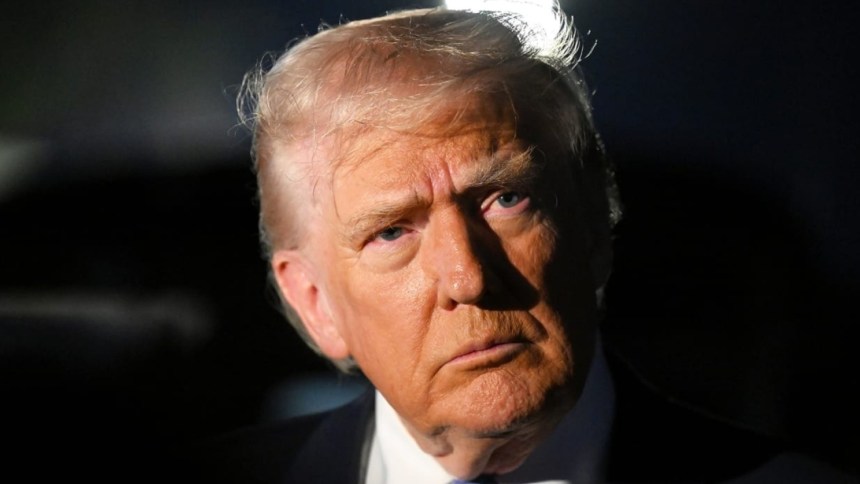

Donald Trump’s saber-rattling toward Venezuela hasn’t exactly been subtle of late. In fact, it was just a couple of weeks ago when the president refused to rule out deploying U.S. ground troops in Venezuela as part of his administration’s opposition toward Nicolás Maduro’s regime. Trump’s State Department soon after designated Maduro and his allies part of a foreign terrorist organization.
On Saturday, the president went further, publishing an item to his social media platform that read in part, “To all Airlines, Pilots, Drug Dealers, and Human Traffickers, please consider THE AIRSPACE ABOVE AND SURROUNDING VENEZUELA TO BE CLOSED IN ITS ENTIRETY.”
As my MS NOW colleague Clarissa-Jan Lim explained, Trump doesn’t actually have the authority to restrict Venezuelan airspace, “but he has presided over a significant increase of U.S. military forces in the region that could be a prelude to further action that the president says is aimed at curbing the flow of illegal drugs.”
One day later, a reporter asked the American president about his declaration, which he was surprisingly quick to downplay.
“Don’t read anything into it,” he said.
It was a difficult response to take seriously. Trump, having already threatened Venezuela and built up a U.S. military presence in the region, announced that he was unilaterally shutting down Venezuelan airspace — it’s not the sort of thing that’s easy to brush off as trivial. Meanwhile, The New York Times reported that Trump spoke to Maduro last week over the phone and the discussion touched on a possible meeting between the two men in the U.S. Asked on Sunday night whether he’d participated in a phone meeting with the Venezuelan leader, Trump initially responded, “I don’t want to comment on it.” A moment later, he apparently changed his mind, adding, “The answer is yes.”
Steve Benen is a producer for "The Rachel Maddow Show," the editor of MaddowBlog and an MS NOW political contributor. He's also the bestselling author of "Ministry of Truth: Democracy, Reality, and the Republicans' War on the Recent Past."
Latest Post
Recommended


