








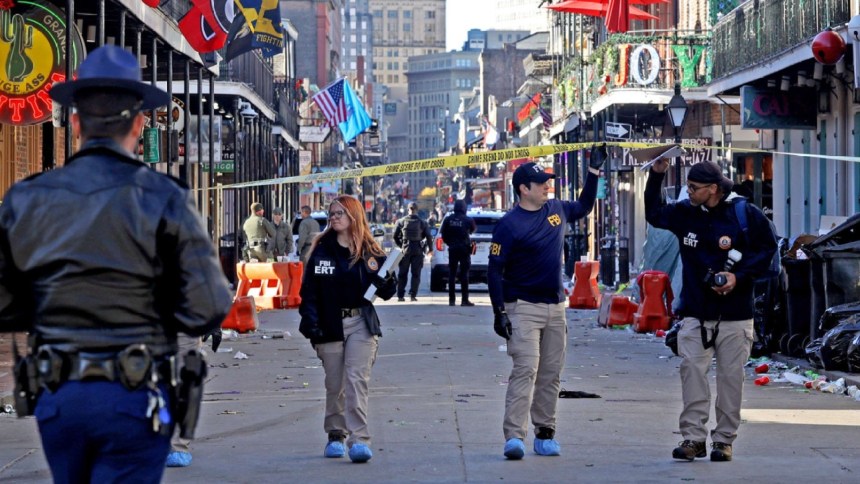
Two high-profile New Year’s incidents — the deadly truck ramming in New Orleans and the explosion of a Tesla Cybertruck outside Trump International Hotel in Las Vegas — underscore the disturbing trend of public violence committed by U.S. military service members and veterans.
Shamsud-Din Jabbar, the driver in the New Orleans attack, and Matthew Livelsberger, who authorities say died by suicide before the explosives-loaded Cybertruck he was sitting in blew up, both served in the U.S. Army. Livelsberger was on active duty.
There are some clear distinctions between the incidents. The FBI says Jabbar’s attack, which killed at least 14 people and injured more than 30 others, was an act of terrorism. Authorities have not confirmed a definitive motive for Livelsberger’s actions, which left several bystanders with minor injuries. Livelsberger, whose uncle said he was a supporter of President-elect Donald Trump, left behind writings criticizing the U.S. government, officials said Friday.
The fact that both men have military backgrounds is enough to prompt questions about what role, if any, that service could possibly have played in leading them to carry out these acts.
That’s essentially what House Democrats, led by Rep. Mark Takano of California, sought to answer during a 2022 hearing on the raft of extremist violence carried out domestically by veterans, which I covered at the time. In his opening statement, Takano said:
It is worth asking why a small but growing subset of the veteran community is drawn to violent extremism or is choosing to associate with violent extremist groups. What are some of the internal factors — like anger, isolation, resentment or a loss of purpose — that are driving even some well-meaning and otherwise honorable veterans down a path toward extremism? What role do external factors such as underemployment, lack of health care access, and online mis- and disinformation play? And finally, what strategies have been found to be most effective in preventing radicalization and in responding to those who have already become radicalized. We must fully understand the physical, psychological and social factors that make some individuals susceptible to violent ideologies and recruitment by extremist groups before we can effectively formulate and advance solutions to support veterans in need.
The Intercept’s Nick Turse essentially just addressed the same concerns in a piece headlined “U.S. Military Service Is the Strongest Predictor of Carrying Out Extremist Violence.”
New from me @theintercept: Military service is the single strongest individual predictor of becoming a “mass casualty offender,” far outpacing mental health issues, according to a sophisticated study by @START_UMD
🧵🧵🧵https://t.co/Wsoe6EXdHPRecommended
 — Nick Turse (@nickturse) January 3, 2025
Members of the military have unique expertise in meting out harm, and they often face hardships or other experiences that can make them vulnerable to extremist indoctrination. Yet Republicans in Congress have bristled over discussions about how to root out extremism in the military.
That’s the main reason why The Guardian concluded that efforts to thwart military extremism are likely to remain stalled under the incoming Trump administration, whose allies have framed such attempts as unnecessary “wokeness.”
But those very efforts could be vital in identifying and discouraging potential threats of public violence — like the ones we’ve seen this week — before they can occur.
If you or someone you know is in crisis, call or text 988 to reach the Suicide and Crisis Lifeline or chat live at 988lifeline.org. You can also visit SpeakingOfSuicide.com/resources for additional support.
Ja’han Jones is an MS NOW opinion blogger. He previously wrote The ReidOut Blog.
