









In recent years, some of the most eloquent commentary related to the Jan. 6 attack has come, unexpectedly, from federal judges, many of whom have sentenced insurrectionist rioters. Judge Royce Lamberth, a Reagan-appointed jurist, has been especially outspoken, warning of a “vicious cycle … that could imperil our institutions” if Americans, upset with future election results, resort to the “vigilantism, lawlessness and anarchy” that occurred on January 6, 2021.
“We as a society, as a community, and as a country cannot normalize the events of Jan. 6,” Lamberth added earlier this year.
The judge clearly hasn’t changed his mind. As last week came to an end, and three more men who participated in the assault on the U.S. Capitol were sentenced to prison, Lamberth declared, “No matter what ultimately becomes of the Capitol riots cases already concluded and still pending, the true story of what happened on January 6, 2021 will never change.”
The phrasing was not accidental: By referring to the uncertainty surrounding the cases, the jurist was implicitly acknowledging the fact that Donald Trump might soon pardon the rioters — a commitment the Republican has emphasized publicly for more than two years.
Two days later, the public saw the president-elect’s latest appearance on NBC News’ “Meet the Press” — his first sit-down interview since Election Day — which featured Trump’s vow to act “very quickly” to set free Jan. 6 criminals, adding that Americans should expect to see him take these steps on the “first day” of his second term. (He said there might be some exceptions for “crazy” people. In the same exchange, he peddled nonsense about law enforcement operatives infiltrating the mob.)
As NBC News’ report noted, Trump also didn’t rule out pardoning people who had pleaded guilty, even when host Kristen Welker asked him about those who had admitted assaulting police officers. “Because they had no choice,” the president-elect added.
In context, it wasn’t altogether clear whether he meant that the rioters who violently clashed with police officers “had no choice” but to plead guilty or whether they “had no choice” but to attack law enforcement, but either way, Trump apparently intends to give the violent criminals get-out-of-jail-free cards.
But as part of the same interview, the Republican didn’t just defend Jan. 6 rioters, he also lashed out at those who investigated the assault on the Capitol. The New York Times’ report noted:
“For what they did, honestly, they should go to jail,” Mr. Trump said of [former Rep. Liz] Cheney, a Republican who represented Wyoming, and the rest of the bipartisan House committee that looked into the attack.
It’s important to emphasize that the president-elect, during the same “Meet the Press” appearance, said that he wouldn’t direct the Justice Department or the FBI to prosecute Jan. 6 committee members — none of whom have been credibly accused of any wrongdoing.
But that’s far more provocative than it might seem at first blush.
On the surface, Trump was effectively arguing that he thinks the bipartisan Jan. 6 panel is filled with criminals, but he would refrain from siccing federal law enforcement on the committee’s former members. But just below the surface, there are key details that deserve attention.
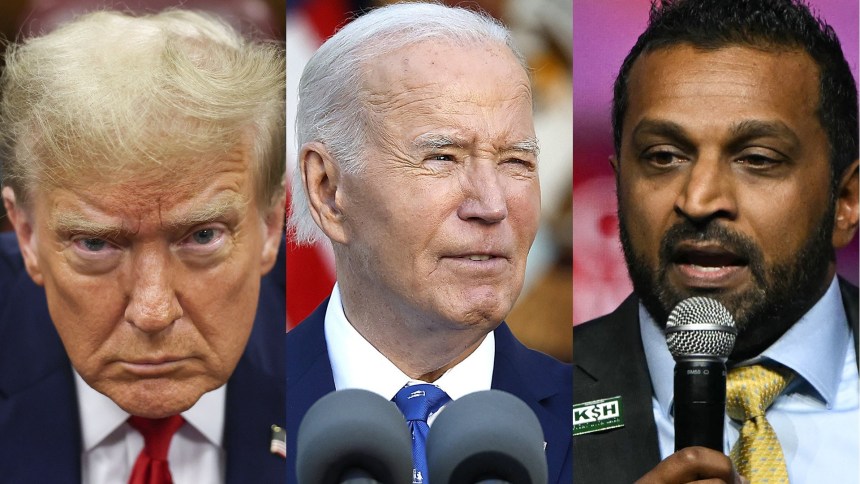
First, there are ample reasons to believe the Republican will do the opposite, because his record is littered with allegations that he did, in fact, give explicit directions to prosecute his perceived political opponents. Second, in the “Meet the Press” interview, Trump said, in reference to FBI officials, “If they think that somebody was dishonest or crooked or a corrupt politician, I think [Kash Patel] probably has an obligation to do it.” The president-elect has, of course, falsely accused Jan. 6 committee members of being dishonest, crooked and corrupt. But perhaps most importantly, we’re dealing with a rhetorical shell game. As the Times’ Jonathan Swan summarized, “Trump is sending clear public signals to his nominees that he wants retribution, although he is then saying he will not direct them to act. But by saying that Jack Smith is ‘corrupt’ and that members of the Jan. 6 committee belong in prison, Trump is making no secret of what he wants his Justice Department to do.” Exactly. The president-elect just told a national television audience that he believes the Jan. 6 committee was comprised of criminals. At that point, whether he literally directs the FBI or the Justice Department to launch investigations is largely irrelevant. Trump expects loyalists to make him happy — and he just left no doubts as to what would make him happy. The message wasn’t subtle, and it was almost certainly noticed by those eager to do his bidding. The Republican doesn’t have to make direct orders under circumstances like these. He’s eager to install partisan loyalists in positions of authority, while making his preferences known. It’s expected that they’ll know precisely what to do, making the discussion about pre-emptive pardons all the more relevant.
Steve Benen is a producer for "The Rachel Maddow Show," the editor of MaddowBlog and an MS NOW political contributor. He's also the bestselling author of "Ministry of Truth: Democracy, Reality, and the Republicans' War on the Recent Past."
Latest Post
Recommended


