









It was inevitable that Donald Trump’s radical and legally dubious ambitions would spark extensive litigation. What’s more, the president and his White House team shouldn’t be at all surprised that much of the Republican’s overreach is already struggling in the courts.
The question is what Team Trump intends to do about it.
Under our constitutional system of government, the president and officials in his administration have some standard options. They can retreat, abandon their plans that are at odds with the law, and pursue other goals. They can file appeals. They can pursue their priorities in different ways. They can whine a whole lot.
What they cannot do is defy court orders — at least if the integrity of constitutional order in the United States is going to remain intact.
The trouble, of course, is that JD Vance, who has long claimed that presidential administrations need not honor “illegitimate” court rulings, argued over the weekend, “Judges aren’t allowed to control the executive’s legitimate power.” The vice president wasn’t alone: Trump told reporters that judges shouldn’t be “allowed” to rule the way a jurist did on Saturday morning in a case restricting Elon Musk’s Department of Government Efficiency from accessing the Treasury Department’s payment systems. Musk argued along similar lines.
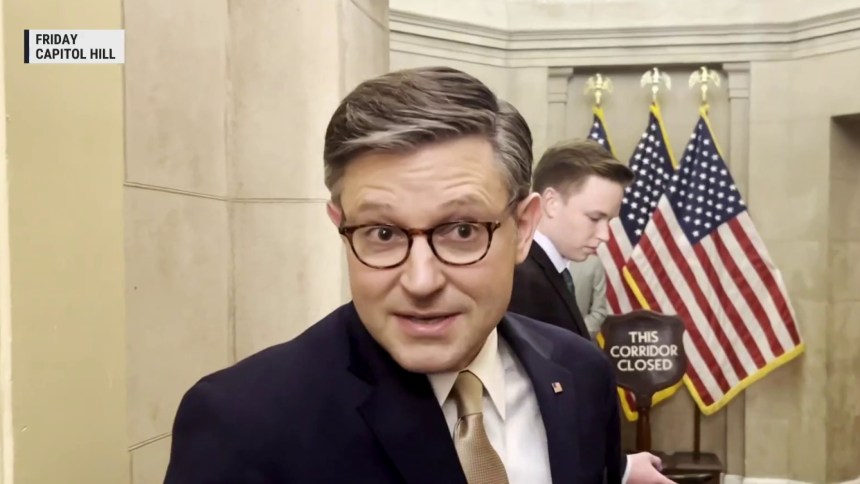
What does House Speaker Mike Johnson, who has a background as a constitutional lawyer, have to say about all of this? Alas, nothing good. HuffPost reported:
Federal courts should back off and let President Donald Trump do what he wants, House Speaker Mike Johnson (R-La.) said Tuesday. Courts have stymied a range of early executive actions by Trump, from his bid to cancel birthright citizenship to his freeze on federal grants and the wholesale elimination of a federal agency.
“The courts should take a step back and allow these processes to play out,” the Louisiana Republican told reporters. As part of the same comments, the House speaker explicitly endorsed Vance’s line on the limits of judicial authority.
Mike Johnson: "Of course the branches have to respect our constitutional order, but … "
Recommended
 — Aaron Rupar (@atrupar.com) 2025-02-11T15:41:08.894Z
Johnson might yet elaborate on his perspective, but his unscripted Capitol Hill comments weren’t exactly helpful, not just because of his support for the vice president’s radicalism, but also because of the inherent ambiguity at the heart of his assertions.
I’m not being coy when I say I don’t know what “The courts should take a step back and allow these processes to play out” even means. The White House, by any fair measure, is pushing the legal envelope and expressing general indifference to legal guardrails. Many affected parties are doing exactly what they should be doing: They’re taking their concerns to the judiciary.
What, exactly, does the House speaker expect judges to do? Tell plaintiffs, “The courts might seem like the appropriate venue, but we’ve decided to take a step back and allow these processes to play out”?
Not to put too fine a point on this, but court cases are a routine and appropriate part of “these processes.” Letting the process “play out” necessarily means adjudicating foundational legal questions. If Johnson doesn’t understand that, it’s worth exploring why not.
Steve Benen is a producer for "The Rachel Maddow Show," the editor of MaddowBlog and an MS NOW political contributor. He's also the bestselling author of "Ministry of Truth: Democracy, Reality, and the Republicans' War on the Recent Past."
Latest Post
