









Rep. Lauren Boebert already had a reputation for radicalism, which was strengthened recently when she condemned the separation of church and state as “junk.” As part of the same public comments, the Colorado Republican added, “The church is supposed to direct the government.”
It was jarring rhetoric — and historical nonsense — but the far-right congresswoman isn’t the only Republican peddling rhetoric like this about the First Amendment and religious liberty.
In Florida, for example, as part of Republican Gov. Ron DeSantis’ Civics Literacy Excellence Initiative, high school educators are being told to tell students that the nation’s founders did not champion the separation of church and state, despite reality.
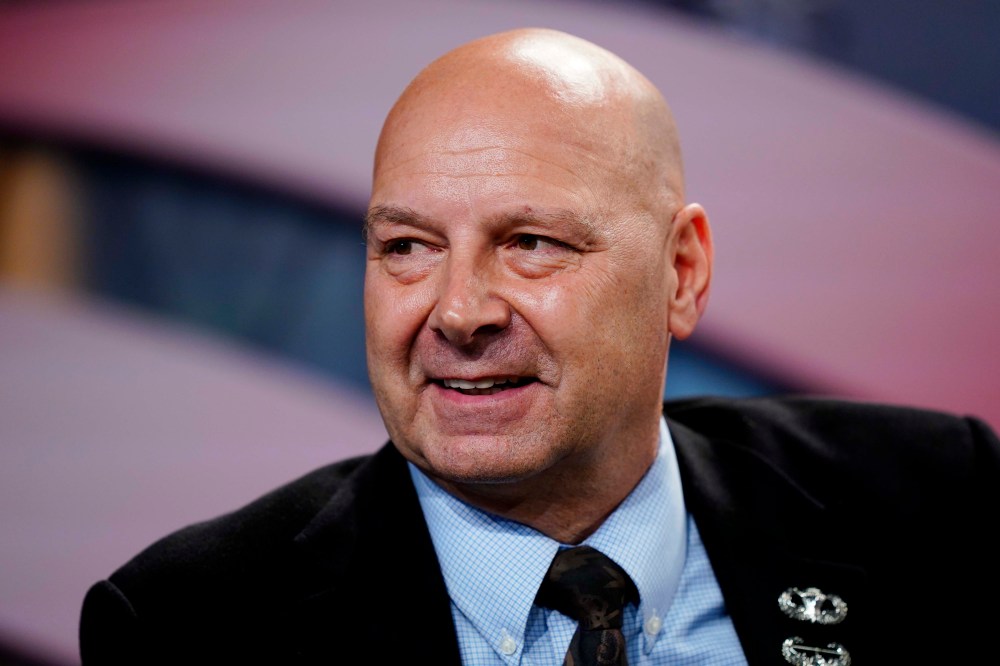
In Pennsylvania, The New York Times reported last week on Republican gubernatorial hopeful Doug Mastriano, who recently addressed a far-right conference that mixed Christian beliefs with conspiracy theories.
Instead of focusing on issues like taxes, gas prices or abortion policy, he wove a story about what he saw as the true Christian identity of the nation, and how it was time, together, for Christians to reclaim political power. The separation of church and state was a “myth,” he said. “In November we are going to take our state back, my God will make it so.”
It’s worth emphasizing that the separation of church and state is not a “myth”; it’s a bedrock principle of our system of government. In fact, I’d refer Mastriano to the First Amendment, which states that “Congress shall make no law respecting an establishment of religion, or prohibiting the free exercise thereof.”
According to Thomas Jefferson, those 16 words created a “wall of separation between church and state” — and he’s a bit more credible in this area than the right-wing state senator.
Stepping back, the problem is not just that Republicans like Boebert and Mastriano are making ridiculous comments about foundational principles of the American experiment. Rather, the larger concern is the broader context in which far-right radicals are going beyond the more mundane goals of the religious right movement. From the Times’ article:
Many dismiss the historic American principle of the separation of church and state. They say they do not advocate a theocracy, but argue for a foundational role for their faith in government. Their rise coincides with significant backing among like-minded grass-roots supporters, especially as some voters and politicians blend their Christian faith with election fraud conspiracy theories, QAnon ideology, gun rights and lingering anger over Covid-related restrictions. Their presence reveals a fringe pushing into the mainstream.
As a rule, any sentence that begins, “They say they do not advocate a theocracy, but…” is cause for concern.
To be sure, there are plenty of examples of contemporary Republicans taking issue with the idea of governmental neutrality on matters of faith. A decade ago, for example, as part of his ill-fated presidential campaign, Rick Santorum said watching John F. Kennedy’s speech to Baptist ministers in Houston in 1960 made him want to “throw up.” (It was a speech in which JFK said, “I believe in an America where the separation of church and state is absolute; where no Catholic prelate would tell the president — should he be Catholic — how to act, and no Protestant minister would tell his parishioners for whom to vote.”) It was a dumb comment, but Santorum went on to explain that he wanted people of faith to play a more active role in public debates. A decade later, the line Republicans such as Mastriano and Boebert are pushing is far more ambitious — and quite a bit scarier. As their efforts progress, Republican-appointed Supreme Court justices appear eager to help. Justice Neil Gorsuch, for example, has used rhetoric about church-state separation that echoed televangelists’ phrasing, and he and his colleagues issued some rulings this term that turned back the clock on religious liberty. In a recent dissent, Justice Sonia Sotomayor wrote, “This Court continues to dismantle the wall of separation between church and state that the Framers fought to build.” The problem is, too many Republicans see that as a positive development.
Steve Benen is a producer for "The Rachel Maddow Show," the editor of MaddowBlog and an MS NOW political contributor. He's also the bestselling author of "Ministry of Truth: Democracy, Reality, and the Republicans' War on the Recent Past."
Latest Post
Recommended


