










The most important moment in the second week of the New York attorney general’s ongoing civil fraud trial against Donald Trump, his companies and others may not have even happened in the courtroom.
Instead, it likely happened last Thursday morning when Forbes published a report accusing former Trump Organization CFO and co-defendant Allen Weisselberg of having perjured himself on the stand, citing emails and reporters’ notes not yet in the public domain and some of which are not in the possession of New York Attorney General Letitia James’ office either.
The alleged perjury occurred, in Forbes’ account, when Weisselberg testified on Oct. 10 that he was not involved in or focused on the valuation of Trump’s triplex apartment in Trump Tower in Manhattan.
Forbes not only asserted that Weisselberg “played a key role in trying to convince Forbes over the course of several years that it [the apartment] was worth more than it really was” and “took a very detailed approach in reviewing Trump’s assets with Forbes,” but also revealed it has documents, including emails and reporters’ notes, some of which were not in James’ possession as of last week. According to Forbes, this shows Weisselberg first misled investors and insurers about the size and value of the apartment and then, last week, “lied in sworn testimony” about his own participation in that deception. Additionally, Forbes noted, “An attorney for Weisselberg did not immediately respond to a request for comment.”
One of the reporters in question, Chase Peterson-Withorn, added to the intrigue on Thursday when he tweeted that Weisselberg was present for a tour Trump gave Forbes of the apartment while both men continued to misrepresent the size of the apartment. According to Peterson-Withorn, Weisselberg insisted, “You really have to see it to understand. You can’t replace this.”
As The Messenger posited last week, it appears that the piece’s very publication caused some disruption in the trial. When Forbes’ piece was published mid-Thursday morning, Weisselberg was on the witness stand, and when the trial broke for lunch, state lawyer Lou Solomon was interrogating Weisselberg about his promises in the severance agreement, which I wrote about last week.
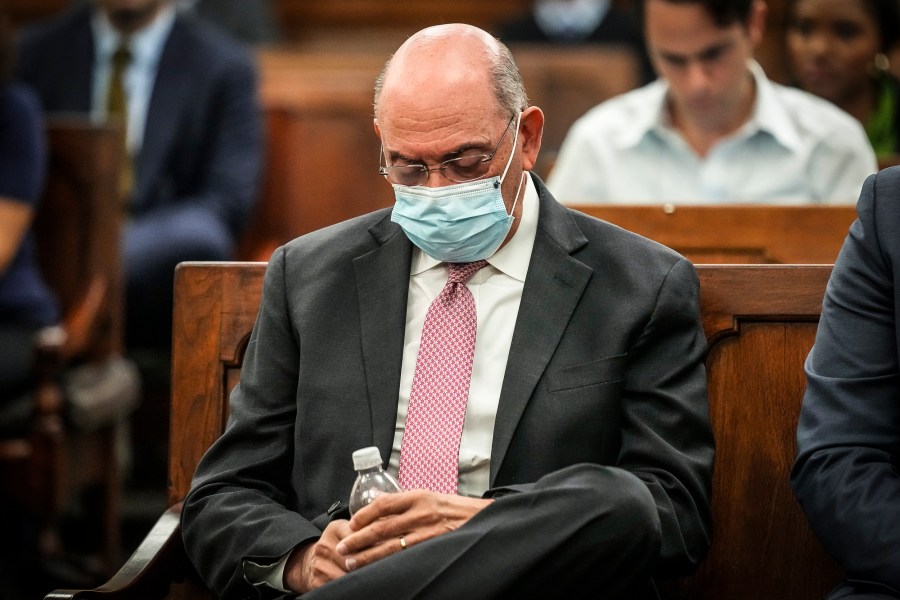
When the trial resumed after lunch, Weisselberg was expected to take the witness stand again. But, following a sidebar between James’ team, defense counsel and Judge Arthur Engoron, the prosecutors reportedly announced that they were finished with Weisselberg. Both sides, however, reserved their right to call him to the stand again. The question is, why did Weisselberg’s testimony end so abruptly?
One possibility is that Forbes’s perjury accusations necessitated that James take a second look at what he said earlier in the week. After all, while Weisselberg is not exactly a friendly witness, the attorney general’s office has already relied on Weisselberg to make certain concessions in aid of its case.
But to the extent that Weisselberg may have knowingly given false testimony, losing credibility in the ongoing trial would be the least of his problems. Rather, after Weisselberg and the Trump Organization were charged with multiple felonies for a separate tax fraud scheme last year, Weisselberg pleaded guilty to all 15 felony counts against him in exchange for a promise to testify truthfully at the then-upcoming Trump Organization trial. Ultimately, Weisselberg did three-plus months at New York’s infamous Rikers Island jail, was ordered to pay $2 million in back taxes, and was sentenced to five years of probation. And it’s that probation period that could cause him serious problems now. Specifically, as the transcript from Weisselberg’s Aug. 18, 2022, plea hearing reflects, one of the conditions of his probation is that he “not engage in any criminal conduct.” And under New York law, perjury is a crime. New York Penal Law 210-15, for example, provides “a person is guilty of perjury in the first degree when he swears falsely and when his false statement (a) consists of testimony, and (b) is material to the action, proceeding, or matter in which it is made.” Significantly, perjury in the first degree is also a felony punishable by up to seven years. But perhaps most importantly, the Manhattan district attorney would not have to undertake a new prosecution of Weisselberg for perjury to move to revoke his probation. It would be enough for the DA’s office simply to convince Judge Juan Merchan that Weisselberg engaged in new, criminal conduct during that period. Of course, doing that would necessitate proof that Weisselberg indeed perjured himself — and that can’t be resolved on the basis of what is known publicly. For one, the emails and notes allegedly in Forbes’ possession underlying its allegations against Weisselberg are not public record. And even assuming Weisselberg did not tell the truth on the stand, it’s also unknown whether such false statements would constitute perjury within the meaning of New York criminal law. New York model jury instructions reflect that in order to prove perjury, prosecutors must show that the defendant “intentionally ma[de] a false statement” only where he did not believe it to be true while giving testimony and had a “conscious objective or purpose” to make a false statement. The bottom line is that there are more questions than definitive answers right now. Did Weisselberg lie on the stand, and if so, did his false testimony constitute perjury, as the Forbes report claims? Could his liberty be at stake? And is the Forbes report in fact the reason or one of the reasons his testimony ended so quickly? I don’t know — but like Trump himself, who is back in the courtroom on Tuesday, I’m watching that case.
Lisa Rubin is MS NOW's senior legal reporter and a former litigator.
Latest Post
Recommended


