










Democratic leaders have taken a series of steps with the hopes of creating a commission to examine January’s deadly insurrectionist attack on the U.S. Capitol. Top Republicans, including Senate Minority Leader Mitch McConnell (R-Ky.) and House Minority Leader Kevin McCarthy (R-Calif.), have balked.
There can be a commission to examine the Jan. 6 riot, GOP leaders have said, just so long as it doesn’t focus entirely on the Jan. 6 riot.
This week, however, one House Republican conceded that Democrats are right about the initiative. Politico reported overnight:
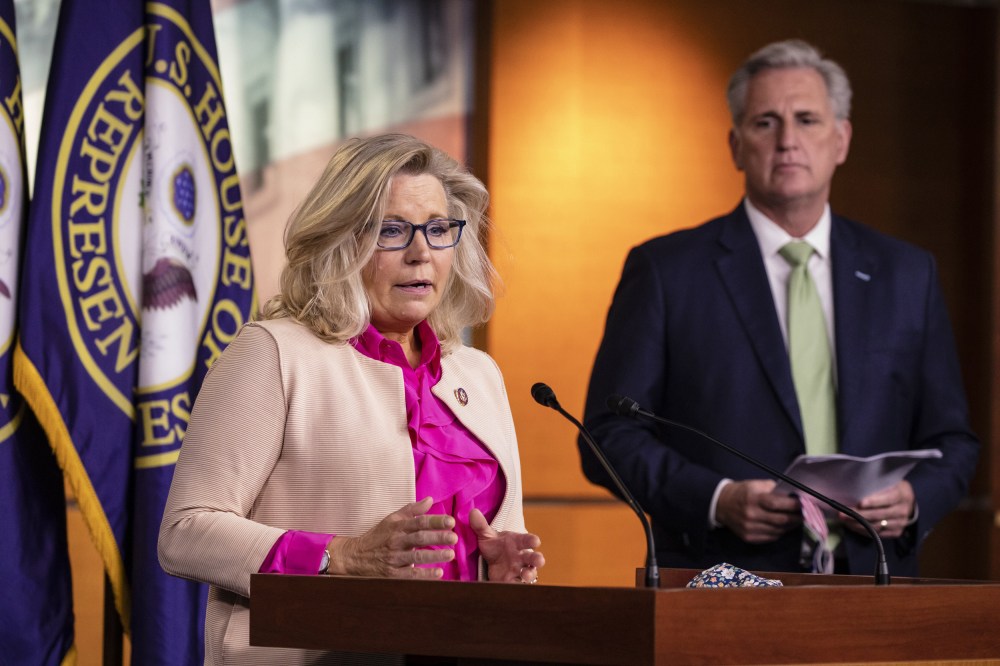
House Minority Leader Kevin McCarthy said it’s imperative for Republicans to stay united if they want to take back the majority. But cracks are widening in his own relationship with one of his top deputies over former President Donald Trump. At a retreat meant to craft a cohesive message for the party, McCarthy (R-Calif.) and GOP Conference Chair Liz Cheney (R-Wyo.) illustrated the exact rift the GOP has fought to avoid.
Cheney clearly knows McCarthy’s position on a Jan. 6 commission, but at a press conference yesterday, the Wyoming congresswoman nevertheless took the opposite position, calling for an investigatory panel focused solely on the attack on the Capitol.
“If we minimize what happened on Jan. 6th and if we appease it, then we will be in a situation where every election cycle, you could potentially have another constitutional crisis,” Cheney told Politico. “If you get into a situation where we don’t guarantee a peaceful transfer of power, we won’t have learned the lessons of Jan. 6.”
The House Republican Conference chair added, “And you can’t bury our head in the sand. It matters hugely to the survival of the country.”

As it always the case, the phrasing matters. Cheney’s use of words such as “appease,” “constitutional crisis,” and “survival of the country” suggest the Wyoming Republican simply isn’t satisfied with what she’s hearing from other GOP leaders.
It’s part of a growing pattern.
In January, after the Capitol riot, Republican leaders scrambled to shield Donald Trump from consequences. Liz Cheney went her own way, saying, among other things, that there had “never been a greater betrayal by a president of the United States.” She voted for the then-president’s impeachment soon after.
In February, House Republican leaders were asked whether Donald Trump should speak at the annual Conservative Political Action Conference (CPAC). McCarthy told reporters, “Yes, he should.” Cheney, indifferent to what McCarthy had just said, added moments later, “I’ve been clear on my views about President Trump. I don’t believe that he should be playing a role in the future of the party or the country.”
In March, when Republican leaders were content to ignore Rep. Paul Gosar’s (R-Ariz.) white-nationalist ties, Cheney again broke ranks. Now, she’s going her own way again. In fact, this week’s split with McCarthy on the proposed Jan. 6 commission comes two weeks after Cheney publicly acknowledged that she would not support Trump in 2024 if the former president tried to reclaim his old job — even as many in her party said the opposite. To be sure, the congresswoman has drawn fire from the right — Donald Trump has been unsubtle in his attacks — but when House Republicans were given a choice to remove Cheney from her leadership post in February, she prevailed with about 70% support. She responded to the challenge by changing … nothing. To think that Cheney has somehow become a moderate among GOP lawmakers would be to make a dramatic mistake. The Wyoming Republican is every bit as conservative as she’s ever been, and when it comes to the major policy disputes of the day, it’s difficult to think of a single issue on which Cheney and Democrats agree. There’s nothing remotely “centrist” about the House GOP conference chair. But Cheney has no use for Trump or Trumpism; she appears to see the rise of the authoritarian right as a genuine national threat; she still thinks democracy is a good idea; and she doesn’t seem to care whether her ostensible allies approve of her beliefs or not.
Steve Benen is a producer for "The Rachel Maddow Show," the editor of MaddowBlog and an MS NOW political contributor. He's also the bestselling author of "Ministry of Truth: Democracy, Reality, and the Republicans' War on the Recent Past."
Latest Post
Recommended


