








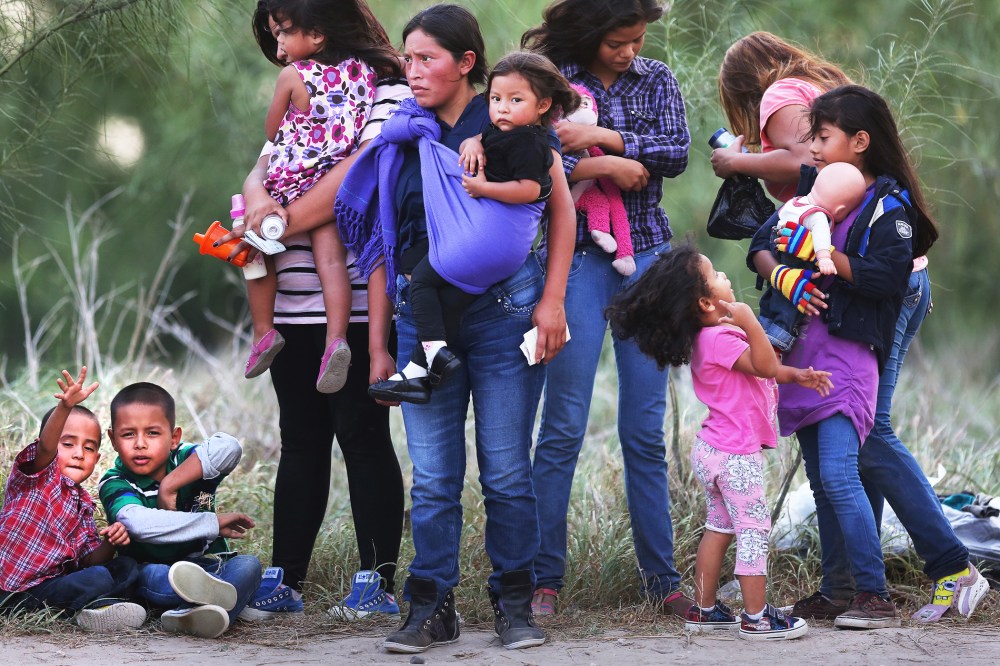
The humanitarian crisis at the southwestern border swelled at the start of the summer only after the federal government was so overloaded, it ran out of beds in detention centers for the unaccompanied minors apprehended by border agents. Now as the initial emergency response simmers down, the U.S. could encounter the same predicament in a new setting: finding desks for the migrant kids in public schools.
School districts are bracing for the start of the new year. More than 30,000 children have been processed out of federal facilities and sent to live with relatives or sponsors since January alone. Thousands more are expected by the end of the year.
Though they were initially swept up along the border, many kids end up living all across country, in whatever communities their guardians are settled. And while school districts can estimate how many new students they will be absorbing from the border crisis, many won’t know the full scope of the resources they need until students show up for their first day of school.
“The question will be how the students are dispersed within the states,” said Francisco Negron, general counsel for the National School Board Association. “We’re going to have to wait and see how it plays out.”
Texas has already taken in some 5,000 unaccompanied minors, more than any other state. But like so many of the other states housing the majority of the unaccompanied minors — California, New York and Florida — school districts have absorbed generations of immigrant students over the years and are prepared for unaccounted newcomers.
“In Texas overall, we’re used to dealing with kids that come in all over the world,” said Noel Candelaria, vice president of the Texas State Teachers Association. “Overall in the state we’re pretty prepared in most major school districts. What we don’t know yet is what additional resources — what type of social services — that they might need outside of the academics.“
The children entering U.S. classrooms for the first time have many unique needs. Language barriers complicate every step of the process, from enrollment to learning. The majority of the kids crossing into the U.S. alone are fleeing violence in Central America, from Honduras, Guatemala and El Salvador. Many do not speak English. In some cases, Spanish is not even the child’s primary language.
The kids traveled thousands of miles across some of the most dangerous regions in the world. After being detained, processed and sent across the country, they are reuniting with family members they haven’t seen in years, or may have never met at all. A number of kids, teens and younger, face hardships in adjusting to their living situations and integrating into communities. Educators and social service providers caution that counselors and therapists are needed in classrooms to help students cope with their new environments, resources that are not always available.
“Many children will require counseling based on the experiences that they have encountered,” said Rocío Inclán, director of human civil rights at the National Education Association (NEA). “Our teachers are not experts in counseling, they will need support.”
President Obama requested nearly $4 billion from Congress to cope with the more than 57,000 children who have entered the country since October, but the majority of the proposed funds focus on bolstering border security and legal services to swiftly process and deport children who do not qualify for humanitarian relief. Very little of the funding goes to post-release services while children wait for the results of their immigration court proceedings.
The situation has grown into a political lightning rod. Some members of Congress are searching for ways to speed up deportations. Public officials have bemoaned that local budgets must be altered to accommodate increased school enrollment. Citizens have even taken up arms in protesting temporary shelters to house the kids.
%22Many%20children%20will%20require%20counseling%20based%20on%20the%20experiences%20that%20they%20have%20encountered.%22′
“If we’re not having a rapid process to get back to the country of origin, they’re going to basically blend into whatever community and state and country they’re in,” Wisconsin Republican Gov. Scott Walker said. “That’s going to have costs and drain the entire system.”
By law, all children, regardless of their immigration status, have the right to enroll in public schools. Federal funding under the No Child Left Behind Act dedicates additional money for schools that enroll students who are English language learners. States are also required to set aside funds for school districts that “experienced a significant increase in immigrant students” to use for intensified tutoring and instruction. Once school districts determine their enrollment size, they can seek additional help from local and federal coffers. “Secretary Duncan has tasked an internal team with tracking the inquiries being received from the field and identifying resources and information that may be helpful to states, school districts and schools,” Department of Education (DOE) press secretary Dorie Nold said in a statement. Parents and sponsors are required to enroll previously unaccompanied minors once they are released from federal custody, just as the federal government is obligated to enroll all students who come to their school doors. But after receiving more than a dozen complaints related to enrollment policies across the country, the DOE was forced to reiterate last spring that schools are not able to turn away students. In North Carolina, a coalition of civil rights groups filed a complaint against two school districts for refusing to enroll two unaccompanied minors last school year. Jerri Katzerman, deputy legal director of the Southern Poverty Law Center, one group involved in the complaint, said the enrollment issues could be widespread not only across North Carolina for families and children with limited English skills. “So many of them are powerless in the system,” Katzerman said. For Montserrat Garibay, she knows exactly what the young kids are going through. As a former undocumented student herself, Garibay, now a pre-Kindergarten teacher based in Austin, Texas, said she knows how important it is for educators to step in and help the kids. “I can relate to how scared they are,” Garibay said. A greater number of the children coming into her school are young children, while before the unaccompanied minors who braved the journey north were typically teenagers. Her teachers helped her adjust when she first moved to the U.S. 22 years ago, Garibay said. Now it’s her turn to pay it forward. “As teachers we need to make sure we always create that safe environment,” she said.
Amanda Sakuma Recommended


