










What it means to be an American is an enduring question of the Donald Trump era, as his administration targets lawful and unlawful immigrants alike while trying to convince the Supreme Court to upend birthright citizenship.
While that citizenship litigation unfolds next year at the high court, a relatedly epic question of American identity emerged in an appeals court ruling this week – specifically, regarding whether noncitizens can have Second Amendment rights. A judge appointed to the bench by Trump in his first term thinks they can’t.
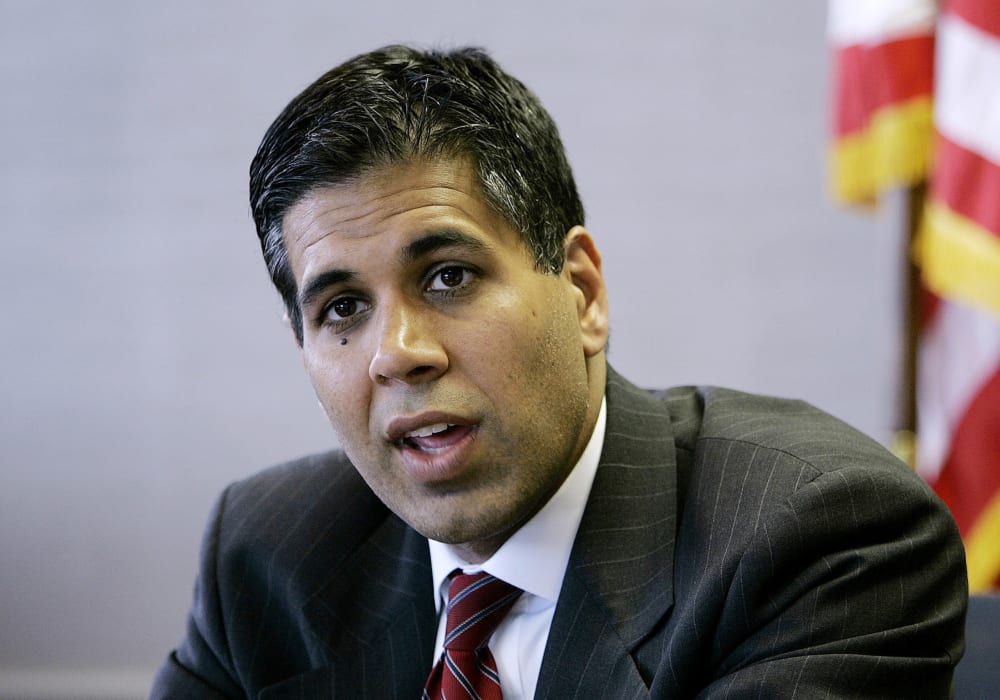
Judge Amul Thapar conveyed that view in his partial dissent from a three-judge panel ruling of the U.S. Court of Appeals for the 6th Circuit, the Cincinnati-based court covering Ohio, Michigan, Kentucky and Tennessee. All three judges agreed to uphold the firearm conviction of Milder Escobar-Temal, a Guatemalan citizen living in Nashville who came to the U.S. illegally more than a decade ago.
Yet, Thapar, who was previously floated as a Trump Supreme Court nominee, disagreed with the reasoning of the majority opinion authored by Obama appointee Jane Stranch, joined by Biden appointee Stephanie Davis.
Escobar-Temal’s case raised the question of who counts as “the people” in the amendment that says (in part) that “the right of the people to keep and bear Arms, shall not be infringed.”

Conducting the historical analysis prompted by recent Supreme Court precedent, Stranch wrote that limiting “the people” to citizens “does not align with the Founders’ intent or the historical understanding of the term.” She wrote that the term “encompasses unlawfully present individuals with sufficient connections to the national community.”
But even though the panel majority found Escobar-Temal’s connections sufficient to make him part of “the people,” that wasn’t the end of its analysis under high court precedent. The majority proceeded to ask whether the government can nonetheless regulate his right to possess a firearm. It can, Stranch wrote, because the defendant’s “lack of relationship with the government as an unlawfully present individual renders it reasonable for the government to disarm him in the same way that, in 1777, it could disarm a peaceable Quaker or loyalist.”
Thapar didn’t think all that analysis was needed. Under his view, the case “begins and ends” at the threshold question of whether Escobar-Temal counts among “the people.” In his separate opinion, which more than doubled the length of the majority’s, he argued that because “illegal aliens aren’t citizens,” they can’t claim Second Amendment rights.
Drawing a bright line at citizenship while criticizing the majority’s decision to analyze the degree of a noncitizen’s connection to the country, Thapar wrote, “We should stay out of the moralizing business of judging what makes an American.” The case highlights tricky questions raised by the Supreme Court’s expansion of Second Amendment rights. That expansion has led to litigation over the rights of people the justices might prefer aren’t armed. That was evident last year, when the court ruled 8-1 to uphold restrictions for people subject to domestic violence restraining orders, over dissent from Justice Clarence Thomas, the court’s foremost gun-rights proponent who authored the 2022 ruling that said gun laws can’t stand unless they’re “consistent with this Nation’s historical tradition of firearm regulation.” This term, among the court’s gun cases is one that challenges the constitutionality of a federal law that bars gun possession by anyone who is “an unlawful user of or addicted to any controlled substance.” The issue raised by Escobar-Temal’s case could also land at the high court someday, with implications not only for gun rights but the constitutional rights of noncitizens more broadly. Subscribe to the Deadline: Legal Newsletter for expert analysis on the top legal stories of the week, including updates from the Supreme Court and developments in the Trump administration’s legal cases.
Jordan Rubin is the Deadline: Legal Blog writer. He was a prosecutor for the New York County District Attorney’s Office in Manhattan and is the author of “Bizarro," a book about the secret war on synthetic drugs. Before he joined MS NOW, he was a legal reporter for Bloomberg Law.
Latest Post
Recommended


