








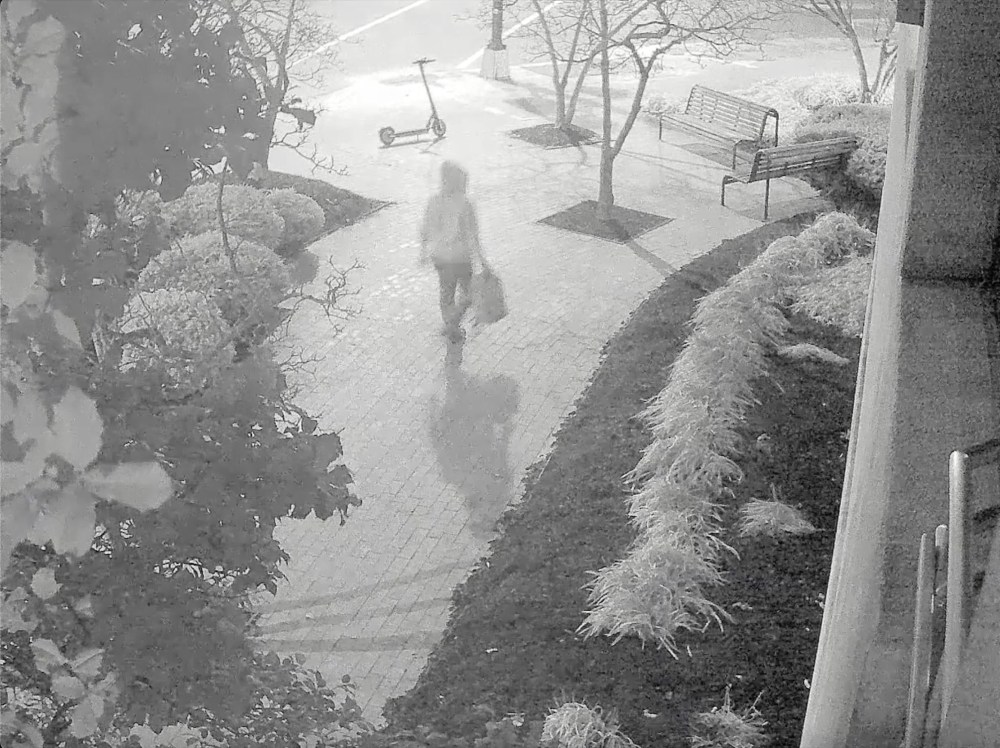
In a stunning break in one of the FBI’s most high-profile unsolved cases, agents arrested a man Thursday morning who investigators believe placed pipe bombs outside Republican and Democratic headquarters in the hours before the Jan. 6, 2021, U.S. Capitol riot.
Brian Cole Jr., 30, is charged with placing the bombs, which did not detonate. Specifically, Cole — of Woodbridge, Virginia, an hour south of Washington — is charged with one count of taking an explosive device across state lines intending to kill or injure someone or damage property, and with one count of attempting to destroy property using explosives.
It was not clear whether Cole had an attorney as of Thursday afternoon. Messages left by MS NOW at phone numbers believed to be assigned to him and his father were not immediately returned.
According to an FBI affidavit unsealed Thursday, agents found evidence Cole had purchased several items that matched the makeup of the bombs, including galvanized pipes, and end caps and 9V batteries.
Agents also matched his phone as being among those detected near the RNC and DNC when the bombs were planted.
The allegations, if proven, would end a longstanding mystery that sparked a multitude of conspiracy theories over who planted the pipe bombs before a mob of pro-Trump supporters stormed the Capitol aiming to stop Congress from certifying Joe Biden’s election as president. Authorities have not yet determined a motive, a law enforcement official said. But the suspect has been linked to statements in support of anarchist ideology, said two people briefed on the arrest who spoke on condition of anonymity.
House Speaker Mike Johnson called the arrest “obviously a great development,” adding he is still waiting for the details on the investigation.
“Those responsible for this horrific act must be brought to justice, and political violence should never be accepted in America,” DNC Chair Ken Martin said after news of the arrest broke.
The FBI’s case against Cole is not based on a new breakthrough, according to two sources, but instead on a review the FBI conducted in recent weeks of evidence that had already been gathered and which the department had in its possession. The sources requested anonymity to speak freely about a sensitive case. That voluminous trove of material was largely collected in 2021 and 2022.
The suspect’s arrest is expected to cause significant embarrassment for the bureau and the enormous team it assigned to the pipe bomb investigation, the two sources said, because the suspect could have been arrested years ago if investigators had earlier connected the dots they already had in hand.
This development could also be seen as a vindication of Deputy FBI Director Dan Bongino, who has long focused on the pipe bomb case and had urged the bureau to redouble its efforts to solve the case when he took office.
Prior to joining the FBI, Bongino — a former Secret Service agent and right-wing podcaster — used his platform to advance theories of the bombing and the subsequent investigation as an “inside job.”
However, there remains no evidence to support the allegations that Bongino made as a podcaster—and never renounced as deputy director—that the FBI was covering up what it knew about the pipe bomb case.
The timing of the arrest also comes as Bongino’s boss, FBI Director Kash Patel, has fallen under increasing scrutiny for his use of bureau resources, placing him under political pressure. MS NOW reported last week that President Donald Trump is considering removing Patel because of frustrations over news coverage about him, including about an unusual arrangement in which an elite SWAT team has been deployed to provide security for Patel’s girlfriend, and reports from a self-styled whistleblower that the FBI director had used a government jet to visit her.
The suspect placed pipe bombs in a Capitol Hill neighborhood near the Republican National Committee and the Democratic National Committee on Jan. 5, 2021, between approximately 7:30 p.m. and 8:30 p.m. the night before the Capitol riot. The FBI has said the pipe bombs, which were discovered 15 hours after they were placed — were viable devices: real bombs that could have seriously injured or killed innocent bystanders. Some investigators theorized that the bombs were placed to divert law enforcement from responding to the attack on the Capitol. The arrest appears to end an enduring mystery for the FBI, a case that was one of the largest in the bureau’s history. The FBI subpoenaed box store retailers for credit card transaction data to obtain the identities of people who bought the kind of battery connectors they thought were used in the bombs. Agents then compared the list of purchasers to the owners of phones located near the DNC and RNC party headquarters around the time the explosives were planted. They concluded there was no match. Agents also focused on the clothing of the likely bomber, captured in video surveillance, and believed they identified the person’s shoe. Agents filed subpoenas for credit card receipts from shoe sellers like Foot Locker and others,and eventually obtained a list of almost 1,200 sneaker sales. They then compared the credit cards used to those used to purchase bomb components. In January, the bureau released new video of the unidentified suspect and at that time, they said agents, analysts and data scientists had visited more than 1,200 residences and businesses, conducted more than 1,000 interviews, reviewed approximately 39,000 video files, and assessed more than 600 tips about who may have placed the pipe bombs. The arrest is also expected to tamp down some conspiracy theories about Jan. 6, one of which claimed last month that the FBI had identified a former Capitol Police officer as the person who planted the pipe bomb based on a “gait analysis.” The former officer, through her attorney Steve Bunnell, has called the accusations “recklessly false, absurd, and defamatory.” The pipe bomb investigation has long been a target of scrutiny by House Republicans, who accused the FBI and the Justice Department of failing to investigate it thoroughly. Sydney Carruth contributed to this report.
Ken Dilanian is the justice and intelligence correspondent for MS NOW.
Carol Leonnig is a senior investigative reporter with MS NOW. Recommended


