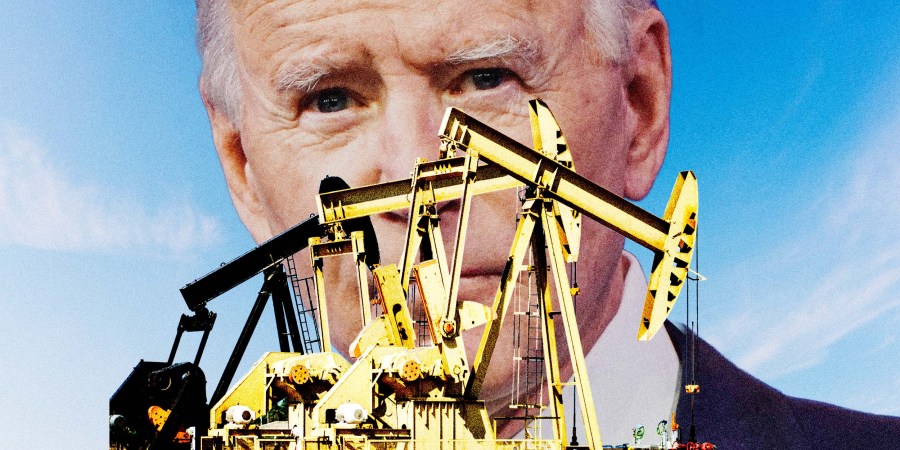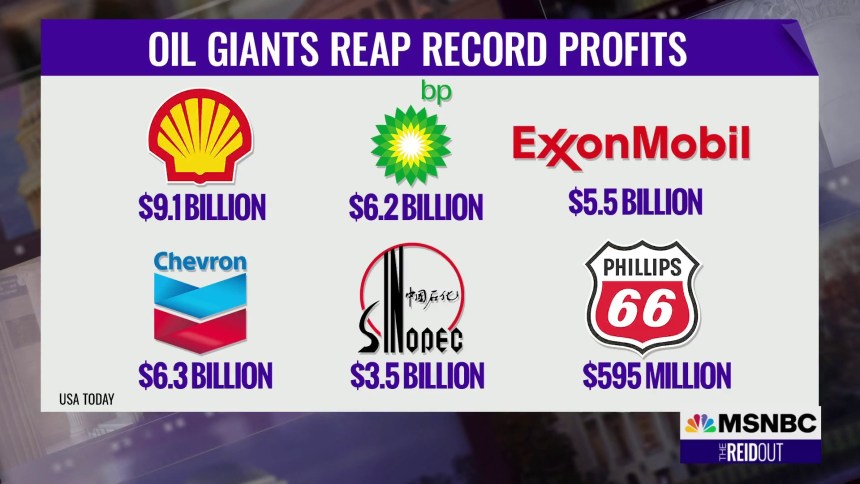
President Joe Biden’s sternly worded letter, released Wednesday, urging oil companies to stop price gouging and produce more product, was an exasperated response to a stubborn problem: Oil companies are greedy and drag on the economy.
“At a time of war — historically high refinery profit margins being passed directly onto American families are not acceptable,” Biden said in a letter to oil companies including ExxonMobil and Chevron.
To reiterate: Presidents can’t dictate oil and gas prices. But the letter is an acknowledgment that Americans tend to blame the White House for gas woes regardless. And the public feud between Biden and Big Oil is just the latest stage of what’s been an on-again, off-again war between them.
As he touted during his presidential campaign, Biden technically introduced the first Senate bill concerning climate change — the Global Climate Protection Act — as a senator back in 1986.
The bill called for then-President Ronald Reagan to “establish a Task Force on the Global Climate to research, develop, and implement a coordinated national strategy on global climate.” It went nowhere when Biden first introduced it, thanks in part to opposition from oil companies.
A version of the bill was adopted as an amendment to a State Department funding bill the following year, but Biden has nonetheless fallen in and out of love with Big Oil throughout his career.
As a senator in the ’90s, Biden repeatedly opposed fuel efficiency measures — which were also opposed by big oil companies — that would have raised the standards on tailpipe emissions. But by the early 2000s, he’d come around to supporting some of those measures. By 2006, he was issuing public warnings about the country’s reliance on oil. During a Senate hearing on the risks of U.S. oil dependence, Biden presciently said, “Our failure to set a national energy policy and reduce our consumption of oil has handcuffed our foreign policy and weakened us economically.”
As vice president under Barack Obama, Biden’s relationship with Big Oil was touch-and-go, as well. He was part of an administration that authorized some policies widely reviled in the oil industry — like nixing the Keystone XL pipeline. And in recent years, oil companies have taken steps to undermine the Obama administration’s key climate achievement, a multinational vow to combat climate change known as the Paris climate accord. That said, Obama, and Biden by proxy, were boons for the oil industry. They oversaw the biggest increase in oil production ever in the history of the United States. As president, Biden’s relationship with the oil industry has also been pretty tepid. Early in his campaign, he was widely criticized by progressives for having several oil-friendly staffers on his team and in his corner. But Biden’s support for sweeping — and necessary — climate measures has placed his administration at odds with oil companies that are singularly concerned with how these policies could impact their profits. Many of those companies have actively, openly campaigned against his policy priorities, including climate measures in the Build Back Better Act. Biden’s relationship with Big Oil was already on the rocks. Wednesday’s letter to oil companies just shows he’s less willing than ever to pretend otherwise.
Ja’han Jones is an MS NOW opinion blogger. He previously wrote The ReidOut Blog. Recommended