The Heritage Foundation put out a long-awaited report on Monday on what it claims are the costs of immigration reform, kicking off a political battle on the right—and producing a loud silence from Democrats who were happy to let other Republicans trash the study.
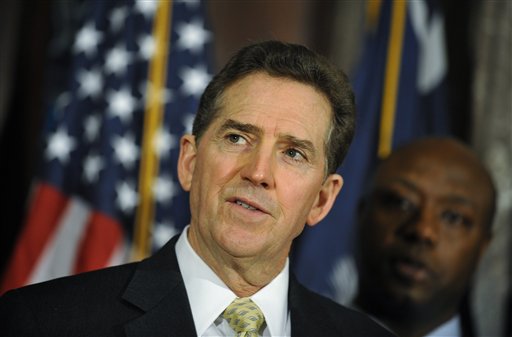
Former Sen. Jim DeMint, who now leads the conservative think tank, may have been a mentor and ally in the Senate to Florida’s Marco Rubio, but those ties weren’t on display Monday when he hammered Rubio’s legislative effort.
“We need an immigration process that attracts workers that our economy needs and encourages patriotic assimilation to unite new immigrants with America’s vibrant civil society, but let’s be clear, amnesty for those who are here unlawfully is not necessary to capture those benefits,” said DeMint.
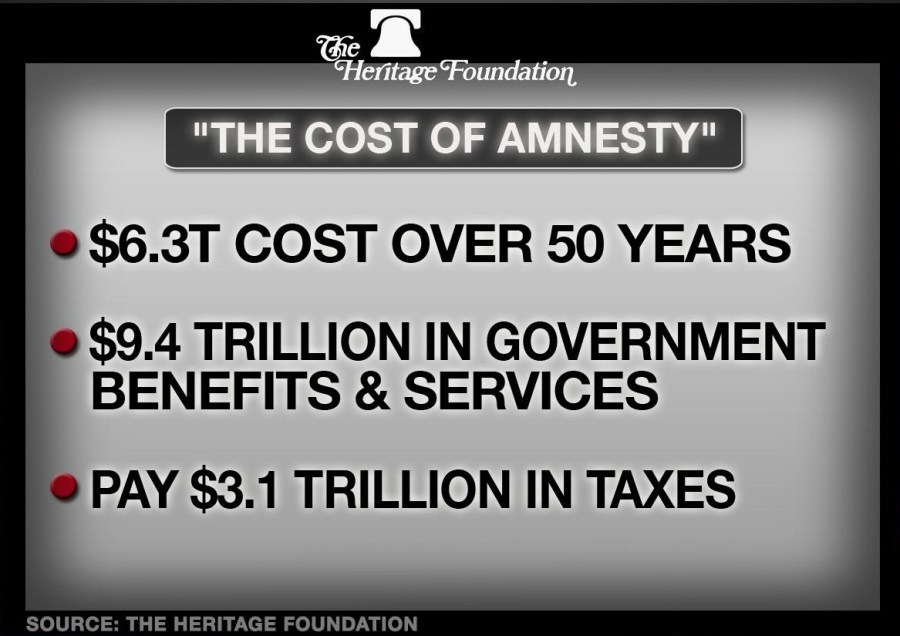
According to the analysis by Heritage co-authors Robert Rector and Jason Richwine, legalizing the 11 million immigrants in the country will cost $6.3 trillion dollars over the next five decades. The authors got that number by calculating the federal benefits newly-legalized immigrants will receive over their lifetimes—which they say amounts to $9.4 trillion in government benefits and services—and comparing it to the $3.1 trillion dollars in taxes they say they will pay.
Critics argue the bulk of entitlement costs are decades away, and the Heritage numbers don’t account for immigration’s economic benefits, like increased productivity and higher GDP. The libertarian-leaning Cato Institute has called the study “flawed and error-prone.” And defenders of the Senate bill were quick to criticize the Heritage study.
Republican Gang of Eight member Sen. Jeff Flake of Arizona tweeted:
Here we go again. New Heritage study claims huge cost for Immigration Reform. Ignores economic benefits.No dynamic scoring.
— Jeff Flake (@JeffFlake) May 6, 2013
Republican Congressman Paul Ryan of Wisconsin also argued for so-called dynamic scoring in a statement released Tuesday, “The Congressional Budget Office has found that fixing our broken immigration system could help our economy grow. A proper accounting of immigration reform should take into account these dynamic effects.”
Former Mississippi Gov. Haley Barbour convened a press call to push back on the study—and tweeted: The @heritage #immigration study is misleading & designed for headlines. The study isn’t a serious analysis for good policy. @bpc_bipartisan — Haley Barbour (@HaleyBarbour) May 6, 2013 Americans for Tax Reform president Grover Norquist was just one critic to point out that in 2006, Heritage published a paper maintaining, “The argument that immigrants harm the economy should be dismissed out of hand.” The current Heritage study is a reworking of a 2007 paper which Rector co-authored. That report helped provide ammunition to critics of immigration reform, and to derail the eventual compromise legislation. This is only the beginning. The immigration debate will formally kick off on Thursday, when the Senate Judiciary Committee starts marking up the 844-page bill.
Sarah Blackwill Recommended