








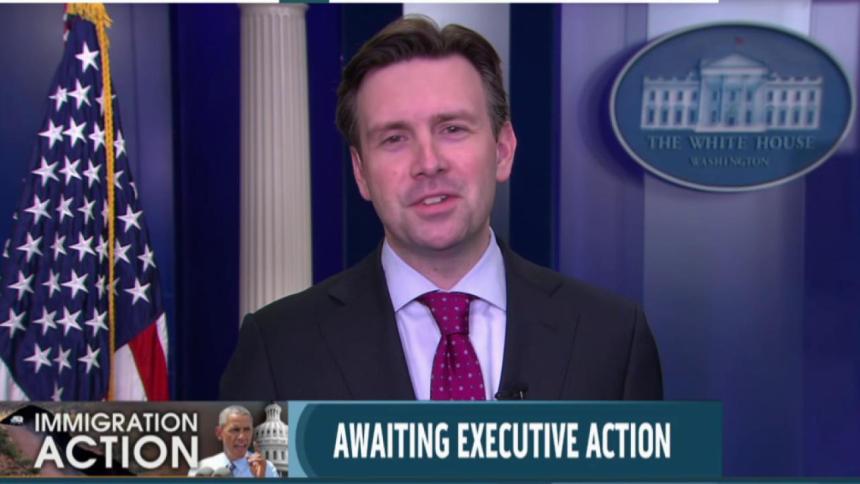
As President Barack Obama moves forward to reform immigration policy through executive order, critics are focusing more on the order’s legality than its wisdom. It’s a strategy that has swiftly turned the immigration debate into another Washington battle over precedents and presidential power – even as experts say Obama has the law on his side.
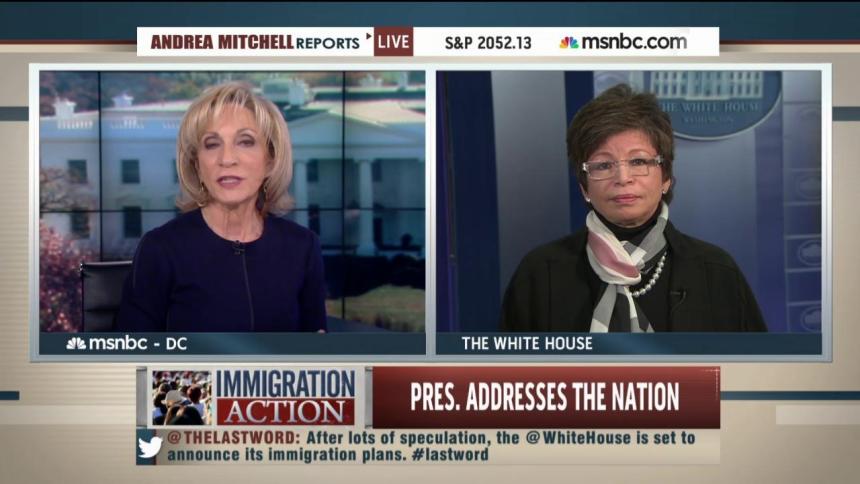
On the eve of the president’s announcement, former President Bill Clinton went out of his way to declare there is “pretty firm legal ground” for the new order.
“Every president in the modern era has issued some executive action on immigration,” Clinton said in a speech at the anniversary of the New Republic magazine in Washington on Wednesday night.
In a brief interview with MSNBC at the event, Clinton was emphatic that the order was not only legal, but a good way to push Congress.
“I’m for it,” said Clinton, stressing that an executive order does “not undermine” further cooperation between the political branches. President Obama waited through years of legislative inaction, Clinton argued, and now “if anything, this will strengthen his chances with Congress.”
Republican congressional leaders insist the opposite, saying the order ruins the prospects for cooperation and exceeds the president’s authority. GOP leaders have made similar charges about a series of Obama’s actions, from naming policy “czars” to delaying parts of Obamacare – an issue House Republicans say they will challenge in court. A new challenge on the immigration order isn’t likely to get very far.
Related: GOP governors call executive action a ‘power grab’
That’s because while immigration may be politically controversial, the executive’s enforcement authority is not legally controversial. The previous three presidents have unilaterally limited deportations for both humanitarian and foreign policy goals. Every administration since World War II has exempted some immigrants from enforcement. A wide range of legal experts, including conservative law professors, say this is standard presidential power.
And beyond all that, Obama’s best legal arguments don’t even have anything to do with immigration.
The Constitution is very clear on how crimes are addressed by the government. Congress defines them and the Executive enforces them. Since prosecutors cannot pursue every single type of crime with the same vigor or resources, the executive branch always sets a range enforcement priorities.
Crimes related to violence and national security, for example, are typically the highest priorities. There are over 4,500 federal crimes on the books, but current F.B.I. policy sets nine top enforcement priorities (Terrorism, espionage, violence, cybercrime, organized crime, financial crime, major thefts, political corruption, and civil rights violations).
By definition, that approach means that many other violations become lower priorities. In fact, just as some are singled out for enforcement, others are singled out for exemption. Related: Obama preps lawmakers ahead of announcement That was the case last August, when the Obama administration announced it was reducing the enforcement priority for certain federal marijuana offenses. In a unilateral Justice Department memo, the administration defined enforcement priorities, like prosecuting gang-related marijuana activity and drugged driving. It also listed federal crimes it was not prioritizing, such as “possession of small amounts of marijuana for personal use.” (Congress has designated first-time possession of any amount of marijuana as a misdemeanor punishable by up to a year in jail.) Congressional Republicans did not attack that move as a lawless power grab. If anything, Washington viewed the announcement as routine or unremarkable – which reveals a great deal about the current debate. The politics of marijuana are easier for Republicans than the politics of immigration — “amnesty” for pot-smokers is a less upsetting concept for the party’s base – which explains the diverging political reactions to these similar legal moves. And there is certainly a fair policy debate over which laws receive enforcement priority. Many states stopped enforcing criminal bans on racial intermarriage and gay sex before the statutes were officially repealed – an uncontroversial approach today – while there would surely be bipartisan outrage tomorrow if an executive decided to stop enforcing laws against theft or corruption. Conservatives certainly have every right to argue that immigration violations should be a high priority – a legal goal built on a policy view. It’s easy to imagine a liberal version of this position, like outrage if a president announced that civil rights laws would be a low enforcement priority. There is actually a long, healthy tradition of political debate over how to apply criminal law – from the heated battles over prohibition to Nixon’s law and order crackdown to today’s libertarian-progressive reforms in the War on Drugs. What is silly about today’s conservative argument, however, is the pretension that the executive branch’s powers would simply be limited by one’s political agenda, rather than the Constitution’s separation of powers.
Ari Melber
Ari Melber, an Emmy Award-winning journalist, writer and attorney, is the host of “The Beat with Ari Melber” airing nightly at 6 p.m. ET on MSNBC. He also serves as MSNBC’s chief legal correspondent and an NBC News legal analyst. Before joining MSNBC, Melber practiced First Amendment law and served as a legislative aide in the U.S. Senate. He received a J.D. from Cornell Law School and is a member of the New York Bar. Recommended


