








Reince Priebus wasn’t exactly a natural choice to serve as White House chief of staff. The Wisconsinite had proven himself to be an adept fundraiser at the Republican National Committee, but he had literally no governing experience at any level, and he’d never run any operation as complex as a White House.
The Atlantic noted today that Donald Trump never really respected Priebus, but chose him as chief of staff because of his relationships with Congress’ Republican majorities. With Trump’s legislative agenda stalled, Priebus quickly became expendable.
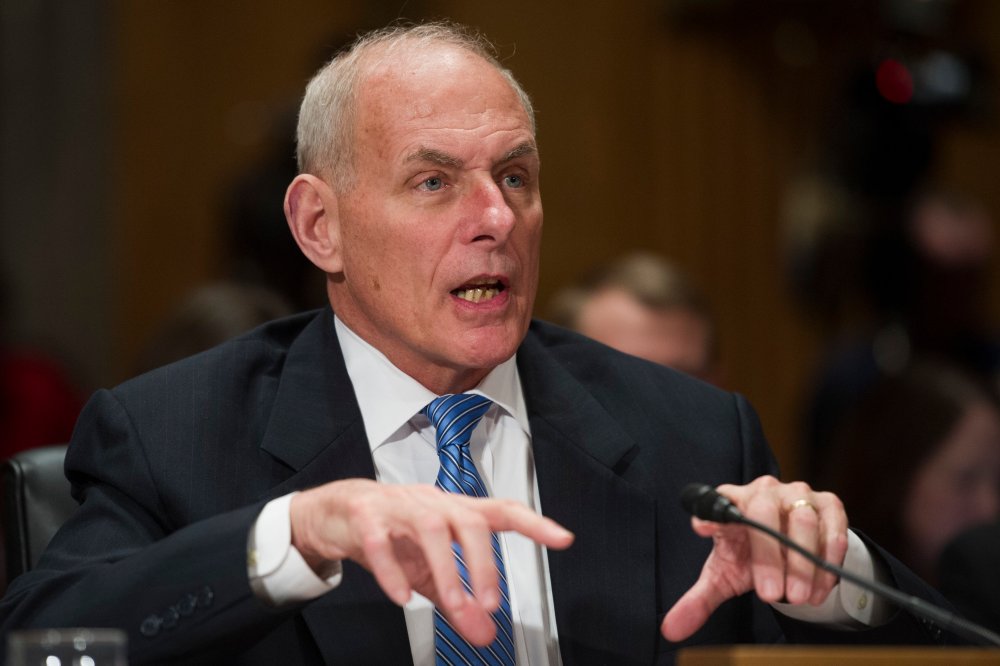
As of this morning, the changing of the guard is complete. The Washington Post reported that John Kelly, who has led the Department of Homeland Security, was sworn in as Priebus’ successor.
President Trump on Monday formally installed John F. Kelly, a retired four-star Marine general, as his White House chief of staff, in a bid to bring more discipline to a West Wing in turmoil. […]
Trump said he has “no doubt” that Kelly — whose appointment was announced via Twitter on Friday — will do a “spectacular job” in his new role.
The obvious question is whether there’s any reason to expect Kelly to succeed where Priebus failed. There’s ample reason for skepticism.
First, if Priebus was a source of disappointment because of the White House’s limited political and legislative successes, Kelly is a curious choice: the retired general has even less of a background in politics and legislative fights. He’s devoted his career to military service, not navigating an agenda through Beltway bureaucracies.
Second, if the goal is to bring some stability to the White House’s chaotic style, it’d make more sense to change presidents, not chiefs of staff. Priebus, his many faults notwithstanding, isn’t responsible for the mess in the West Wing; Trump is.
Indeed, there’s no reason to believe conditions are poised to change at all. The Washington Post reported over the weekend, “The new chief of staff is expected to have full control over the Oval Office and schedule, officials said. Trusted aides such as Hope Hicks, Dan Scavino and Keith Schiller — as well as senior advisers such as Kushner, Bannon and Conway — will continue to have casual access to the president.”
Note the degree to which the second sentence in that quote contradicts the first. Finally, let’s not overlook Kelly’s fairly brief tenure leading the Department of Homeland Security, where, as Dara Lind explained, he was the source of several controversies. While Trump has credited Kelly with successfully implementing an immigration policy turnaround at DHS, Kelly and department leadership really haven’t done much themselves. They’ve simply granted greater latitude to officers in the field — and defended them vociferously whenever criticized. There’s been plenty of criticism. Kelly — who wasn’t even briefed on the first iteration of Trump’s “travel ban” executive order until Trump was in the midst of signing it — came under fire for the aggressive detention and interrogation of people from majority-Muslim countries by Customs and Border Protection agents during the week the ban was in effect. He’s been criticized by Democratic members of Congress for ICE’s actions to apprehend immigrants in courthouses and near churches, and for their occasional attempts to arrest and deport immigrants protected under Obama’s Deferred Action for Childhood Arrivals program. But with each round of criticism, Kelly’s response has gotten more forceful…. Kelly’s rhetoric has often glossed over or contradicted the policies his department carried out, or he’s simply refused to believe accounts of officer abuses. Kelly will now bring these attitudes into the West Wing. What could possibly go wrong?
Steve Benen is a producer for "The Rachel Maddow Show," the editor of MaddowBlog and an MS NOW political contributor. He's also the bestselling author of "Ministry of Truth: Democracy, Reality, and the Republicans' War on the Recent Past." Recommended


