








When then-Rep. Chris Collins (R-N.Y.) agreed to plead guilty to charges relating to insider trading, he issued a letter of resignation the same day, and it took effect one day later. It seemed like an obvious thing to do: there’s no requirement that forces convicted criminals to resign from Congress, but common sense suggests it’s the appropriate next step.
Indeed, it’s the pattern others have also followed. When then-Rep. Chaka Fattah (D-Pa.) was convicted of corruption charges, he resigned two days later, in part because Democratic leaders told him he didn’t have a choice. A year earlier, then-Rep. Michael Grimm (R-N.Y.) stated publicly that he intended to keep his seat, even after pleading guilty to tax fraud, though he too soon realized that resignation was his only credible option.
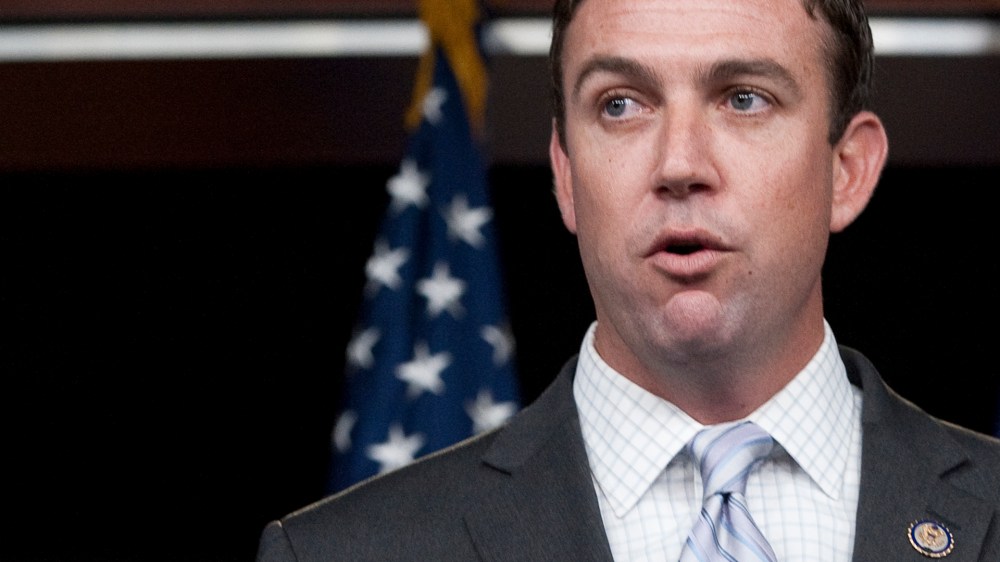
All of which leads us to Rep. Duncan Hunter (R-Calif.), who’s been caught up in an ugly corruption scandal, and who agreed this week to plead guilty to misusing campaign funds. As the California Republican awaits sentencing — prison time is a distinct possibility — his resignation is a foregone conclusion, right?
Not necessarily. Politico reported yesterday:
Rep. Duncan Hunter (R-Calif.) is showing no signs of stepping down from office despite his guilty plea Tuesday on a felony campaign finance charge in federal court.
When asked Wednesday about whether and when he intended to resign, Hunter blew off the question. “Good talk,” Hunter told a POLITICO reporter.
The article added that both parties’ leaders want to see Hunter step down, though he has not yet met with House Minority Leader Kevin McCarthy (R-Calif.) about his future.
And what happens if Hunter refuses to quit? There are a couple of angles to keep in mind.
There are, for example, practical considerations. If the Republican congressman is sent to prison at his March 17 sentencing hearing, Hunter’s tenure on Capitol Hill will have reached its logistical end — it’s not as if he’ll be released periodically from behind bars to cast votes on the House floor. But even putting that aside, there’s a case study that lawmakers could follow. In 2002, then-Rep. Jim Trafficant, a conservative Ohio Democrat, was convicted in a corruption case, but he refused to step down. The House agreed to do the obvious thing: members expelled him on a 420-1 vote. In fact, Trafficant was one of only two U.S. House members to be expelled since the Civil War. If Duncan Hunter believes he can hold onto his seat for another year, he may very well add his name to this very short list.
Steve Benen is a producer for "The Rachel Maddow Show," the editor of MaddowBlog and an MS NOW political contributor. He's also the bestselling author of "Ministry of Truth: Democracy, Reality, and the Republicans' War on the Recent Past." Recommended


