








When it comes to the Middle East, progress has never moved in a straight line. There are fits and starts, ebbs and flows. There are heartening breakthroughs and crushing disappointments, occasionally at the same time.
That said, while the domestic political establishment’s attention seems focused elsewhere, there’s reason to believe new opportunities are materializing in the region in ways that were hard to even imagine up until very recently.
This morning, for example, the Organization for the Prohibition of Chemical Weapons (OPCW) announced that Syria has taken its first steps towards detailing its stockpiles. Michael Luhan, a spokesperson for the Hague-based chemical weapons regulator, said in a statement, “The OPCW has received an initial disclosure from the Syrian Government of its chemical weapons programme, which is now being examined by the Technical Secretariat of the Organisation.”
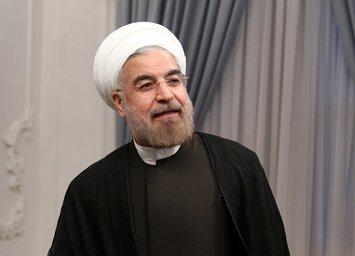
Meanwhile, Iranian President Hasan Rouhani has a new op-ed in the Washington Post arguing that the United States and the rest of the world “must work together to end the unhealthy rivalries and interferences that fuel violence and drive us apart” through a policy of “constructive engagement.”
The New York Times added that Iranian leaders, “seizing on perceived flexibility in a private letter from President Obama, have decided to gamble on forging a swift agreement over their nuclear program with the goal of ending crippling sanctions.”
David Sanger summarized the bigger picture nicely.
Only two weeks after Washington and the nation were debating a unilateral military strike on Syria that was also intended as a forceful warning to Iran about its nuclear program, President Obama finds himself at the opening stages of two unexpected diplomatic initiatives with America’s biggest adversaries in the Middle East, each fraught with opportunity and danger.
Without much warning, diplomacy is suddenly alive again after a decade of debilitating war in the region. After years of increasing tension with Iran, there is talk of finding a way for it to maintain a face-saving capacity to produce a very limited amount of nuclear fuel while allaying fears in the United States and Israel that it could race for a bomb.
The surprising progress has come so suddenly that a senior American diplomat described this week’s developments as “head spinning.”
So what happens next?
The consensus among many foreign policy observers is that developments in Syria and Iran are linked in ways that may or may not be helpful to the United States. Max Fisher explained well yesterday that President Obama’s pragmatism “has sent exactly the right signals to Iran, particularly at this very sensitive moment.”
Obama has been consistently clear, even if some members of his administration were not, that his big overriding goal is for Syrian leader Bashar al-Assad to stop using chemical weapons. First he was going to do that with strikes, meant to coerce Assad. Then, in response to the Russian proposal, Obama signaled he would back off the strikes if Assad gave up his chemical weapons, which is exactly what Obama has always said he wants. He’s been consistent as well as flexible, which gave Assad big incentives to cooperate when he might have otherwise dug in his heels. There are some awfully significant — and promising — parallels here with the U.S. standoff with Iran. Obama has been clear that he wants Iran to give up its rogue uranium-enrichment program and submit to the kind of rigorous inspections that would guarantee that its nuclear program is peaceful. He’s also been clear that the United States is using severe economic sanctions to coerce Tehran to cooperate and that it would use military force if necessary. The implicit (and sometimes explicit) message to Iran has been: If you abandon your enrichment program, we’ll make it worth your while by easing off. Here’s where the parallel with Syria is really important: Iranian leaders distrust the United States deeply and fear that Obama would betray them by not holding up his end of the bargain. That’s been a major hurdle to any U.S.-Iran nuclear deal. But seeing Assad’s deal with Obama work out (so far) sends the message to Iran that it can trust the United States. It also sends the message that making concessions to the United States can pay off. Iran’s supreme leader has been talking a lot lately about flexibility and diplomacy toward the West. So it’s an ideal moment for Obama to be demonstrating flexibility and diplomacy toward the Middle East. There are, of course, plenty of skeptics, who may yet be proven right. Syria may end up playing games and failing to honor its obligations, and Iran may see Congress’ recent debate over the authorization to use force as proof that there’s no real American appetite for another confrontation in the Middle East. Maybe Assad will break every promise and maybe Rouhani’s outreach is made up of nothing but hollow gestures. But for now, there is hope. The diplomatic approach in Syria is advancing; tensions with Iran show signs of cooling; and there are even peace talks between Israelis and Palestinians underway for the first time in years. The conventional wisdom is that President Obama cannot possibly hope to achieve anything in his second term in light of the broken and dysfunctional Congress. But if we broaden our vision, the opportunities for success may be found outside our borders, in areas congressional Republicans will find it difficult to screw up.
The place for in-depth analysis, commentary and informed perspectives. Recommended


