









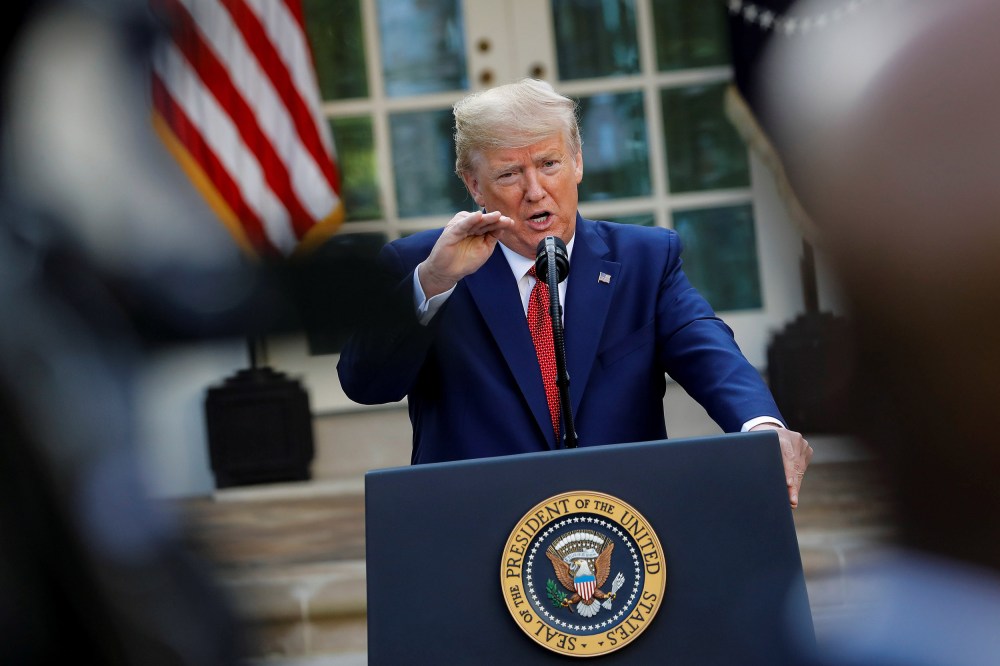

Reflecting on White House coordination with governors on the coronavirus crisis, Donald Trump told Fox News last week, “I think we’re doing very well. But, you know, it’s a two-way street. They have to treat us well, also.” It was an unsettling posture: the president seemed to suggest he expected deferential treatment from officials as the administration distributed emergency supplies.
On Friday afternoon, he went considerably further. When a reporter asked the president what, specifically, he wants from governors such as Washington’s Jay Inslee and Michigan’s Gretchen Whitmer, Trump replied:
“All I want them to do — very simple — I want them to be appreciative. I don’t want them to say things that aren’t true. I want them to be appreciative. We’ve done a great job.”
And what, pray tell, does the Republican believe should be done in response to governors who fail to show their appreciation to Trump’s satisfaction? As Trump went on to explain at the same briefing, he believes those governors’ pleas should get less presidential-level attention.
“[Vice President Mike Pence] calls all the governors. I tell him — I mean, I’m a different type of person — I say, ‘Mike, don’t call the governor of Washington. You’re wasting your time with him. Don’t call the woman in Michigan.’ … You know what I say? If they don’t treat you right, I don’t call.”
Yesterday, Trump denied having made these comments, but reality is stubborn. Trump effectively declared — on camera and on the record — that his ego and sense of personal grievances aren’t just foremost on his mind, they’re also influencing the White House process.
A federal crisis response guided by a fragile president’s need for sycophancy and gratitude is a federal crisis response that cannot work.
During a brief Q&A on Saturday, a reporter asked Trump, “Should anyone who lives in a state that has a governor that you’re not getting along with well be concerned at all?” The correct answer would have been, “Of course not.” Instead, he replied, “So, I think, really, most of the governors are very appreciative,” and he then quickly changed the subject. It was not reassuring. Among the most bizarre elements to a story like this is how overt Trump is on the subject. It’d be one thing if there were behind-the-scenes reports featuring quotes from concerned White House aides, quietly letting reporters know that the president is preoccupied with perceived slights and the constant need for praise. But Trump isn’t even making much of an effort to hide his pettiness or insecurities.
Steve Benen is a producer for "The Rachel Maddow Show," the editor of MaddowBlog and an MS NOW political contributor. He's also the bestselling author of "Ministry of Truth: Democracy, Reality, and the Republicans' War on the Recent Past."
Latest Post
Recommended


