








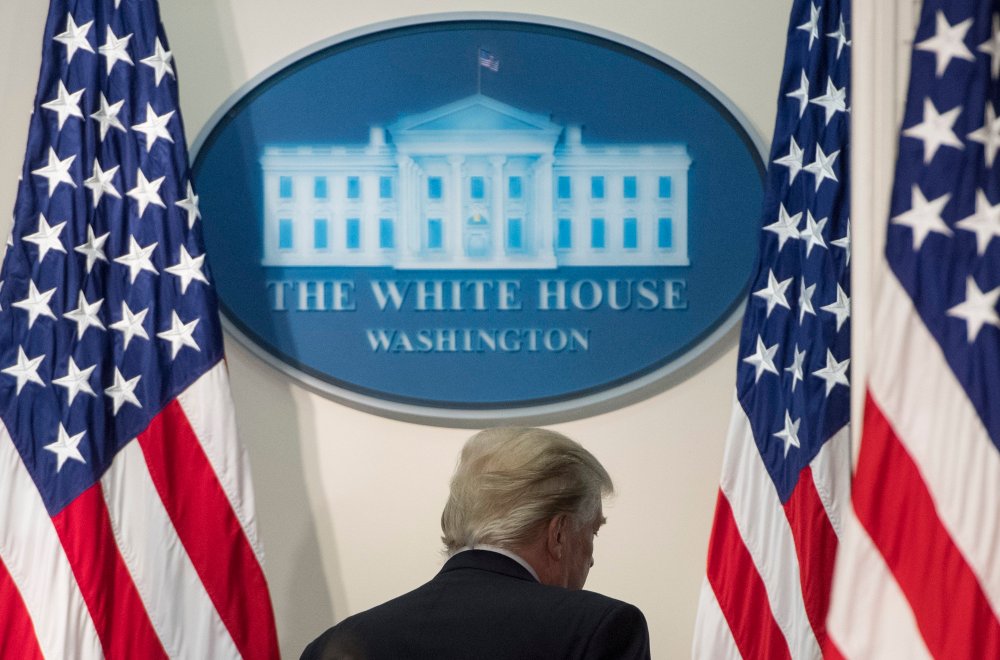
For quite a while, Donald Trump seemed quite interested in developments in Venezuela. The president published a bunch of tweets; he rattled his saber; and he reportedly even spoke to U.S. officials behind the scenes about a possible invasion.
By all appearances, the Republican thought his policy toward Venezuela would work out fairly easily: Trump would back Juan Guaidó over Nicolás Maduro, the Venezuelan military would switch sides, and the country’s crisis would end with a new president, backed by the White House.
That was several months ago. The Washington Post reported today that as Maduro’s hold on power now appears stronger, Trump’s attention has shifted.
Summer arrives this week with Maduro still in place, and little indication that he is imminently on his way out, or that the Trump administration has a coherent strategy to remove him. The president, officials said, is losing both patience and interest in Venezuela. […]
Trump has clearly been frustrated about a foreign policy issue he “always thought of … as low-hanging fruit” on which he “could get a win and tout it as a major foreign policy victory,” the former official said. “Five or six months later … it’s not coming together.”
The Post added that the president “chewed out” his team at an April 30 meeting — because as Trump sees it, they’re responsible for the failure of his policy.
The larger takeaway from a story like this is the inherent challenges of a White House conducting foreign policy with a president with a very short attention span.
A couple of years ago, for example, when H.R. McMaster was still the White House national security advisor, the Post noted that one of the three-star general’s challenges was “holding the attention of the president.”
The same article added that when it comes to the war in Afghanistan, Trump couldn’t be bothered with in-depth briefings on the country’s history or complicated politics: “Even a single page of bullet points on the country seemed to tax the president’s attention span on the subject, said senior White House officials.” Around the same time, Reuters reported that National Security Council officials, troubled by Trump’s disinterest in reports, learned that Trump is likely to stop reading important materials unless he sees his name, so they included his name in “as many paragraphs” as possible. A report in Foreign Policy soon after added that NATO allies were “scrambling” to tailor an upcoming meeting “to avoid taxing President Donald Trump’s notoriously short attention span.” Is it any wonder Trump reportedly lost “interest” in Venezuela after five months?
Steve Benen is a producer for "The Rachel Maddow Show," the editor of MaddowBlog and an MS NOW political contributor. He's also the bestselling author of "Ministry of Truth: Democracy, Reality, and the Republicans' War on the Recent Past." Recommended


