








After the public learned about the allegations raised in John Bolton’s book, and the degree to which they make Donald Trump appear guilty during his impeachment trial, Axios ran a report on how Republicans were approaching the issue of trial witnesses.
Republican sources tell Axios that party leaders and the White House will still try to resist witnesses because, as one top aide put it, “there is a sense in the Senate that if one witness is allowed, the floodgates are open.”
“If [Bolton] says stuff that implicates, say Mick [Mulvaney] or [Mike] Pompeo, then calls for them will intensify,” the aide said.
There’s some truth to that. Indeed, it happens in trials all the time: lawyers and jurors hear from a key witness, who’ll offer important information that relates to other key witnesses, and so on. The result is a process in which those involved get the whole story, or at least try to, and evaluate the facts accordingly.
The question in this case, however, is why anyone would argue that opening the “floodgates” of information is a bad thing to be avoided.
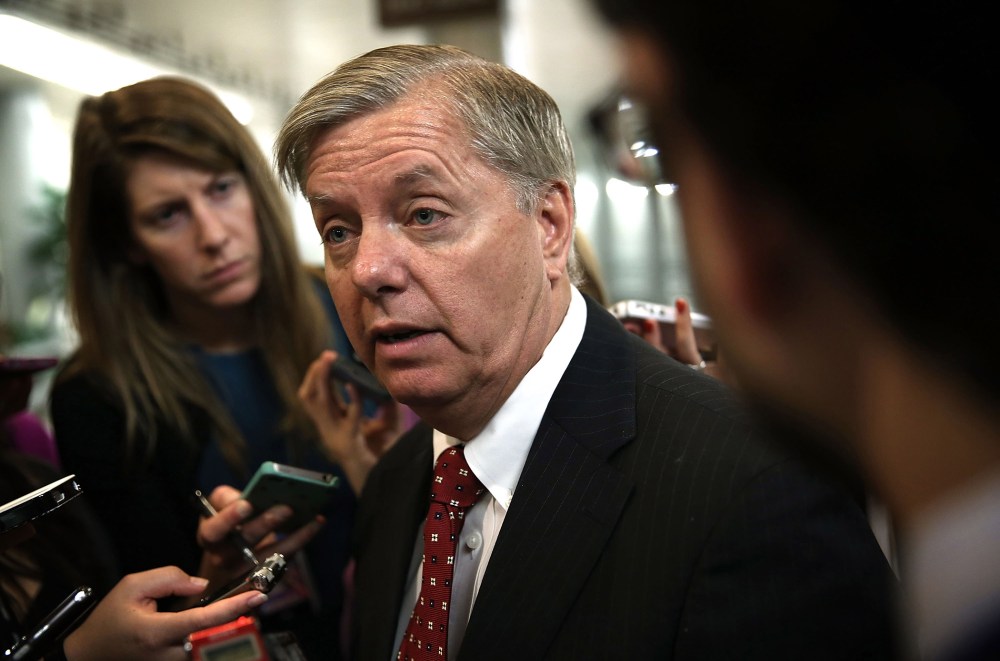
That is among the prevailing arguments among the White House’s GOP allies on Capitol Hill. Senate Majority Whip John Thune (R-S.D.) warned yesterday against creating an “endless cycle” of information for senators to consider. Senate Judiciary Committee Chairman Lindsey Graham (R-S.C.) added, “One witness would probably lead to a lot of witnesses.”
He meant that as a dynamic that senators should be eager to avoid, not embrace. A Politico report added that the White House is warning senators that if they don’t resist the call for witnesses, the proceedings could “turn it into a full-fledged trial with multiple witnesses on both sides.” Heaven forbid. As Vox’s Ezra Klein put it this morning, “We’re not arguing over what Trump did. We’re arguing over whether Republicans want to know what Trump did. Sometimes this whole saga feels like a thought experiment where we keep layering on more and more extreme conditions to see how broken the Republican Party really is.”
Steve Benen is a producer for "The Rachel Maddow Show," the editor of MaddowBlog and an MS NOW political contributor. He's also the bestselling author of "Ministry of Truth: Democracy, Reality, and the Republicans' War on the Recent Past." Recommended


