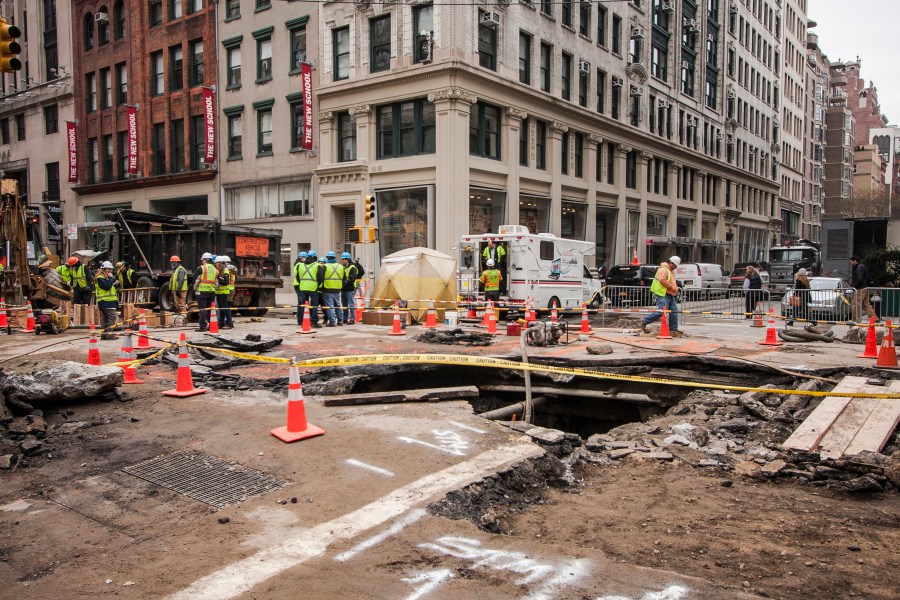
Above: January 16, 2014. The previous day, a water main beneath New York City’s Fifth Avenue at 13th Street burst, flooding businesses and basements, leaving residents without water, interrupting subway service on multiple lines, and throwing traffic into upheaval for almost two weeks. According to the city’s Department of Environmental Protection, the cast iron pipe that broke was from 1877.
That’s not just an old pipe. At that age, it would have to have been part of the city’s very first real water system. Prior to 1842, city water was all ponds and wells (though some was stored in reservoirs around the city). It wasn’t until they dammed the Croton River, north of the city, and ran the water down an aqueduct to distribution reservoirs in the city, that the first water system took shape. (If your particular brand of nerdery is streaked with veins of history and infrastructure, the deep digital archives at the New York Times offer some fun search results for “Croton” and “water” through the mid-to-late 1800s.)
One distribution reservoir was where there is now Central Park’s Great Lawn. The other was a short distance south of that at 42nd Street and Fifth Avenue, where the Public Library currently stands. Back then it was the Murray Hill distributing reservoir. From 42nd Street, 137 years ago, the water ran downtown, apparently literally in the same pipe that finally gave out two weeks ago.
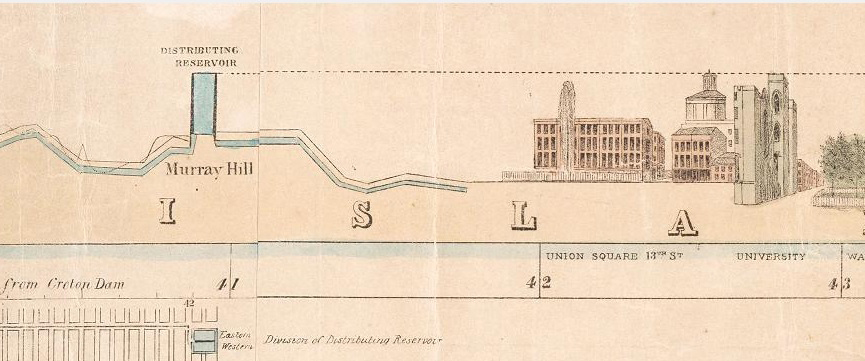
New York City has two other water systems now, so the Croton typically serves only about 10 percent of the city’s needs, but it is still pretty amazing that the same pipes remain in use after all this time.
Amazing, and also insane, right? Why aren’t they changing out that ancient infrastructure for new pipes?
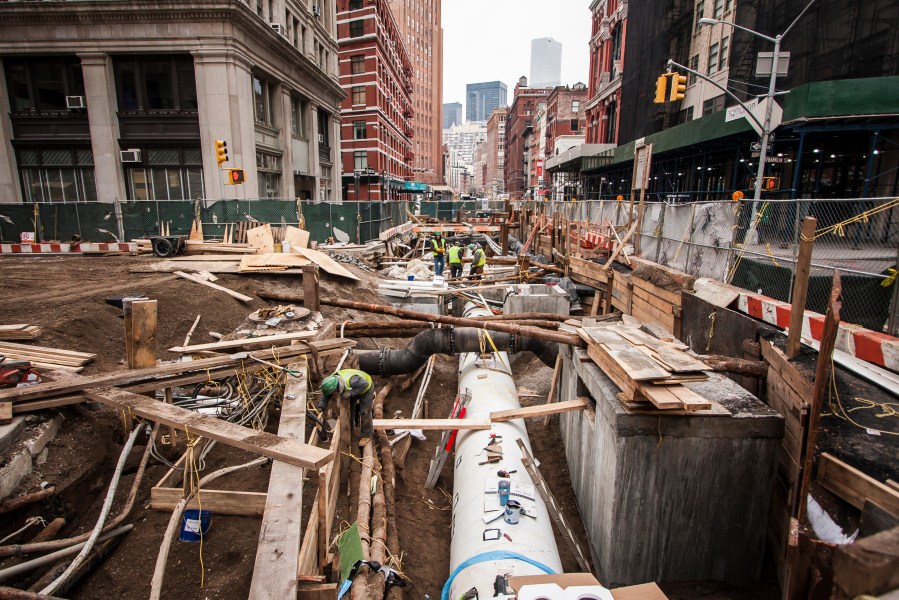
Ah, but they are! Below, also January 16, 2014, a similar scene a little farther downtown, in TriBeCa, on Hudson Street at Leonard Street — except in this case, the pipes exposed beneath the peeled-back road are brand new. The city is in the midst of a $59.5 million project (pdf) called the Hudson Street Trunk Water Mains (pdf), to replace old water infrastructure and to connect new lines to the new City Water Tunnel No. 3. Water Tunnel No. 3 was completed last year after what can only be described as an arduous conception. And as long as they’re digging… In addition to the water trunk-main installation, the city will jointly coordinate infrastructure work with city agencies and utility companies to improve electric sewer, gas, steam, and fiber-optic facilities. Through the joint-bid process, the project will occur in multiple segments that will remove old ducts and upgrade existing utilities — improving capacity for decades to come. “Decades” indeed.Recommended