









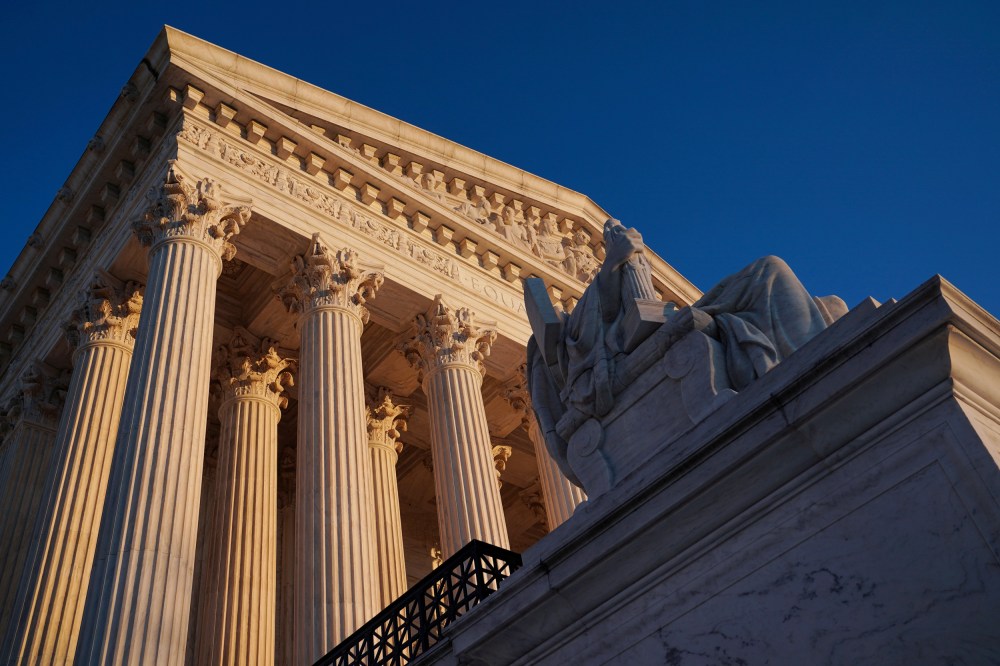

Many of the Affordable Care Act’s opponents keep looking to the U.S. Supreme Court to help undermine the health care reform law. They also keep coming up short, including in a ruling that was issued this morning. NBC News’ Pete Williams reported:
By an 8-1 vote, the court said when Congress passed the Affordable Care Act, it set up programs to compensate insurance companies during the first three years for plans that turned out to be unprofitable. But when several companies sustained a total of $12 billion in losses, both the Obama and Trump administrations said because Congress didn’t fully fund the reimbursement program, the government had no obligation to pay.
The full ruling in Maine Community Health Options v. United States is online here (pdf). Justice Sonia Sotomayor wrote for the majority, while Justice Samuel Alito stood alone as the sole dissenter.
For those unfamiliar with the case, let’s circle back to our earlier coverage and review how we arrived at this point.
When the ACA was created a decade ago, there was a broad understanding that private insurers would benefit from millions of new customers, but they’d also take on new risks, since the law required insurance companies to treat all customers equally, regardless of pre-existing conditions. That raised the prospect, of course, of some insurers taking on hard-to-predict numbers of unhealthy consumers whose coverage would cost more.
The law’s architects added “risk corridors” — an idea Republicans liked in the not-too-distant past — to help reimburse insurers that took a hit, at least for the first few years as the new marketplace took shape. The same provision also required insurance companies that didn’t take a hit to pay into a risk corridor fund to help the rest of the industry.
As longtime readers may recall, Sen. Marco Rubio (R-Fla.), for reasons that were never altogether clear, helped lead the charge to destroy the risk corridors. (It almost certainly had something to do with the Floridian’s ill-fated presidential campaign and its false claim that he “killed Obamacare.”) Rubio and his Republican brethren succeeded, which led to some very unhappy insurers: companies that worked within the system in good faith were suddenly told the money they were promised would never arrive. Litigation soon followed, and the justices heard the case in December. Many observers who were in the chamber for oral arguments came away with the same impression: most of the justices seemed quite sympathetic to the insurers’ concerns. Those impressions proved true. While this resolves one of the pending Supreme Court cases related to “Obamacare,” as we discussed last month, there’s a more serious threat to the law still on the horizon. The fact that today’s ruling was so one-sided has fueled some talk in legal circles that the justices just aren’t too keen on tearing down the ACA just because some far-right officials want them to.
The place for in-depth analysis, commentary and informed perspectives.
Latest Post
Recommended

