








During CNN’s forum on school shootings this week, Sen. Marco Rubio (R-Fla.) faced an outraged parent, whose daughter was shot, and who couldn’t understand the Republican senator’s opposition to an assault-weapons ban.
Rubio responded that the original assault-weapons ban “failed” after its passage in 1994. But is that true? The Washington Post had a good piece on this yesterday, taking a closer look at the data, and concluding that the since-expired law “had a significant impact.”
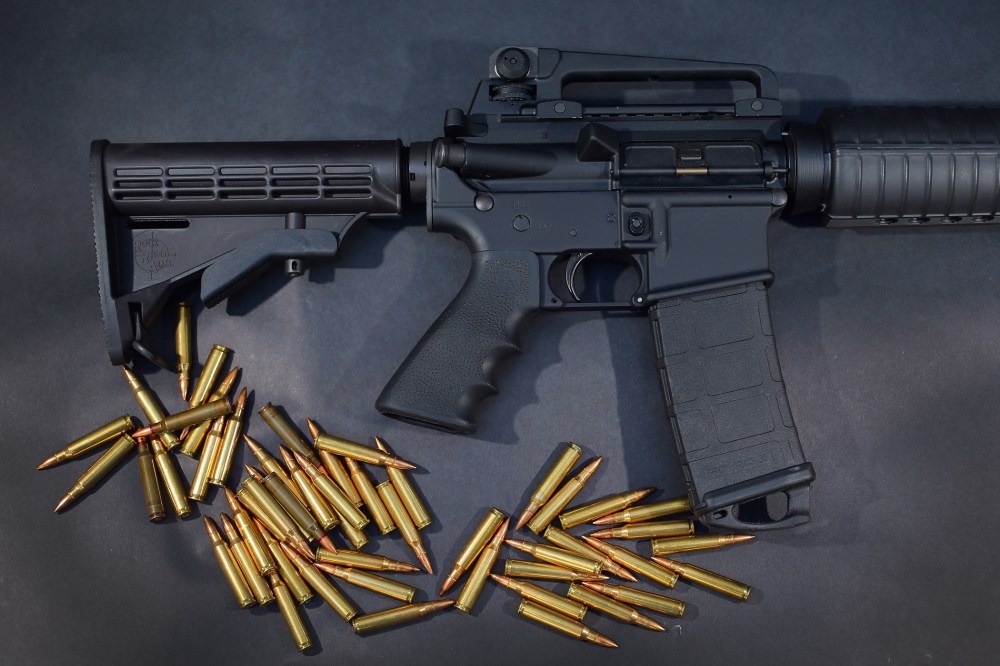
The 1994 law included a ban on 18 specific models of assault weapons, as well as a ban on any firearms containing certain military-style features, like a bayonet mount, a flash suppressor or a folding stock. It also banned high-capacity magazines capable of holding more than 10 bullets. The bill allowed individuals already in possession of such weapons to keep them. It was also set to expire after 10 years’ time.
“The original intent of the assault weapons ban was to reduce the carnage of mass shootings,” [Louis Klarevas, a researcher at the University of Massachusetts at Boston who wrote a 2016 book on mass shooting violence] said. “And on that front the data indicate that it worked.”
Klarevas has compiled data on gun massacres involving six or more fatalities for the 50 years before 2016. His numbers show that gun massacres fell significantly during the time the assault weapons ban was in place, and skyrocketed after the ban lapsed in 2004.
In the American tradition, the country has repeatedly responded to brutal gun violence by imposing new restrictions — each of which was permissible under the Second Amendment. One of the reasons fully automatic weapons aren’t generally available to the public, for example, was the response to the St. Valentine’s Day Massacre in 1929.
The massacre in Parkland, Fla., last week was also on Valentine’s Day. There’s no reason policymakers can’t take similar, legal steps in the name of public safety now. * Postscript: At the same CNN event, Rubio said any attempt to ban assault weapons would open the door too widely: “Once you start looking at how easy it is to get around it, you would literally have to ban every semiautomatic rifle that’s sold in America.” Much to the Republican senator’s chagrin, the crowd erupted in applause. Yesterday, he followed up by saying this idea may have received cheers, but it’s outside “the mainstream.” First, Rubio opposed a popular and bipartisan background-check bill in the wake of the Sandy Hook massacre, so I’m not sure he should be commenting on who is and isn’t within “the mainstream.” And second, there’s ample evidence to suggest Rubio’s assessment is factually wrong.
Steve Benen is a producer for "The Rachel Maddow Show," the editor of MaddowBlog and an MS NOW political contributor. He's also the bestselling author of "Ministry of Truth: Democracy, Reality, and the Republicans' War on the Recent Past." Recommended


