









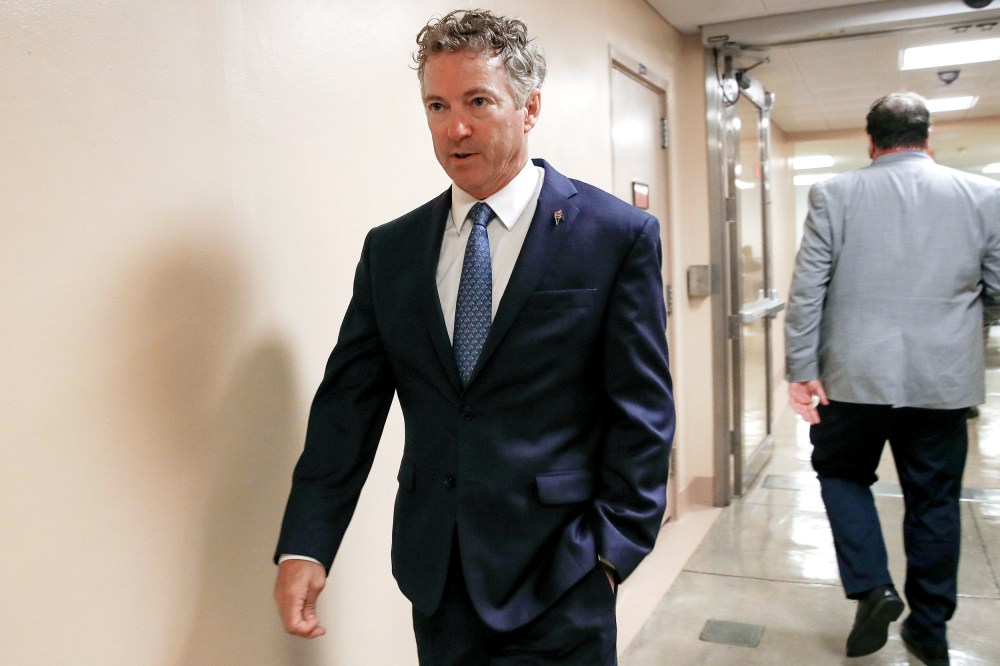

The competition has been fierce, and the competitors have spent months running neck and neck. But in the end, either Sen. Rand Paul (R-Ky.) or Sen. Ron Johnson (R-Ky.) will do the most damage to their reputation in 2020.
To be sure, the Kentucky Republican took the early lead in the race. In early March, as the nation started coming to grips with the coronavirus crisis, Congress approved a modest $8.3 billion emergency bill to respond to the public-health emergency. The bipartisan measure passed the Senate 96 to 1 — and Sen. Rand Paul (R-Ky.) was the lone opponent.
But like any true competitor, the Wisconsin Republican fought back, making clear that Paul wasn’t the only one who could look foolish. Indeed, later in March, Johnson blasted pandemic mitigation efforts as an “overreaction.”
Back and forth they went. In May, Rand Paul publicly clashed with Dr. Anthony Fauci for no reason while insisting that New York is in New England. The same month, Ron Johnson suggested independent inspectors general should be subservient to Donald Trump.
Over the summer, after Rand Paul held up a bipartisan anti-lynching bill, Ron Johnson went after Lt. Col. Alexander Vindman, a decorated American war hero. The Kentuckian used his office to question epidemiological expertise, while the Wisconsinite used his office to chase anti-Biden conspiracy theories before Election Day.
But once the fall arrived, the self-defeating competition to destroy their reputation reached an entirely new level.
Rand Paul pretended Joe Biden didn’t really win the 2020 presidential win, as Ron Johnson held a Senate hearing to blast “bureaucrats” for not making hydroxychloroquine more available. When Johnson held a separate hearing to undermine public confidence in the election results, Paul went further than most, telling the public that the 2020 election “in many ways was stolen.”
Ron Johnson appeared to be inching ahead with a second hearing indulging his anti-science impulses, but Rand Paul fought back, taking a stand against a bill to protect judges from attackers. Johnson tried to take the lead by blocking a bipartisan measure on increased direct aid during the pandemic, but Paul stayed in the fight, denouncing increased voting in Georgia.
Last night, only six senators rejected a bipartisan compromise on economic relief and government funding, but since Johnson and Paul were both part of the sextet, neither could claim an advantage. But shortly before the vote, the Kentucky Republican shared a few thoughts with a CNN reporter about the COVID-19 crisis. “It’s this political correctness of submission, submission, submission. Everybody’s got to submit, going to walk around like a drone and wear a mask, and yet there’s no real evidence of this working.” In reality, of course, the CDC has pointed to plenty of evidence that masks reduce the spread of the virus. What’s more, mitigation efforts during a pandemic are not “political correctness,” and it’s profoundly foolish — and potentially dangerous — to argue otherwise. There are only nine days remaining in the year. The ball’s in your court, Ron Johnson.
Steve Benen is a producer for "The Rachel Maddow Show," the editor of MaddowBlog and an MS NOW political contributor. He's also the bestselling author of "Ministry of Truth: Democracy, Reality, and the Republicans' War on the Recent Past."
Latest Post
Recommended


