









Given the many unfortunate lines the White House has peddled on the coronavirus crisis, it didn’t come as too big of a surprise when this one landed with a thud yesterday afternoon. That said, as is always the case, the context matters.
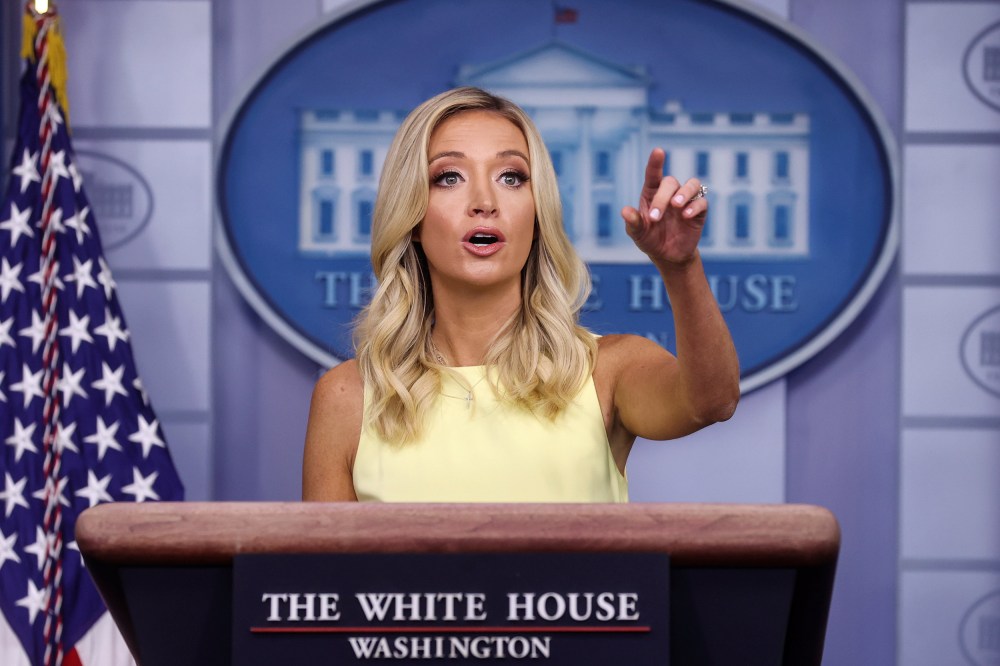
White House press secretary Kayleigh McEnany said during a Thursday press briefing that “science should not stand in the way of” schools fully reopening for the upcoming academic year, later blasting coverage of her comments as a “case study in media bias.”
The official transcript helps flesh out the relevant details. A reporter specifically asked about the White House’s recommendations to families as some districts plan to start the upcoming school year with online-only classes. McEnany replied, “You know, the president has said unmistakably that he wants schools to open. And I was just in the Oval talking to him about that. And when he says open, he means open in full — kids being able to attend each and every day at their school. The science should not stand in the way of this.”
To many, that made it sound as if the White House press secretary was arguing that science was an impediment to Donald Trump’s preference, so officials should put science aside and prioritize the president’s wishes.
But as part of the same briefing, McEnany went on to argue, “The science is on our side here, and we encourage for localities and states to just simply follow the science, open our schools.”
In other words, when the press secretary said, “The science should not stand in the way of this” she apparently meant that the science is consistent with Trump’s re-opening wishes, so there’s no reason to use science to block the White House’s demands.
And while this context casts McEnany’s controversial quote in a less embarrassing light, there’s a lingering problem lurking in the background: is the science on the White House’s side?
There’s reason for skepticism. When scientists at the Centers for Disease Control and Prevention drew up guidelines for re-opening schools, the CDC endorsed a school environment in which educators should, among other things, distance kids within classrooms, build physical barriers to prevent infections, and go to staggered scheduling to minimize interactions.
Trump decided he didn’t much care for what the experts had come up with — the president described the CDC’s guidelines as “very tough” and “expensive” — and said the administration would come up with alternative approaches. This was entirely consistent with the routine indifference Trump has shown toward scientific conclusions throughout the crisis. The New York Times noted three months ago, for example, “As the nation confronts one of its worst public health disasters in generations, a moment that demands a leader willing to marshal the full might of the American scientific establishment, the White House is occupied by a president whose administration, critics say, has diminished the conclusions of scientists in formulating policy, who personally harbors a suspicion of expert knowledge, and who often puts his political instincts ahead of the facts.” The article came on the heels of the president speaking publicly about research into disinfectant injections as a possible COVID-19 treatment. With this in mind, it’s good to see Kayleigh McEnany reference the significance of science from the briefing room podium, but White House officials should probably realize Team Trump’s credibility in this area is limited.
Steve Benen is a producer for "The Rachel Maddow Show," the editor of MaddowBlog and an MS NOW political contributor. He's also the bestselling author of "Ministry of Truth: Democracy, Reality, and the Republicans' War on the Recent Past."
Latest Post
Recommended


