









One of Georgia’s U.S. Senate races hasn’t yet been called, but as things stand, it appears likely that Republicans are going to lose their majority in the chamber. It’s quite a turnaround for the party: as the dust settled on the 2016 elections, Republicans controlled the White House, the Senate, and the House, and as the dust settles on the 2020 elections, the GOP won’t control any of those institutions.
As Politico reported this morning, some Republicans are “pointing a frustrated finger at Donald Trump.”
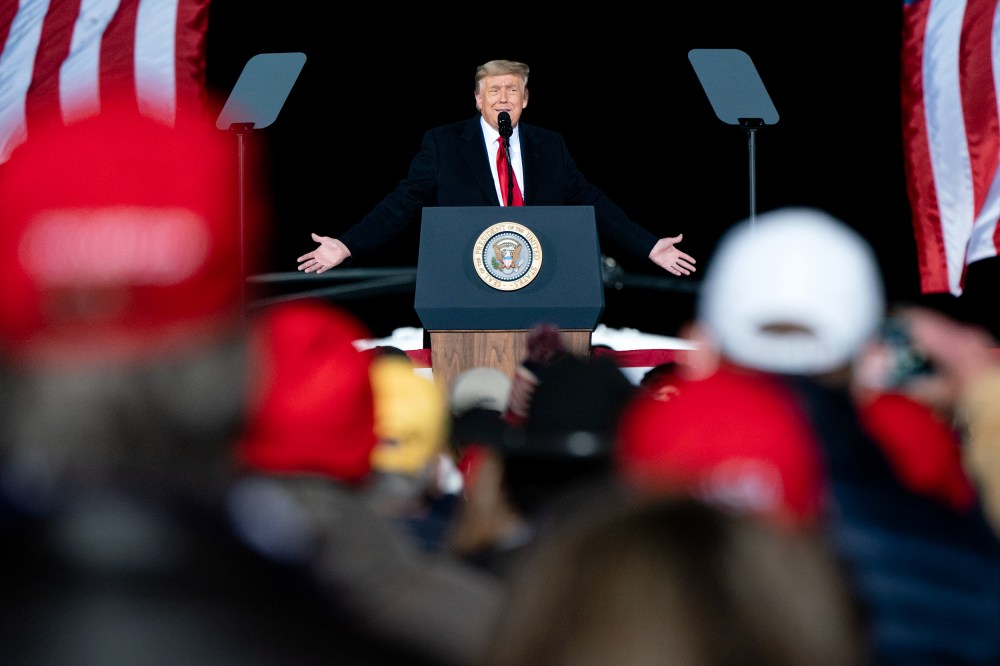
With control of the Senate at stake in the state’s two races, the president chose to spend weeks peddling baseless claims that Georgia’s electoral system was rigged, fueling an online movement to boycott Tuesday’s election. He demonized the state’s Republican leaders and fractured the local GOP. He ignored calls from his allies to rally in the state sooner. His support for Sens. Kelly Loeffler and David Perdue mainly came in the form of the occasional tweet and two rallies, including one on Monday. He blasted Senate Majority Leader Mitch McConnell for not heeding his calls for boosted stimulus checks.
Reflecting on Georgia’s results, one Republican strategist told Politico, “Trump is the cause of this, lock, stock and barrel.” Asked why the GOP incumbents struggled in Georgia, a senior Senate Republican aide added, “Donald J. Trump.”
The president’s intra-party critics clearly have a point. Loeffler and Perdue were flawed candidates — both were plagued by credible corruption allegations, non-existent records of accomplishments, and a message that was little more than incessant references to “socialism” — but if Trump had spent the last eight weeks quietly golfing, or perhaps even taking an interest in the deadly pandemic taking a brutal toll on his own country, the senators almost certainly would’ve been better positioned to prevail.
But the president had a different strategy in mind; his party spent two months enabling him; and the results speak for themselves.
The significance of these assumptions extends well beyond overnight election analysis.
Much of Trump’s perceived power in Republican politics is based on fear: GOP officials are expected to follow his lead because they’re afraid he’ll turn on them, and that fear leads the outgoing president to believe he’ll continue to effectively control the party, even after he exits the White House. Trump’s focus on the 2022 elections is already obvious, and he’s made little effort to hide his interest in next year’s Republican primaries. The New York Times reported around Thanksgiving that Trump intends to “retain control” of the GOP indefinitely, and if anything, that interest appears to have grown. And that’s what makes Georgia all the more significant. It’s a problem for the outgoing president that he campaigned for Loeffler and Perdue, and they appear to have come up short anyway, but it’s an even larger problem with the GOP’s circular firing squad deciding that Trump wasn’t just unable to save them, but was also largely responsible for their failures. The entire system of partisan incentives breaks down the moment Republicans stop fearing Trump and start blaming him.
Steve Benen is a producer for "The Rachel Maddow Show," the editor of MaddowBlog and an MS NOW political contributor. He's also the bestselling author of "Ministry of Truth: Democracy, Reality, and the Republicans' War on the Recent Past."
Latest Post
Recommended


