










Today’s edition of quick hits:
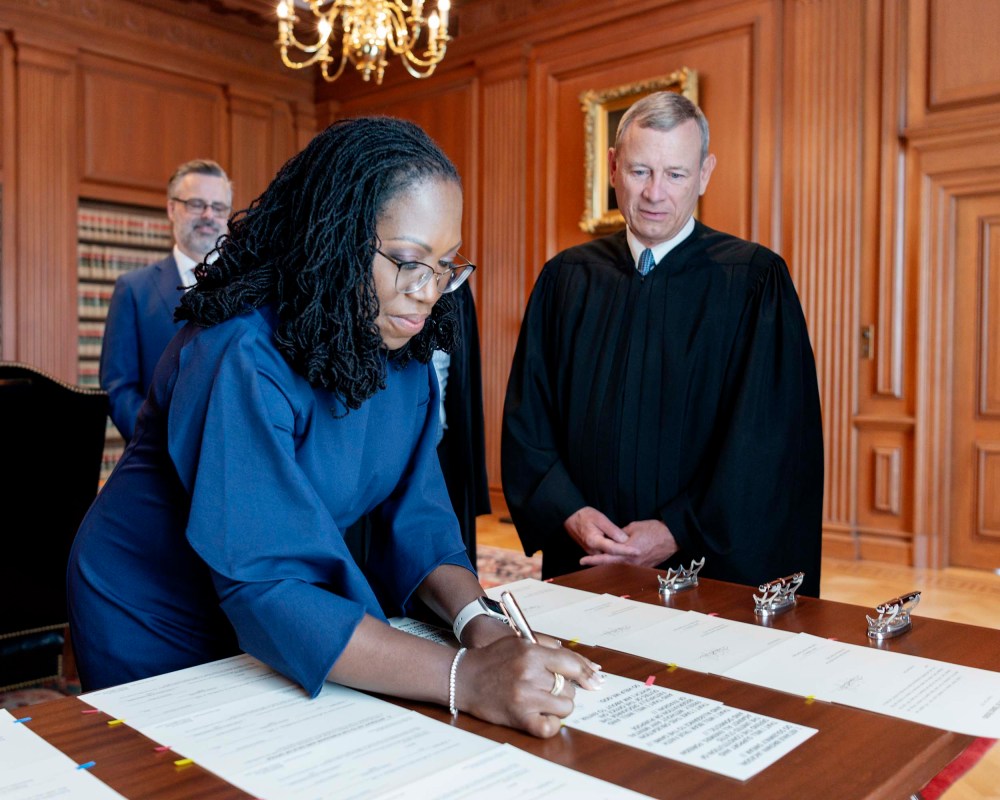
* There was at least some good news today: “Ketanji Brown Jackson was sworn in as a Supreme Court justice Thursday, making her the first Black woman on the nation’s highest court.”
* In Ukraine: “For weeks, the world’s attention has been fixed on the battle for Ukraine’s east, where Russian forces have been pressing a painstaking advance. But in the south, recent developments suggest Russia’s hold on territory it seized there may be increasingly fragile.”
* In related news: “The U.S. will make its biggest military expansion in Europe since the Cold War, including its first permanent troop presence in Poland, as NATO prepares for two more members to join the alliance in response to Russia’s invasion of Ukraine.”
* Today’s other big ruling: “The Supreme Court handed President Joe Biden a victory Thursday, ruling that he can shut down a Trump administration program designed to restrict immigration at the southern border. The court said in a 5-4 ruling that the Biden administration acted properly in seeking to end the ‘Remain in Mexico’ policy, formally known as the Migrant Protection Protocols.”
* For a variety of reasons, I wish the senator a speedy recovery: “Senate Democrats suddenly found themselves Thursday potentially without a critical vote they will need in their uphill effort to pass a major tax and spending reconciliation package before the August recess. Appropriations Chairman Patrick J. Leahy, D-Vt., broke his hip after taking a fall in his McLean, Virginia home Wednesday night and was scheduled for surgery to repair the fracture on Thursday morning, his office said in a statement.”
* Monkeypox news: “The Biden administration will begin sending out tens of thousands of vaccine doses to clinics nationwide in an effort to control a record U.S. monkeypox outbreak that many experts say is far larger than the official count of 306 cases, officials announced earlier this week.”
* What a ridiculous mess: “The Wisconsin Supreme Court on Wednesday effectively handed the Republican-controlled State Senate broad authority over the composition of state boards and commissions, three and a half years into the term of a Democratic governor whose duties include naming board members.”
* Longshot diplomacy: “Indirect talks between Iran and the U.S. have ended in Doha, Qatar, with no sign of a breakthrough in efforts to revive a 2015 nuclear deal, raising the risk of a potential confrontation with Tehran in coming months.” * An update on a story from yesterday: “Less than 24 hours after Saint Luke’s Health System announced will no longer provide emergency contraceptive to patients in Missouri, the group reversed its decision.” * Hmm: “Sean Dollman, who worked for former President Donald Trump’s 2020 campaign as chief financial officer, testified on Wednesday before the House select committee investigating the January 6, 2021, insurrection, CNN has learned. Dollman spoke for several hours with the committee over video conference behind closed doors.” * Newspapers remain the lifeblood of a democracy: “The pandemic has been bad for the country’s local newspapers. But maybe not as bad as some people have feared. Over 360 newspapers in the United States have gone out of business since just before the start of the pandemic, according to a new report from Northwestern University’s journalism school.” See you tomorrow.
Steve Benen is a producer for "The Rachel Maddow Show," the editor of MaddowBlog and an MS NOW political contributor. He's also the bestselling author of "Ministry of Truth: Democracy, Reality, and the Republicans' War on the Recent Past."
Latest Post
Recommended


