









In the 2016 presidential election, Donald Trump received 304 electoral votes to Hillary Clinton’s 227, but that’s not quite what voters intended. I’m not referring to the popular vote — which Clinton won by nearly 3 million ballots — but rather the electoral college itself, which in 2016 featured more than a few “faithless electors.”
Because of the United States’ convoluted system, several members of the electoral college decided to ignore Americans’ wishes and cast their own presidential votes — in effect, substituting their preferences for those of the electorate. It had no practical effect on the outcome, but the unprecedented incident served as a reminder that electors can choose to create constitutional chaos.
Can states address the problem by forcing electors to vote in accordance with the wishes of their state’s voters? According to a new U.S. Supreme Court ruling, the answer is yes.
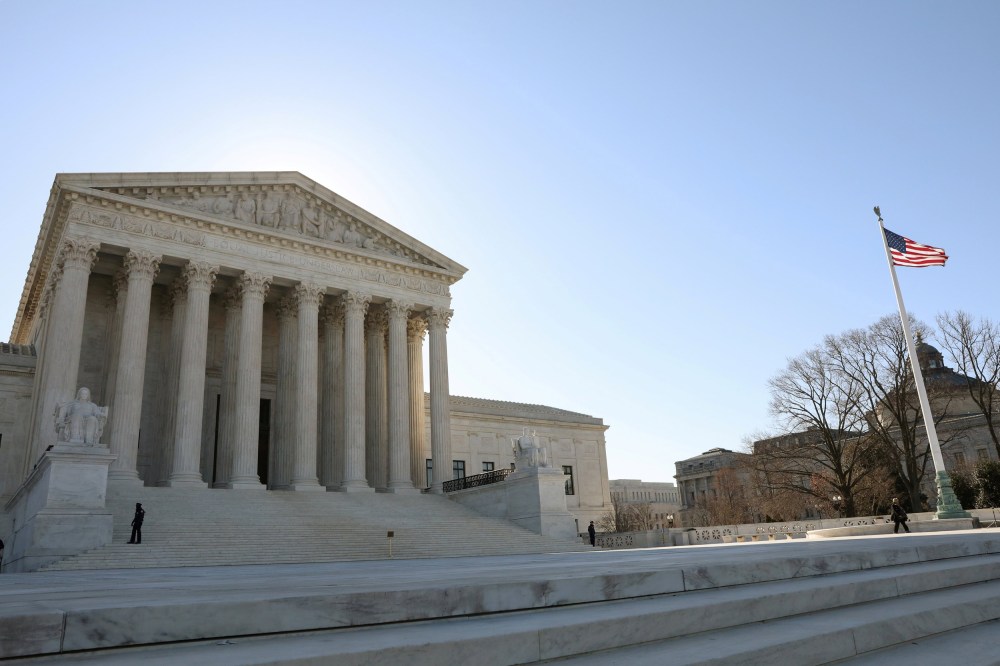
The 538 people who cast the actual votes for president in December as part of the Electoral College are not free agents and must vote as the laws of their states direct, the Supreme Court ruled Monday. The unanimous decision in the “faithless elector” case was a defeat for advocates of changing the Electoral College, who hoped a win would force a shift in the method of electing presidents toward a nationwide popular vote. But it was a win for state election officials who feared that empowering rogue electors would cause chaos.
The relatively short ruling in Chiafalo v. Washington is online here (pdf). Justice Elena Kagan wrote the opinion, concluding that the outcome aligns with “the trust of a nation that here, We the People rule.”
The fact that this case even existed serves as a reminder that our convoluted system is overdue for a common-sense overhaul. As you probably learned in your high-school civics class — and then proceeded to forget in the years since — when Americans cast a ballot in a presidential election, they’re not actually voting for a candidate or even a party ticket. They’re actually voting for electors to the electoral college, who are expected to support the candidate backed by their state’s electorate.
The plaintiffs in this case argued that they should be able to vote for whomever they want: the American system, they said, should allow for voters to choose electors, whom the public has never heard of, and it should fall to those people to exercise their own judgment with little regard for voters’ will. Lawrence Lessig, a law professor at Harvard, reportedly took up the case in order to expose the absurdity of the system, with the hopes that the case would in turn spark a meaningful reform effort. That effort will probably be delayed by today’s ruling. But I hope it isn’t delayed indefinitely. The anachronistic status quo is still tough to defend on the merits. In fact, I’m reminded of something Ezra Klein tweeted a couple of months ago, after the oral arguments in this case: “The problem: Allowing faithless electors strikes most people as crazy but not allowing faithless electors destroys the point of the electoral college. The obvious answer here is the correct one: Abolish the electoral college.”
Steve Benen is a producer for "The Rachel Maddow Show," the editor of MaddowBlog and an MS NOW political contributor. He's also the bestselling author of "Ministry of Truth: Democracy, Reality, and the Republicans' War on the Recent Past."
Latest Post
Recommended


