









Throughout the fall, there was ample talk about a looming “Christmas crisis” for American consumers, who’d soon confront empty shelves, delivery delays, and systemic supply-chain problems.
As The Washington Post’s Dana Milbank noted in his new column, Republican leaders and their allies seemed a little too eager to not only predict failure, but also to position the GOP to capitalize on the public’s difficulties and discontent.
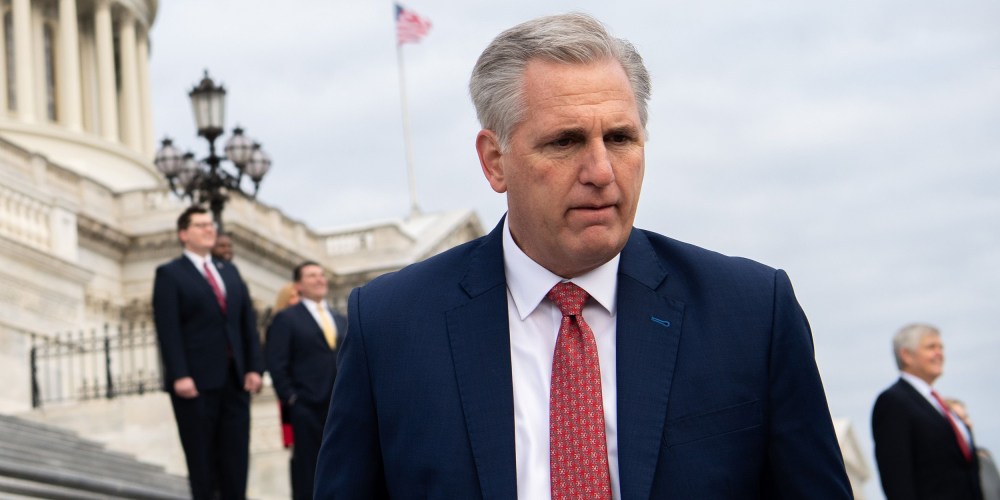
House Republican leader Kevin McCarthy joined 159 House Republicans in a letter to President Biden saying his policies “will certainly ensure that this Christmas will not be merry” because of a “supply chain crisis” and inflation. Chairman Jim Banks of the House Republican Study Committee, citing the same reasons, wrote to colleagues: “Our job as Republicans is to explain to the American people what the grinches at 1600 Pennsylvania Ave did to ruin Christmas.”
Note the lack of qualifiers. GOP leaders didn’t hedge their bets; they were convinced that Democratic policies would “certainly” be responsible for a holiday disaster. It was a matter of when, not if.
Steve Cortes, a former Trump campaign adviser, made related predictions in early October, warning of a “miserable” Christmas for American consumers. “I’m coining it [and] calling it the Biden Blue Christmas,” he added.
Two months later, these predictions aren’t exactly holding up well. The New York Times reported last week, for example, that the “Christmas crisis” never materialized. “[D]elivery companies have given consumers little to complain about,” the article noted. “By some measures, in fact, they have done a better job this holiday season than even before the pandemic.”
It may be tempting to think there were fewer breakdowns because fewer Americans were shopping, discouraged by higher prices and product supplies. But that’s also wrong. CNBC reported this week:
As shoppers kick off a wave of returns and exchanges or rush in to spend gift cards, retailers appear to have reason to celebrate: Holiday spending rose 8.5% compared with a year ago, according to Mastercard SpendingPulse. The gain was slightly less than the 8.8% increase that Mastercard had predicted, but it was the biggest annual increase 17 years. As we discussed last week, there are a variety of factors that contributed to the averted disaster. Major retailers and delivery companies planned ahead, for example, as did many consumers who shopped early. It didn’t hurt that the Biden administration has prioritized addressing supply-chain delays, which has helped make a difference. All of which brings us back to House Republican Study Committee Chairman Jim Banks and the memo he released to GOP lawmakers exactly 10 weeks ago today. The document not only made bold predictions about an abysmal holiday season, it included an indictment of sorts, making the case that specific Democratic policies were directly responsible for the looming consumer catastrophe. The same memo included marching orders: “Our job as Republicans is to explain to the American people what the grinches at 1600 Pennsylvania Ave did to ruin Christmas.” But Christmas wasn’t ruined. Shelves were stocked. There were no systemic delivery delays. Supply chain congestion has improved, thanks at least in part to the Biden administration’s efforts. With this in mind, perhaps Republicans can explain to the American people who saved the holidays from being “ruined,” and why GOP officials’ predictions turned out to be so wrong? If the president deserved the blame for a Christmas “crisis,” do McCarthy and Banks believe Biden also deserves the credit for the fact that the disaster was averted?
Steve Benen is a producer for "The Rachel Maddow Show," the editor of MaddowBlog and an MS NOW political contributor. He's also the bestselling author of "Ministry of Truth: Democracy, Reality, and the Republicans' War on the Recent Past."
Latest Post
Recommended


