










Asked this week about prolonged infrastructure talks, Sen. Joe Manchin (D-W.Va.) suggested he didn’t much care about dragging out bipartisan negotiations. “This is the long game, it’s not a short game,” the conservative Democrat told reporters.
As we discussed yesterday, Senate Dems took a similar approach 12 years ago on the Affordable Care Act. Indeed, there was a “Gang of Six” — a group of three Democratic senators and three Republican senators, led by then-Sen. Max Baucus (D-Mont.) — which was ostensibly focused on crafting a bipartisan health care reform package. The “gang” invested months into fruitless negotiations, in which Democrats pleaded for GOP votes that did not, and would not, materialize.
One Republican member of the “gang,” Wyoming’s Mike Enzi, later conceded that he negotiated with Democrats in bad faith, stringing Dems along and weakening the Affordable Care Act blueprint, though he didn’t have any intention of voting for it. Eventually, the Democratic majority recognized reality and approved their plan on their own, but not before moderate Dems wasted a precious resource: time.
As it turns out, Montana’s Baucus — like Manchin, a red-state centrist — spoke to Business Insider and suggested contemporary lawmakers choose a course different from the one he followed in 2009.
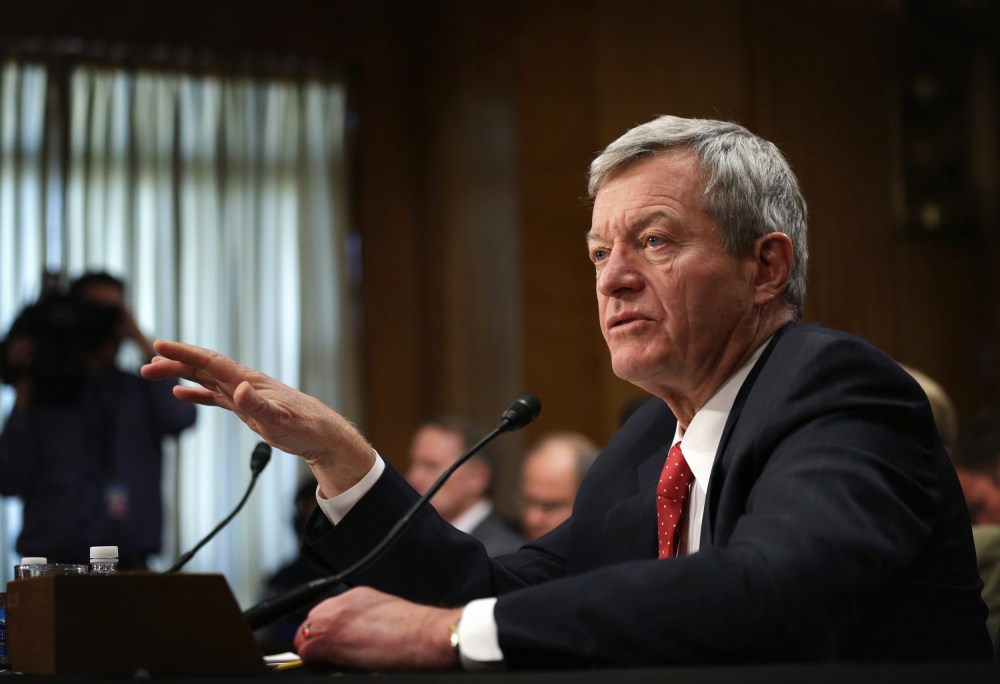
Max Baucus, a former Democratic senator and one of the architects of Obamacare, said in an interview that he was getting “somewhat” of a case of deja vu seeing the infrastructure discussions unfold. “I’d keep pushing forward as hard as I could, but there’s not much time left. I’d give it a month or so and then tell Schumer to push reconciliation,” the former Montana lawmaker said, referring to a legislative tactic available to Senate Majority Leader Chuck Schumer to approve some bills with only a simple majority.
“I doubt you’re going to see much bipartisanship in the end. Frankly, a lot of Republicans would rather not see a bipartisan bill,” the former senator added. “They say they would, but deep down they don’t.”
Baucus concluded, “I think you go as far as you can, but then there comes a time where the other side is just not seemingly negotiating in good faith, so you’ve got to stop and pass your own bill.” Remember, the Montanan is not a liberal, blue-state firebrand, known for waging partisan warfare; Baucus was basically the Joe Manchin of his day. And even he doesn’t see the point of wasting months begging 10 Republican senators to come around on infrastructure, reminding Democrats of the value of passing their own bill.
Steve Benen is a producer for "The Rachel Maddow Show," the editor of MaddowBlog and an MS NOW political contributor. He's also the bestselling author of "Ministry of Truth: Democracy, Reality, and the Republicans' War on the Recent Past."
Latest Post
Recommended


