








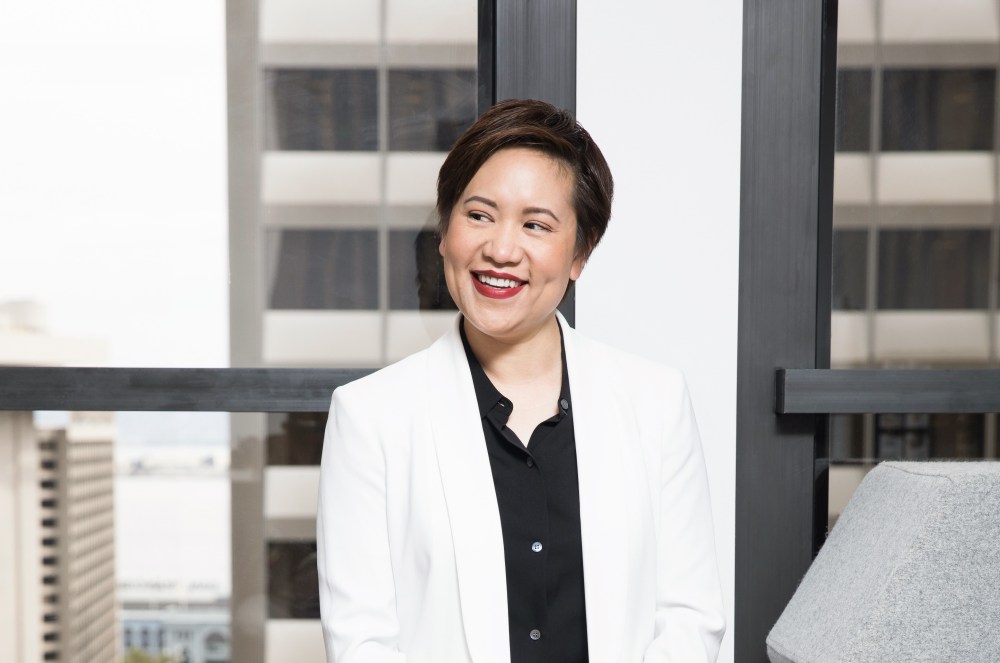
Asian women are the least likely to become executives across all genders and races. But thanks to women like Deborah Yeh, chief marketing officer at Sephora, there’s a new path being paved for the next generation of leaders.
“There are conversations around how do you behave as an Asian woman? What are people expecting of us? Are you a dragon lady, a hardcore professional, or are you a Lotus flower? And there’s an expectation of subservience,” said Yeh about the stereotypes of Asian women.
“We have to disrupt our ideas of what leadership looks like and what leadership sounds like.”
Yeh is doing just that. As CMO of Sephora, she has helped transform the brand into an inclusive, inspiring and educational beauty destination. Before joining Sephora in 2012, Yeh led marketing strategy and planning for companies including Old Navy and Target.
Yeh recently chatted with Know Your Value founder Mika Brzezinski about bringing greater diversity and inclusion into the workplace, how she built a career for herself without a generational roadmap, leading through a pandemic and more.
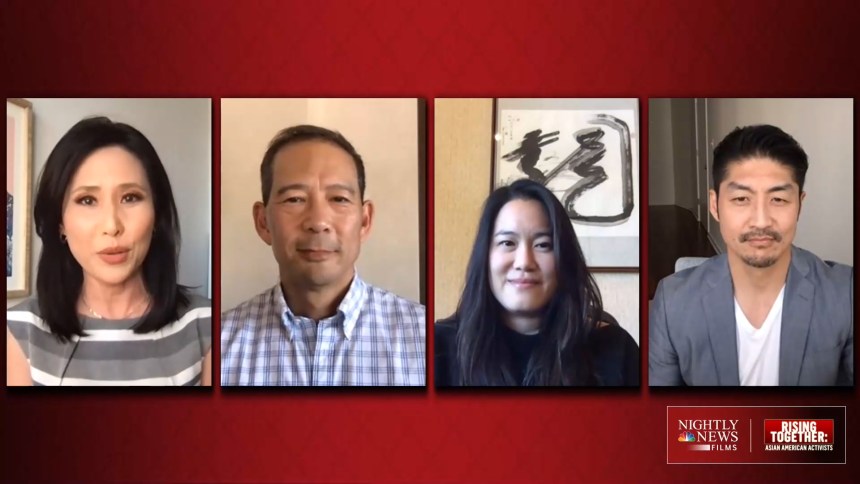
Here’s their conversation, which has been edited for brevity and clarity:
Mika Brzezinski: You’ve worked in both male-dominated industries (in tech) and female- and beauty-dominated industries, now with Sephora. How would you describe the different experiences? And how have women mentors impacted you versus men?
Deborah Yeh: I want to sing the praises of the benefits of being surrounded by women. But first I’ll give you a little bit of background.
I got my marketing start in the tech world. I worked in business marketing, supporting engineers, software developers. I also did marketing in consumer technology …Afterwards, I went to apparel and later took a role in beauty, and it was such a big change. I think when you are in these industries where you have the benefit of female leadership, female peers, there were just so many more opportunities for different role models …
I remember distinctly, I was pregnant with my first kid and I was an executive at the time. And I remember walking into my boss’s office, the CMO of Old Navy. And I was like, “I have to tell you something.” And she’s like, “OK, you’re pregnant.”

She said, “I’m going to tell you something. There is not a more powerful machine in the world of business than a working mother. So, when you’re ready, we are going to talk about the car seat that you need to get to get onto the plane. We’re going to talk about how you get out of here on time.” And I just felt so seen and supported in that moment. That was such a powerful moment for me in my career that I actually give the same speech to people today when they tell me they’re expecting … I do want to highlight how beneficial it can be if you have a choice, not everyone has a choice about what industry that they go into. But if you have the choice … find those environments that can support you.
Brzezinski: I know you’re doing a lot of important work with diversity, equity and inclusion at Sephora, including with the #StopAAPIHate campaign. I’m wondering, from the perspective of an Asian American, if that impacts the work and adds inspiration to it?
Yeh: It does absolutely. The conversation and tapping into my own identity, has been a gradual process and something that really came to the forefront last year.
I’ve been involved with my work at Sephora for a number of years on our efforts to create inclusivity and build a beauty community where everyone feels like they can belong, which has always been important to the brand … But what’s interesting is that my own personal positioning in those conversations had been one of allyship, of making sure that I understood the needs of all of the communities that Sephora was representing and serving, especially those that are most disadvantaged and challenged … And then the violence against the Asian-American community started to appear in the news just last spring. It was a moment of, wait a second. This is me, my grandparents …
So it’s interesting. I recently became more active in AAPI issues, not directly with Sephora [at first]. I actually went on my own learning journey last spring. A friend of mine called me up and said, “Hey, have you seen all the stuff that’s happening in hate crime? Can we get together some Asian-American marketers to start talking about this?”
I would have these calls on the weekends with other Asian-American marketing leaders to say, “OK, what can we do together to elevate these issues?” We started meeting more nonprofits in this space … And so, I met some amazing organizations, one of them is a group called Hollaback, which works on anti-harassment training. Another group was called Act to Change, and they’re focused on anti-bullying efforts for AAPI youth.
What has been wonderful though is now, especially after [the shooting in] Atlanta we’re having much more visible conversations … So, I’ve been able to actually weave this stuff back into my work at Sephora. For example, with Hollaback, I said, “Oh, you should meet my social media team. We’re actually moderating conversations all the time and trying to create safe digital spaces.” How do we actually take these principles of bystander intervention anti-bullying into the social media context? So, it’s been really rewarding to be able to connect the dots and yes, take what has been that personal journey into the professional environment.
Brzezinski: I’m curious, how did you get through the pandemic? And was there anything you learned about yourself, your leadership style, any real struggle that you confronted? We all confronted struggle, but was there one that really pushed you to pull on your skills? Yeh: I think the pandemic for me personally [forced me] to get over my tendency toward privacy. … But what I’ve learned in the pandemic is, first of all, the [work and personal life] barriers are completely gone. Everyone can see whatever’s going on in your life in the background, in this Zoom screen. But also, my team wanted to hear from me personally. I remember starting a newsletter for my department at this time. I’d always send some form of department mobile communication, but [it turned into] “I want to talk to you about the walk that I just took in the morning with my kids and how shocked we were that the streets were empty.” And “I want to talk about what I’m cooking in my kitchen right now, the bread that I’m making.” And it was so funny that people would actually respond to this and be like, “Hey, we relate to this. We appreciate hearing about real human lives.” So I think the pandemic for me as a leader made me realize how powerful that kind of connection is. … I understand this as a marketer, that there’s the power of story. But I didn’t necessarily apply it to my own life … And so I learned a little bit more to bring myself more fully into the office. Brzezinski: Or in other words, know your value and communicate it effectively. I love that you’re sharing. And I think I should now ask about your story and your upbringing. Yeh: … I was born in Chicago. I was a child of Chinese-American immigrants. Both of my parents were the first in their family to complete college. [My father became a doctor and my mom worked in the school system]. They did pretty well for themselves. My dad grew up in Chicago. My mom grew up in Chinatown. They both completed their schooling and really encouraged me to take my academic obligations seriously, but also to explore. They couldn’t tell me anything about business. But I had a grandfather who ended up in business. He was a street preacher in China during WWII and was “spotted” by some missionaries who suggested that he get further education in the US. So my grandfather and grandmother relocated temporarily to attend a seminary in Chicago. When they were ready to return East, China fell to the Communist party, and the political environment was tumultuous. The state department advised that the family not return. That is why my father’s side of the family ended up in the States. My grandfather had to figure out how to make a living, and he did it through pure hustle. And that is the reason why that side of the family stayed in the U.S. My grandfather ended up making a living by selling shoes. He saw that people were buying these sneakers and he was like “Well, I can figure this out.” He figured out a factory in Hong Kong that could manufacture sneakers and then walked himself into a bank and convinced the bank manager to give him a loan. The bank manager was like “Why should I help you out?” … My Grandpa said, “I don’t have anything. I have no money. I have nothing.” The bank manager took some pity on him and said “OK, fine. I’m going to take your first shipment as collateral. If you sell enough shoes, I will gradually release the inventory.” This is a very unusual arrangement (banks like securing their risk with actual money, not product inventory), but that one moment of grace made it possible for my grandfather to launch his business. And I tell the story because for me, my inheritance, I have a strong sense of just figure it out … I didn’t have parents who could call a friend at a country club to give me an internship. I remember coming out of college and not really knowing how to find a job. I went to the career center, I looked at the notebooks and wrote cover letters because I didn’t know how to do it. But I did have in my background family members and people and role models who could show that you can kind of improvise your way to success. If you have enough grit, focus and a little help from people willing to help you out … Brzezinski: In closing, I want to ask about the makeup … How are you guys selling makeup and marketing makeup in this pandemic world? Has it all moved to social media? Have things changed? Yeh: I think it changed, even before the pandemic. What’s interesting is people are finding new ways to discover products, new beauty routines, new beauty hacks in so many new ways … It all happened pre-pandemic. Over the years, Sephora actually became more of a content company than just a store. We have a whole crew of beauty directors, influencers. They’re not just there to help you find your next lipstick, but maybe even “OK, if you have this skin tone, this kind of hair texture, this kind of eye shape, we’re going to help you navigate this exciting, but complex world. We’ll help you find the right thing.” So, it’s been a fun journey to be a part of. I think certainly the pandemic accelerated it.
Know Your Value staff Recommended


