










By most measures, Republican candidates fared very well in Georgia’s elections yesterday, winning key contests up and down the ballot. That includes incumbent Gov. Brian Kemp, who faced a tough challenge from Democrat Stacey Abrams, but who ended up prevailing by nearly eight points.
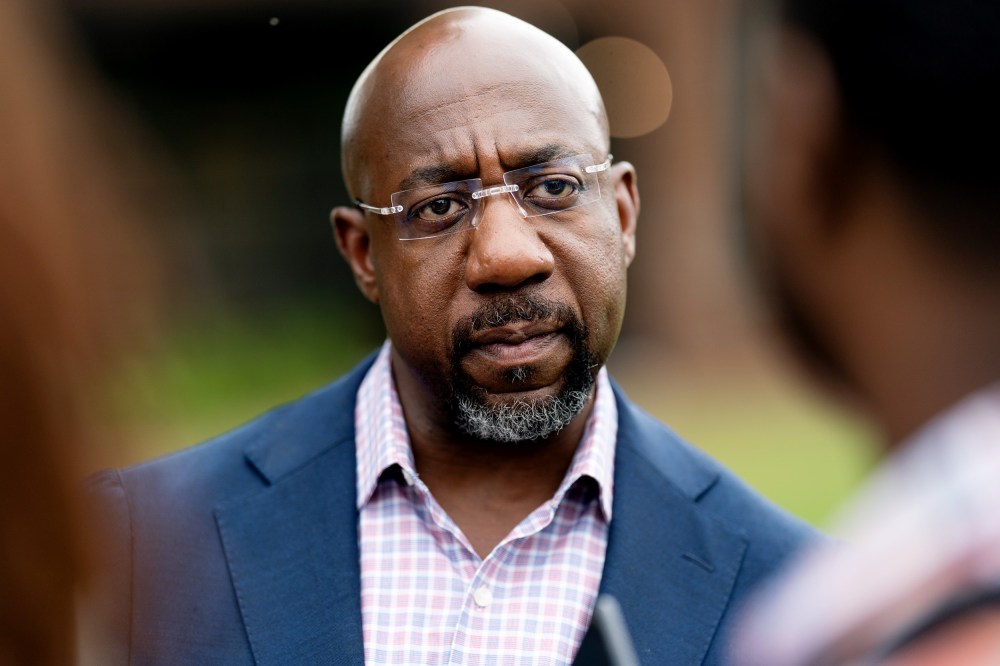
The exception, of course, was the U.S. Senate race, where incumbent Democratic Sen. Raphael Warnock narrowly finished ahead of Republican Herschel Walker. It was a striking reminder that, at least in some instances, candidates matter.
But while Warnock is no doubt pleased to have received more votes, he fell short of a majority — and in Georgia, in order to win, a plurality isn’t good enough. As NBC News reported, that means the senator and his hapless rival are headed for a runoff.
The Georgia Senate race is headed to a runoff, NBC News projected Wednesday, with neither Democratic Sen. Raphael Warnock nor Republican challenger Herschel Walker topping the necessary 50% required under state law to win on the first ballot. The runoff will take place on Dec. 6, according to the Georgia secretary of state’s office.
This will unfold fairly quickly, with early voting just a few weeks away.
If the circumstances seem a little familiar, it’s not your imagination: After the 2020 elections, both of Georgia’s Senate races went to runoff elections. Democrats won both, resulting in a narrow Democratic majority in the chamber.
The question now is whether another Georgia Senate runoff will again dictate which party has control.
As things stand, the overall national map shows Democrats and Republicans tied with 48 seats each. (Technically, there are two independents who caucus with Democrats, but to simplify matters, let’s put that aside for now.) That leaves four Senate contests that have not yet been called.
One of the four is Alaska’s race, where the Democratic candidate is not competitive, and where a Republican victory is all but assured. That narrows the focus to Arizona, Georgia, and Nevada.
If Democrats end up winning two of these three races, they’ll have a 50-seat majority — which is to say, another 50-seat majority — in the next Congress. If Republicans end up winning two of these three races, they’ll end up in the majority. So, what’s going to happen? It’s difficult to say with confidence, but here’s where things stand: To go ahead and state the obvious, if Kelly and Cortez Masto prevail, Democrats will hold onto their majority no matter what happens in Georgia’s race. If Masters and Laxalt win, Republicans will have won a majority. But if the parties split the Arizona and Nevada races, control of the Senate will come down to a final Warnock-Walker contest. Watch this space.
Steve Benen is a producer for "The Rachel Maddow Show," the editor of MaddowBlog and an MS NOW political contributor. He's also the bestselling author of "Ministry of Truth: Democracy, Reality, and the Republicans' War on the Recent Past."
Latest Post
Recommended


