










At first blush, reporting on wealthy conservative donors financing Republican campaigns hardly seems new. A decade ago, for example, the race for the GOP presidential nomination appeared to be as much a competition between billionaires as a race between candidates.
Indeed, in recent years, wealthy mega-donors not only used their fortunes to become power players, they became prominent political figures in their own right. Those who followed public affairs came to know names like Sheldon Adelson, Foster Friess, Robert Mercer, and the Koch brothers.
What went unsaid, however, was that each of these contributors were relatively conventional in their partisan endeavors. They wanted to elect Republicans to do Republican-style things. Though there were occasional differences in priorities and style, those who financed GOP campaigns had orthodox expectations when considering returns on their investments. They envisioned a model in which they’d put money behind Republicans, and Republicans in turn would work on tax breaks for those who financed their ambitions.
By all appearances, Peter Thiel is … different.
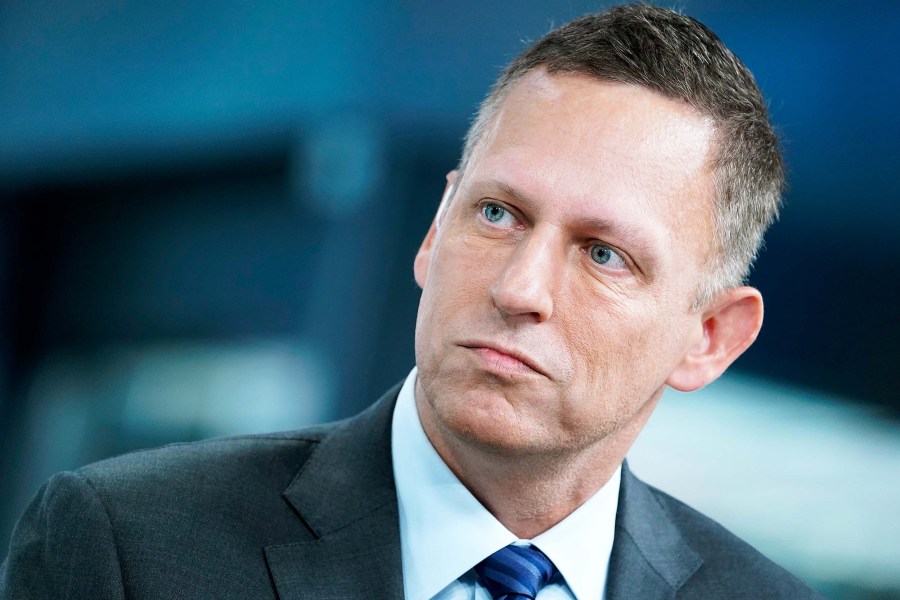
For a while, Thiel was principally known for his work in the tech industry. He helped create PayPal, for example, and was an early investor in Facebook.
In the years that followed, Thiel took a greater interest in sharing his thoughts about politics, economics, and even theology. In 2009, he even wrote an essay complaining about too many American voters standing in the way of the kind of free-market reforms he supports. “I no longer believe that freedom and democracy are compatible,” Thiel argued at the time.
It’s against this backdrop that the billionaire has become, as The New York Times explained in a fascinating piece yesterday, “a prime financier of the Make America Great Again movement.” That includes a specific focus on supporting not just Republicans, but Republicans of a Trumpian mindset. What sets Mr. Thiel’s spending apart … is its focus on hard-right candidates who traffic in the conspiracy theories espoused by Mr. Trump and who cast themselves as rebels determined to overthrow the Republican establishment and even the broader American political order. These campaigns have raised millions in small-dollar donations, but Mr. Thiel’s wealth could accelerate the shift of views once considered fringe to the mainstream — while making himself a new power broker on the right.
To date, Thiel has backed 16 Republican candidates — many of whom peddle the lie that Donald Trump won the 2020 race — to the tune of more than $20.4 million. No one will be surprised if these totals grow in the coming months. But what’s jarring is not the number of millions or even the number of far-right candidates. It’s the larger context: A billionaire who’s expressed public skepticism of democracy is working to elect likeminded Republicans, as part of a broader ideological struggle. From the article: Unlike traditional Republican donors who have focused on their party’s winning control of Congress and the White House, Mr. Thiel has set his sights on reshaping the Republican agenda with his brand of anti-establishment contrarianism, said Stephen K. Bannon, Mr. Trump’s former chief strategist. “I don’t think it’s just about flipping the Senate,” said Mr. Bannon, who has known Mr. Thiel since 2016. “I think Peter wants to change the direction of the country.”
The Times quoted Lee Drutman, a senior fellow at the left-leaning group New America, explaining, “When you have a funder who is actively elevating candidates who are denying the legitimacy of elections, that is a direct assault on the foundation of democracy.”
Steve Benen is a producer for "The Rachel Maddow Show," the editor of MaddowBlog and an MS NOW political contributor. He's also the bestselling author of "Ministry of Truth: Democracy, Reality, and the Republicans' War on the Recent Past."
Latest Post
Recommended


