









Over the summer, Politico was first to report on a curious contract from the Department of Health and Human Services. The idea, evidently, was to spend hundreds of millions of dollars — in public funds — to “defeat despair and inspire hope” about the coronavirus pandemic.
At face value, it appeared to be a political effort to make Americans feel better about an ongoing catastrophe during Donald Trump’s re-election campaign. As Politico noted in a new follow-up report, those appearances reflected reality.
The Trump appointee who steered a $300 million taxpayer-funded ad campaign to “defeat despair” about the coronavirus privately pitched a different theme last month: “Helping the President will Help the Country.” That proposal, which came in a meeting between Trump administration officials and campaign contractors, is among documents obtained by the House Oversight Committee that further illustrate how political considerations shaped the massive campaign as officials rushed to get public service announcements on the air before Election Day.
This controversy coincides with new reporting on the Interior Department promoting a pre-election video touting the incumbent president’s “historic feats for conservation.” TPM reported yesterday:
On Tuesday, Interior Secretary David Bernhardt posted a video to his official Twitter account featuring majestic images of national parks, birds, mountains and plains over text praising the Trump administration…. Tim Fullerton, who served as the director of digital strategy for the Interior Department during the Obama administration, decried the video as “propaganda” and said he would’ve been fired if he posted similar content when he ran the Interior’s digital team in 2012.
And shortly after I read that report, I saw this item on Vox.
Just a week before the election, Trump’s National Security Adviser Robert O’Brien is visiting key swing states in what appears to be a naked attempt to boost his boss’s re-election chances — a move some say is consistent with a broader administration campaign.
In isolation, each of these stories are important and noteworthy on their own. But as Election Day nears, it’s the pattern that’s worth appreciating.
The last 24 hours pointed to examples of the Interior Department, HHS, and the office of the White House national security advisor taking dubious steps to help Trump at a politically convenient time. But they’re hardly the only examples.
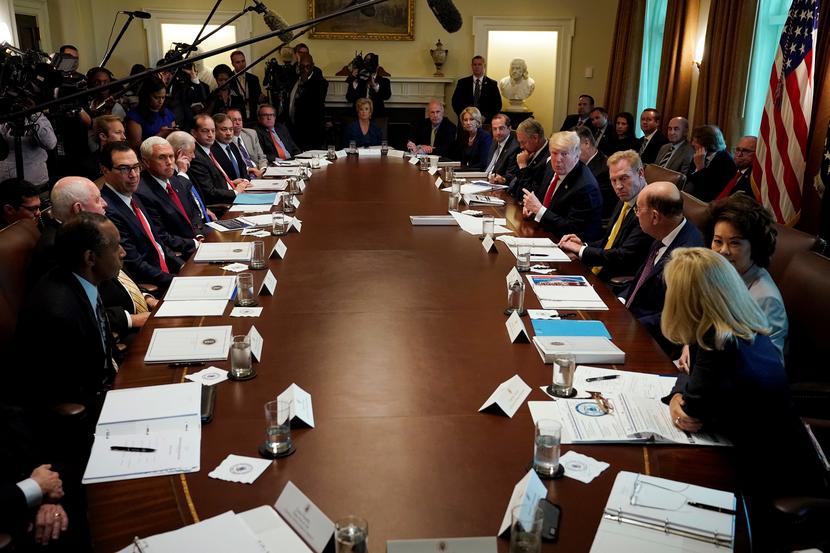
Secretary of State Mike Pompeo has appeared a little too eager to use the State Department to help the president’s re-election efforts — to the point that the cabinet secretary is now facing multiple ethics investigations. Trump has abandoned all subtlety while pressing Attorney General Bill Barr to use the Justice Department to help his campaign, too. Director of National Intelligence John Ratcliffe is facing accusations of using his office to help the Trump campaign, and according to a recent investigation launched by the Office of Special Counsel, Agriculture Secretary Sonny Perdue “improperly used his position to push the president’s re-election.” There are federal ethics laws written to prevent these kinds of activities, but Team Trump has already made clear that it does not care about these legal limits. The result is a blurring of the lines between the president’s cabinet and the president’s re-election campaign.
Steve Benen is a producer for "The Rachel Maddow Show," the editor of MaddowBlog and an MS NOW political contributor. He's also the bestselling author of "Ministry of Truth: Democracy, Reality, and the Republicans' War on the Recent Past."
Latest Post
Recommended


