









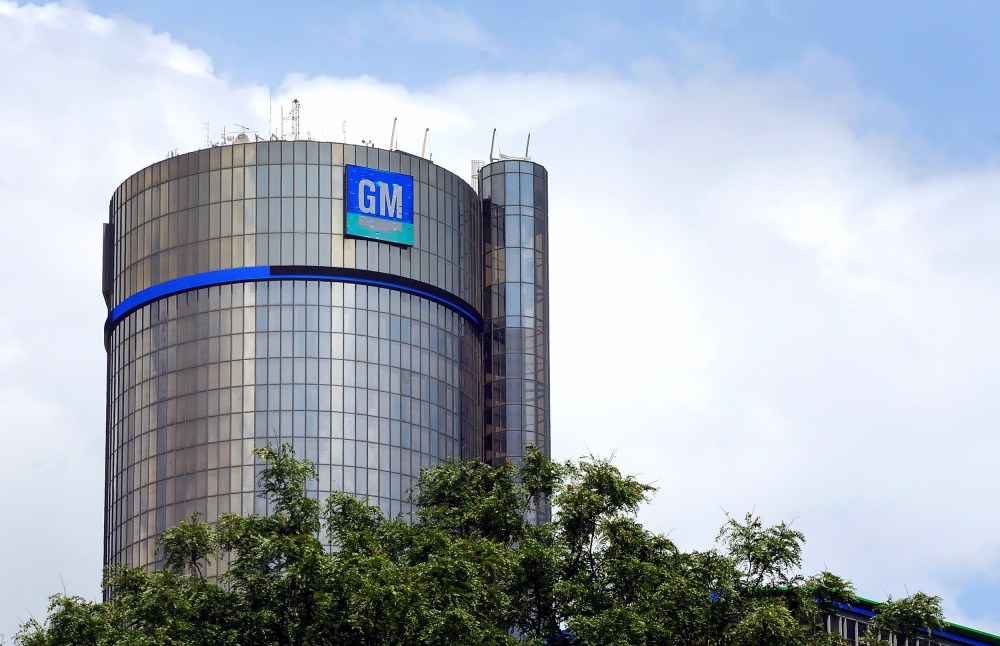

Between defeats at the ballot box and in the courts, Donald Trump has struggled through a difficult November. But as NBC News reported, among the most important of the outgoing president’s post-election defeats came at the hands of General Motors.
General Motors said Monday it has reversed course and no longer supports President Donald Trump’s plan to prevent California from setting its own automotive emissions standards…. In a letter sent to environmental groups Monday, GM CEO Mary Barra said the automaker was “immediately withdrawing from the pre-emption litigation and inviting other automakers to join us.”
For those who may need a refresher, let’s review how we arrived at this point.
In Barack Obama’s first term, the Democratic administration came to a fairly obvious conclusion: to address the climate crisis, we’re going to need to reduce emissions, and in the United States, the #1 source of carbon pollution is transportation. With that in mind, the White House created tough fuel-efficiency standards for the auto industry, to be phased in gradually.
Manufacturers, not surprisingly, weren’t thrilled, but there was a broad realization that the policy, in conjunction with a series of related efforts, would make a positive difference.
Then Donald Trump got elected. In 2018, the Republican White House announced plans to roll back the tougher standards, making it easier for the automotive industry to sell less efficient vehicles that pollute more. (By way of a defense, the Trump administration said the new policy would improve auto safety — which, as we discussed at the time, made no sense at all.)
Trump assumed he was helping the industry at the expense of the environment — a trade-off he was happy to make since he rejects climate science anyway. The trouble for auto makers, however, was that the Republican was so aggressive in gutting pollution safeguards that many states announced plans to enforce stricter standards on their own, raising the untenable prospect of the industry having to make different vehicles for different parts of the country.
When California — the nation’s largest consumer market — announced tough standards, auto manufacturers urged the White House to work out a compromise. Team Trump instead announced that California should no longer have the authority to establish carbon-emission policies.
Once the litigation started, the industry splintered, with Ford and BMW among those siding with California and its stricter standards, while Toyota and Fiat Chrysler sided with the Trump administration in support of a looser national standard.
Originally, General Motors partnered with the latter contingent. This week, in the wake of Joe Biden’s victory, GM switched sides. It may not be alone: Toyota issued a statement saying it’s “assessing the situation.” This matters, of course, not just as an embarrassing setback for Trump — he assumed GM would stand by him — but also as a signal of the industry’s plans to deal with the incoming Democratic White House and its ambitious plans to address the climate crisis. And on that front, General Motors is now saying the right things. From the NBC News report: [GM CEO Mary Barra] has ordered the automaker to accelerate its move down what she frequently refers to as “a path to an all-electric future.” In recent months, the company has unveiled an assortment of new battery-electric vehicles, or BEVs, including the Chevrolet Bolt EUV, the Cadillac Lyriq SUV and the GMC Hummer pickup. Last week, GM announced it was increasing spending on EVs and autonomous vehicles by 35 percent over prior, mid-decade plans…. GM has laid out one of the most aggressive electrification programs in the industry, with plans to bring “20 or more” BEVs to market by 2023, and even more through the rest of the decade. This isn’t the path Donald Trump has in mind, but his perspective is a whole lot less relevant than it was a few weeks ago.
Steve Benen is a producer for "The Rachel Maddow Show," the editor of MaddowBlog and an MS NOW political contributor. He's also the bestselling author of "Ministry of Truth: Democracy, Reality, and the Republicans' War on the Recent Past."
Latest Post
Recommended


