









As the Israel-Hamas war continues, the United States is at a diplomatic disadvantage: There is currently no Senate-confirmed U.S. ambassador to Israel.
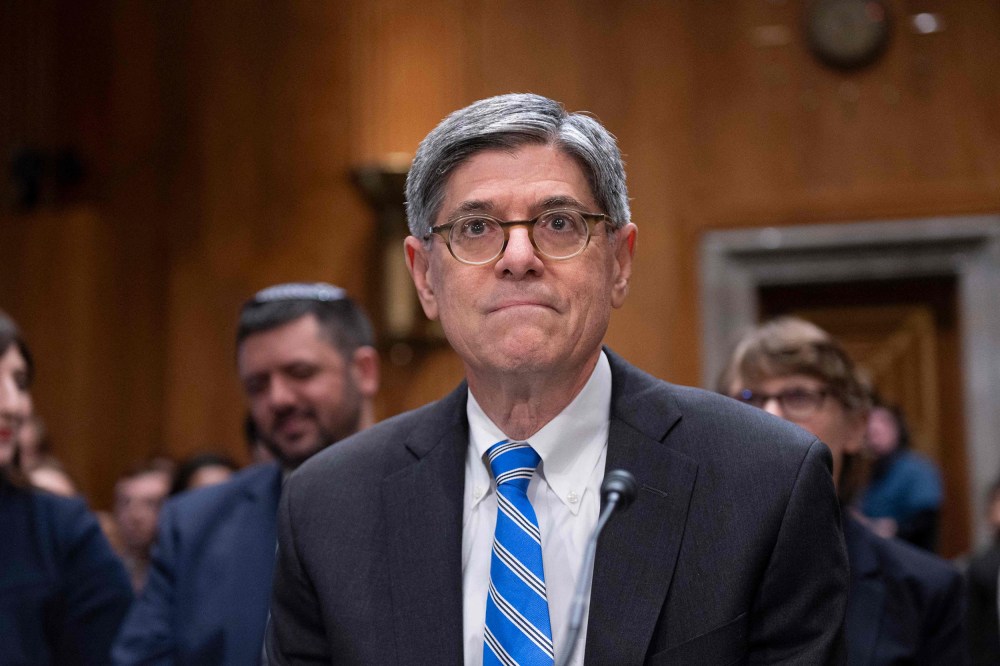
The Biden administration recently nominated Jack Lew for the position, and as we recently discussed, under normal circumstances Lew’s nomination would be a no-brainer. His resume is extraordinarily impressive — Lew has served as the White House budget director, White House chief of staff, and Treasury secretary — and he’s already been through the Senate confirmation process more than once, receiving bipartisan backing.
It was against this backdrop that the Senate Foreign Relations Committee held a confirmation hearing for Lew roughly 24 hours ago. As Roll Call reported, the nominee faced considerable skepticism from the panel’s Republican minority.
Senate Republicans on Wednesday voiced reservations about the Biden administration’s nominee to be the new ambassador to Israel at one of the most perilous times in the country’s history. … The last time he was up for a Senate confirmation vote in 2013, to become Treasury secretary, Lew was confirmed 71-26, but his next vote could be much narrower, given how deep GOP antipathy has grown in the ensuing years to any Democratic officials who work on Iran-related policy.
Indeed, much of the committee hearing focused on Lew’s role in the 2015 international nuclear agreement with Iran, known as the Joint Comprehensive Plan of Action, or JCPOA.
For Republicans, the calculus is simple: They opposed the JCPOA; Lew helped make the policy possible; and GOP members are therefore balking at his pending nomination.
Meanwhile, away from Capitol Hill, Donald Trump is using his social media platform to publish strange messages like this one from earlier this week: “IRAN IS RAPIDLY BUILDING A LARGE SCALE ARSENAL OF NUCLEAR WEAPONS. … Three years ago, under ‘TRUMP,’ Iran was BROKE — NO NUCLEAR WEAPONS, OR PROSPECTS.”
This comes on the heels of Trump bragging in June about having “terminated the Iran nuclear deal.”
What the former president and Republicans on the Senate Foreign Relations Committee have failed to appreciate is that the JCPOA policy was working — and Trump made matters worse when he abandoned it.
As regular readers know, I periodically like to bang my head against this particular wall, but I think the political world should pause periodically to come to terms with just how severe the consequences of Donald Trump’s policy toward Iran have been. Let’s revisit our earlier coverage and take stock.
It was Joe Cirincione, whose expertise in international nuclear diplomacy has few rivals, who wrote a piece for NBC News two years ago explaining that the international community has been tasked with trying to “undo the damage Donald Trump caused when he left an agreement that had effectively shrunk Iran’s [nuclear] program, froze it for a generation and put it under lock and camera.”
I continue to believe this is an underappreciated truth. The international agreement with Iran did exactly what it set out to do: The policy dramatically curtailed Tehran’s nuclear ambitions and established a rigorous system of monitoring and verification. Once the policy took effect, each of the parties agreed that the participants were holding up their end of the bargain, and Iran’s nuclear program was, at the time, on indefinite hold.
And then Trump took office and got to work abandoning the policy for reasons he was never able to explain.
The West lost verification access to Tehran’s program, and Iran almost immediately became more dangerous by starting up advanced centrifuges and ending its commitment to limit enrichment of uranium.
Earlier this year, the Pentagon told Congress that Iran could make enough fissile for one nuclear bomb in “about 12 days” — as opposed to the year it would’ve taken while the 2015 Iran nuclear deal was in effect. As part of his testimony to the House Armed Services Committee in March, Colin Kahl, the then-under secretary of Defense, explained that Iran’s nuclear progress since Trump abandoned the international nuclear agreement has been “remarkable.” The testimony came about a year after Robert Malley, the then-special envoy for Iran, told the Senate Foreign Relations Committee that after Trump’s decision, Iranian attacks on U.S. personnel in the region got worse, Iranian support for regional proxies got worse, and the pace of the Iranians’ nuclear research program got “much worse.” The fact that Trump did this for no reason adds insult to injury. One of my favorite stories about the Iran deal came a few months into Trump’s term in the White House, when the then-president held a lengthy meeting with top members of his team: Secretary of State Rex Tillerson, Defense Secretary James Mattis, White House National Security Adviser H. R. McMaster, and Chairman of the Joint Chiefs of Staff General Joseph Dunford. Each of the officials told Trump the same thing: It was in the United States’ interest to preserve the existing JCPOA policy. The Republican expected his team to tell him how to get out of the international agreement, not how to stick with it. When his own foreign policy and national security advisers told him the policy was working, Trump “had a bit of a meltdown.” Soon after, he abandoned the JCPOA anyway, not because it was failing, but because Trump was indifferent to its success. Now, Republicans are holding a successful policy against Lew, and the former president is pretending he didn’t make a terrible mistake. Those who care about factual details know better. This post updates our related earlier coverage.
Steve Benen is a producer for "The Rachel Maddow Show," the editor of MaddowBlog and an MS NOW political contributor. He's also the bestselling author of "Ministry of Truth: Democracy, Reality, and the Republicans' War on the Recent Past."
Latest Post
Recommended


