










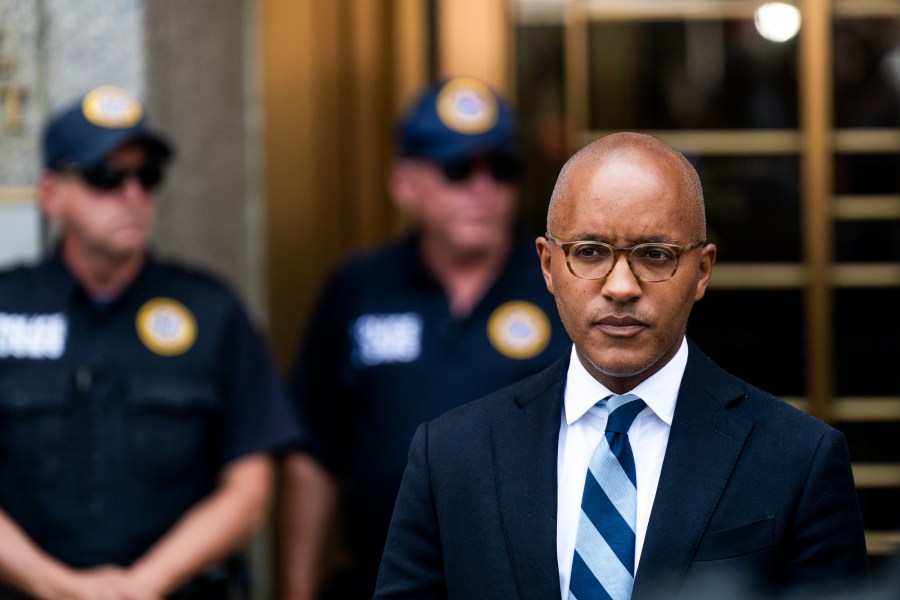
If you’re not a regular court watcher, you’d be forgiven for having no idea who — or even what — the U.S. attorney for the Southern District of New York is. But chances are, you’re familiar with at least one of his recent cases. That’s because United States Attorney Damian Williams has brought two of the highest-profile criminal cases in the country — at the same time.
In a less than two-week span, Williams charged rapper and entertainment mogul Sean “Diddy” Combs with a racketeering conspiracy centered on his alleged sexual abuse and trafficking of multiple victims over nearly 15 years, and then, just days later, he indicted New York City Mayor Eric Adams, accusing him of an almost decade-long conspiracy centered on his alleged solicitation and acceptance of illegal campaign contributions and bribes in the form of free or heavily discounted luxury trips abroad, all in exchange for favors for the Turkish government. (Both defendants have pleaded not guilty in their respective cases. Adams is seeking to have the bribery charge against him dismissed.)
That Williams’ office has managed to bring two cases of this magnitude so close in time probably won’t surprise anyone who’s traced his “compelling biography.” His resume is one of legend: Born to Jamaican parents in Brooklyn before moving to Atlanta, Williams attended Harvard, Cambridge and Yale Law School. And then he began his ascent to the tippy-top of the legal elite: clerkships for now-Attorney General Merrick Garland, who was a federal appeals court judge at the time, and for then-Supreme Court Justice John Paul Stevens; a stint at Paul Weiss, one of the country’s most prestigious — and liberal-leaning — law firms; and a coveted position as an assistant U.S. attorney in the Southern District of New York, which encompasses Manhattan and the Bronx, along with six suburban and even exurban upstate counties.
That Combs and Adams are the only defendants in their cases — at least for now — strikes me as deliberate, clever, methodical and ambitious.
SDNY, as the office is known, is also occasionally referred to as the “Sovereign District” for its historic independence, as well as its size (Williams supervises around 220 lawyers), the quality of its lawyers, and the sophistication of its cases. But even in the nation’s premier U.S. attorney’s office, Williams distinguished himself, focusing on “white collar cases involving corruption in financial markets and politics” before becoming the chief of the securities unit. And he was still holding that civil-service role — as opposed to retreating to a cushy law firm partnership — when President Joe Biden nominated him to be U.S. attorney. Upon his confirmation, he became the first Black person in SDNY’s then-234-year history to lead the office.
Williams left no brass ring behind during his ascent. But if his background reads like an impeccable execution of “How to Succeed In Law By Being Brilliant and Personable,” he now seems determined to leave his own mark on SDNY. How? By prosecuting major political and cultural figures for yearslong alleged crimes, irrespective of their power and party and perhaps more importantly, without other defendants.
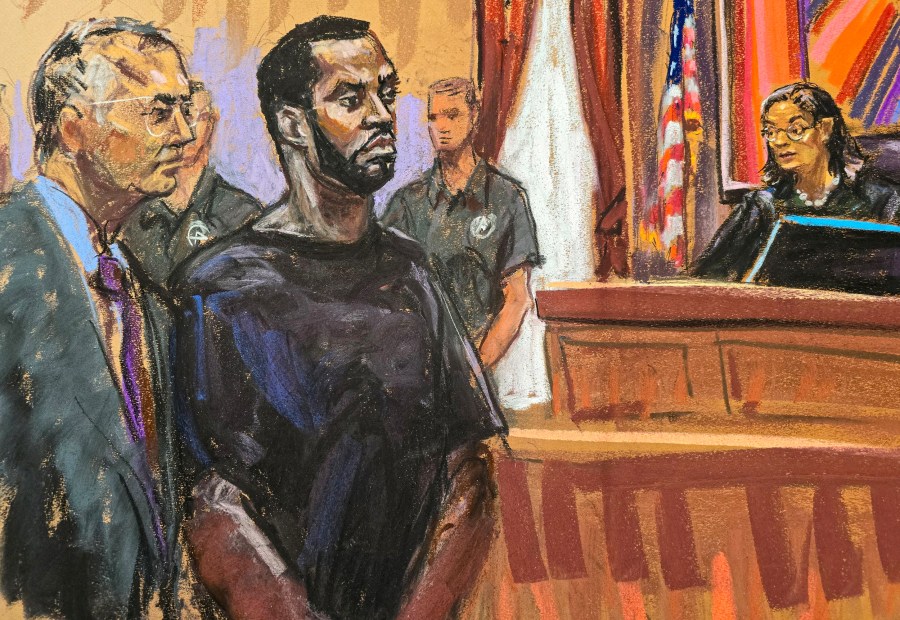
Take the Combs case, for example. The whole point of a Racketeer Influenced and Corrupt Organizations Act, or RICO, case is to shut down an “enterprise” — which may or may not be an actual business or organization — through which multiple individuals, or “members,” commit multiple crimes. Put another way, there can be no RICO charge without an allegation that several people participated in the alleged wrongdoing. But Combs is the sole defendant in his RICO case. And while one or more cooperating witnesses may already have pleaded guilty under seal, Adams — the literal head of the city — is similarly the only defendant named in his case despite the 57-page indictment describing, by function, more than 20 others involved in his alleged scheme without using their real names (e.g., “Adams Fundraiser,” the “Promoter,” the “Turkish Official,” etc.).
That Combs and Adams are the only defendants in their cases — at least for now — strikes me as deliberate, clever, methodical and ambitious, all words former colleagues have used to describe Williams. What makes me say that?
One former colleague of Williams told me she … was surprised — and impressed — by just how much hard evidence SDNY already has. First, charging Combs and Adams alone reflects an understanding of each man’s empire and their respective holds over their alleged co-conspirators and witnesses, albeit for different reasons. The usual order of operation — locate the little guys first, flip ’em, and repeat up the chain of command — doesn’t apply when most everyone involved is professionally and financially dependent on the kingpin or legitimately fears for their safety and security. And in such circumstances, key individuals might not come to the table until an indictment hits and they can see not only how serious prosecutors are about putting the boss away but can more concretely assess their own criminal exposure. Second, while accumulating cooperating witness (and/or victim) testimony is almost always desirable for trial, the increasingly electronic nature of our lives has transformed prosecutions — and Williams’ own roots in complex financial crimes reflect that evolution. As he investigated those cases, he likely scoured trading histories, phone call records, video surveillance and the like. My guess is that Williams knows well how a case can be built on and around the data available through seized devices and third-party subpoenas. And indeed, both the Combs and Adams indictments rely heavily on the kinds of evidence found on cell phones and computer servers: copious text messages and email trails, video and voice recordings, social media posts, airline tickets and hotel reservations. One former colleague of Williams told me she expected the Combs indictment to be detailed, but was surprised — and impressed — by just how much hard evidence SDNY already has. Of course, not everyone sees the Combs and Adams indictments as emblematic of a change in investigative methods or prosecution strategy, or of Williams’ influence alone. Another former Williams colleague told me that from his vantage point, what links the two cases most is a focus on “big scalp hunting.” A third former colleague suggested that the breadth and depth of evidence cited in the indictments might reflect not just Williams’ vision but the investigative resourcefulness of Andrea Griswold, his former deputy who left SDNY in June. All three former prosecutors agreed to speak on the condition of anonymity as they have or may have business before the office. Either way, Damien Williams has come for the kings. Both defendants have signed up lawyers who actually try criminal cases, rather than resolving them through plea deals. Thankfully for Williams, SDNY rarely misses.
Lisa Rubin is MS NOW's senior legal reporter and a former litigator.
Latest Post
Recommended


