









Senate Republicans haven’t yet voted down any of Donald Trump’s nominees, but up until fairly recently, Tulsi Gabbard’s nomination to serve as director of national intelligence appeared to be in real trouble.
Two months ago, for example, the former Hawaii congresswoman reportedly struggled during her preliminary meetings with unimpressed senators, one of whom was quoted as saying there were “a lot of eyerolls” from members who sat down with Gabbard. A month later, there was similar reporting about her apparent “confusion” about things she really should’ve known.
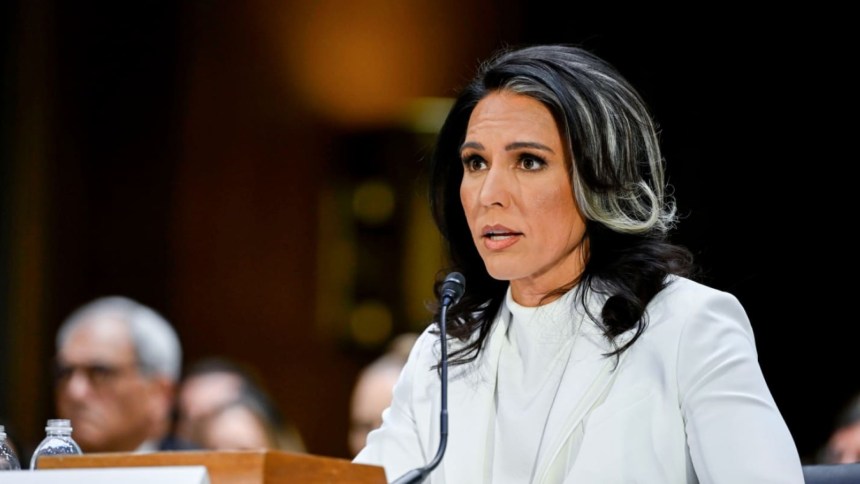
Gabbard’s confirmation was an opportunity for her to turn things around, and by accounts, she fell far short. Soon after, The Washington Post reported that the DNI nominee was apparently untruthful — under oath — about her interactions with a Syrian cleric who had threatened the United States with suicide bombers.
Given these developments, coupled with Gabbard’s lack of experience in intelligence, her habit of echoing Russian propaganda, her defense of Bashar al-Assad’s Syrian regime, and the unsubtle warnings that senators heard from former national security officials, common sense suggested that she’d face broad, bipartisan opposition. After all, even the most knee-jerk Republican partisans have their limits, don’t they?
No, evidently they do not. As my MSNBC colleague Clarissa-Jan Lim explained:
The Senate voted to confirm Tulsi Gabbard as director of national intelligence on Wednesday, elevating a former lawmaker with controversial foreign policy views to the head of the country’s spy agencies. Gabbard was confirmed on a 52-48 vote. Sen. Mitch McConnell, R-Ky., was the only Republican to oppose Gabbard’s confirmation.
There’s no shortage of concerns surrounding these truly absurd circumstances. We are, after all, talking about someone the Republican National Committee described as “Assad’s ‘mouthpiece’ in Washington.” Around the same time, Republican Sen. Lindsey Graham of South Carolina said that Gabbard’s “so-called leadership” would make “terrorism come roaring back.” (Graham was among the 52 Republicans who voted to confirm Gabbard as DNI.)
But as the dust settles, I’m especially interested in how the United States’ international allies intend to respond to the developments.
When Trump sat down with reporters from Time magazine after winning a second term, the Republican faced a rather pointed question that he apparently wasn’t expecting: “Mr. President, some foreign officials have expressed concern about sharing intelligence with Tulsi Gabbard, given her positions in support of Russia and Syria. Would her confirmation be worth the price of some of our allies not sharing intelligence with us?”
“I’m surprised to hear it,” Trump replied. He added that the former congresswoman is “like, a really great American.” That wasn’t an especially compelling response, but this was an instance in which the question was more newsworthy than the answer: Trump’s choice for DNI nominee was so problematic that U.S. allies abroad were reportedly rethinking their willingness to participate in intelligence-sharing strategies. More than a month later, Shane Harris had an interesting new report in The Atlantic that raised a related point: “Several foreign intelligence officials have recently told me that they are taking steps to limit how much sensitive intelligence they share with the Trump administration, for fear that it might be leaked or used for political ends.” While the underlying point hasn’t been independently verified by MSNBC or NBC News, the intelligence dynamic highlighted by The Atlantic and Time magazine was both striking and unfamiliar. Nearly every Senate Republican apparently didn’t care. They probably should have.
Steve Benen is a producer for "The Rachel Maddow Show," the editor of MaddowBlog and an MS NOW political contributor. He's also the bestselling author of "Ministry of Truth: Democracy, Reality, and the Republicans' War on the Recent Past."
Latest Post
Recommended


