








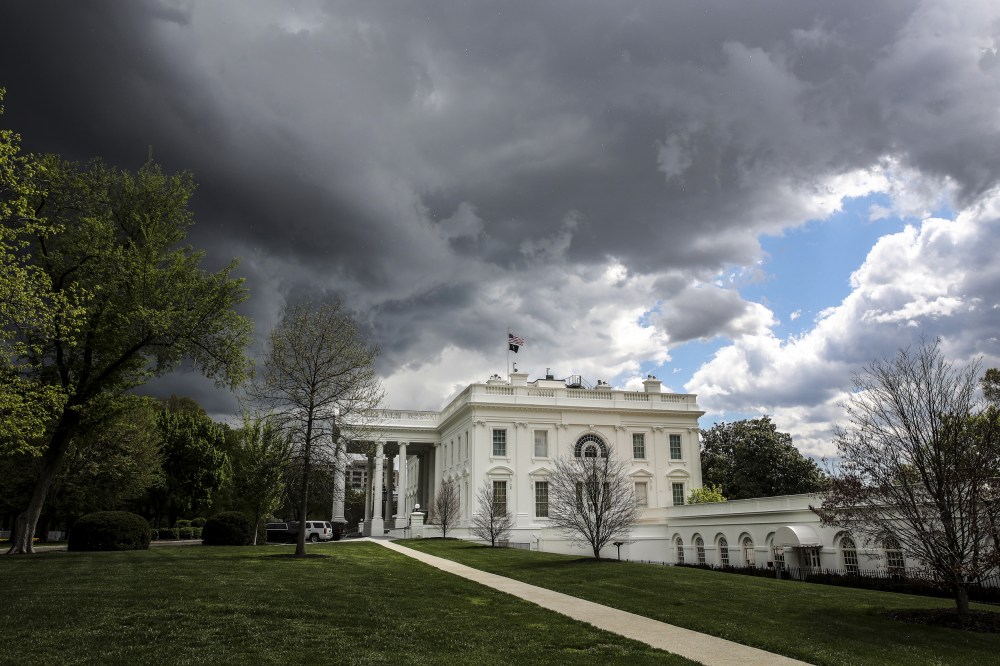

The Washington Post published a detailed, behind-the-scenes look at developments in the White House over 34 days — from March 29, when Donald Trump agreed to respond to the pandemic by extending social-distancing guidelines, to last week, when those guidelines expired — which the article described as “a story of desperation and dysfunction.”
So determined was Trump to extinguish the deadly virus that he repeatedly embraced fantasy cure-alls and tuned out both the reality that the first wave has yet to significantly recede and the possibility of a potentially worse second wave in the fall. The president sought to obscure major problems by trying to recast them as triumphs.
The whole, five-byline piece, based on “interviews with 82 administration officials, outside advisers and experts with detailed knowledge of the White House’s handling of the pandemic,” is well worth your time, though there are a handful of elements I’d draw your attention to.
The Post noted, for example, that the president and his team were discouraged by the epidemiological models available in late March, prompting Trump to look for evidence that would tell him what he wanted to hear. This flawed approach reportedly led Kevin Hassett, a former chairman of the Council of Economic Advisers, to build “an econometric model to guide response operations.”
If the reporting is accurate, this was unwise, in part because of Hassett’s unfortunate track record — his predictions and forecasts are the subject of mockery — and in part because that econometric model turned out to be wrong. Given that the conservative economist has no background in epidemiology or public health, it’s not altogether clear why Hassett came up with a model in the first place.
The same article quoted a senior administration official complaining that the members of the White House coronavirus task force with medical degrees aren’t as interested in political considerations as they “should be.”
Later in the piece, one senior White House official said that Trump was most animated when discussing his press appearances: “A call-in to the radio? A morning photo opp? An evening news conference?” In order to move conversations along in key meetings, officials would placate the president by telling him they’d discuss his media strategies later. But it’s the bigger picture that’s worth appreciating. The emerging portrait is one of a hapless and confused president, preoccupied with grievances and his own personal political fortunes, unable to tell the difference between failures and successes, veering in wildly different directions from one day to the next. It was a posture that led the White House to pass the buck, leaving key decisions to governors and mayors — in part because White House officials hoped to avoid responsibility, and in part because they weren’t altogether sure what to do. At no point did Trump or his operation prioritize governing or responsible policymaking. It’s as if White House officials read my upcoming book — out six weeks from tomorrow — and went out of their way to bolster the thesis about the Republicans’ transition into a post-policy party.
Steve Benen is a producer for "The Rachel Maddow Show," the editor of MaddowBlog and an MS NOW political contributor. He's also the bestselling author of "Ministry of Truth: Democracy, Reality, and the Republicans' War on the Recent Past."
Latest Post
Recommended


