








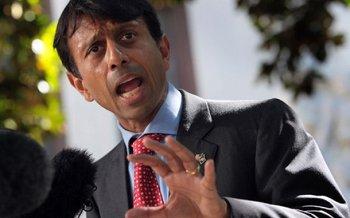
Louisiana Gov. Bobby Jindal’s (R) school voucher scheme has been plagued by a series of problems, culminating in a legal defeat in a state court two weeks ago. But in a Brookings speech yesterday, the Republican governor said he still sees his plan as a national model.
“I think there is a moral imperative that it’s not right that only wealthy parents get to decide where their kids go to school,” Jindal told an audience at Washington’s Brookings Institution. […]
“To oppose school choice is to oppose equal opportunity for poor and disadvantaged students in America,” he said. “What we are putting in motion in Louisiana can be done across the country.”
This is certainly standard rhetoric from the right. They’re not trying to privatize public schools out of existence, the argument goes, they’re simply trying to use tax dollars to provide new opportunities to “poor and disadvantaged” children.
There’s always been one part of this argument that bugs me: why does the principle apply solely to education?
For Jindal, poor and disadvantaged kids should have the same educational opportunities as kids from wealthy families. Fine. There’s ample evidence that vouchers don’t work, but let’s stick to the larger principle. The next question is pretty straightforward: can poor and disadvantaged kids have the same access to quality health care as kids from wealthy families? How about the same access to safe and affordable housing? How about nutrition? And transportation? And political influence?
Jindal and his allies want the public to see them as entirely sincere. They’re not trying to crush teachers’ unions, and they’re not on a privatization crusade, intent on destroying public institutions. They just want to help low-income children, even spending public funds to advance their goal. But their purported concern for the poor is literally unbelievable. When the issue is health care and housing, Jindal and other conservatives say struggling families should rely on the free market and their capacity to pull themselves up by their bootstraps. When the issue is education, suddenly the right cares deeply about disadvantaged children and is eager to “help.” When Jindal and other school voucher advocates are ready to assist “poor and disadvantaged” families in ways that don’t undermine public schools and teachers’ unions, I’ll gladly revisit the debate. Until then, this looks a lot like a scam.
The place for in-depth analysis, commentary and informed perspectives. Recommended


