








Campaign fundraising in the 2008 presidential election was thought to have reached dizzying heights. Republican nominee John McCain raised $370 million for his presidential bid, while Democrat Barack Obama shattered records en route to a $750 million haul. The totals, at the time, seemed staggering.
Four years and a Supreme Court ruling later, the 2008 fundraising figures will very likely appear puny by the time the 2012 dust settles.
Republican super PACs and other outside groups shaped by a loose network of prominent conservatives — including Karl Rove, the Koch brothers and Tom Donohue of the U.S. Chamber of Commerce — plan to spend roughly $1 billion on November’s elections for the White House and control of Congress, according to officials familiar with the groups’ internal operations.
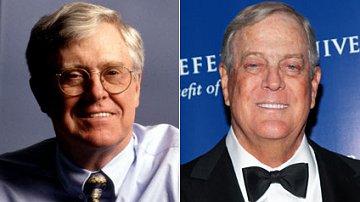
That total includes previously undisclosed plans for newly aggressive spending by the Koch brothers, who are steering funding to build sophisticated, county-by-county operations in key states. POLITICO has learned that Koch-related organizations plan to spend about $400 million ahead of the 2012 elections — twice what they had been expected to commit.
Karl Rove’s Crossroads operation alone is expected to collect $300 million — nearly as much as McCain’s entire campaign total in the last election.
Indeed, it’s important to realize that the playing field has changed in fundamental ways. In the traditional model, we’d see two major-party candidates, each backed by their respective national party. In 2012, President Obama’s campaign team will effectively have two extremely well-financed opponents: Mitt Romney and the RNC, which are projected to raise at least $800 million, as well as a $1 billion outside attack operation.
Obama, in other words, is going to face a far-right wall of at least $1.8 billion between now and Election Day. To say this is without precedent in a major democracy is a dramatic understatement.
Won’t Romney also have to face two comparable entities? So far, that seems unlikely — Obama is having some fundraising success, and labor unions will play a role, but a super PAC supporting the president, Priorities USA Action, has so far struggled to keep up.
There are two related angles to this to keep in mind. First, unlike previous elections, the Supreme Court has cleared the way for “dark money” contributions — right-wing gazillionaires can invest heavily in destroying the president, but can now legally keep their donations secret. We can see the results of folks trying to buy the keys to the White House for Mitt Romney, but we won’t be able to see who’s writing all the checks (or what they’ll expect in return for their investment). Second, the prospect of a $1 billion far-right operation suggests conservative heavyweights believe they have a real shot at success. If the Kochs and their cohorts were convinced Obama is likely to win, they could easily start buying congressional and gubernatorial races; the fact that they have their eyes on the most sought after prize tells us they have confidence they can succeed. On a related note, Tim Dickinson has a great piece in the new issue of Rolling Stone, highlighting each of the wealthy Republicans lining up to get Romney elected.
The place for in-depth analysis, commentary and informed perspectives. Recommended


