








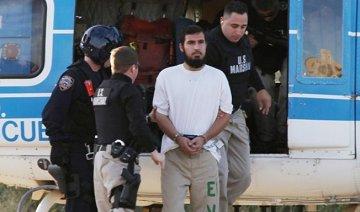
It’s only natural that successful terrorist plots will generate vastly more attention that unsuccessful ones, but I’ve long believed that Najibullah Zazi is one of the under-appreciated stories of the last several years.
If the name doesn’t ring a bell, we’re talking about what was arguably the most serious domestic terrorist threat since 9/11. Zazi plotted with two friends to detonate bombs in New York City — Grand Central and Times Square — during rush hour, in the middle of the packed trains, to ensure the most carnage possible.
The plot had progressed to a rather dangerous point — this was not just an aspirational goal — before Zazi was taken into custody. From there, the system worked flawlessly — Zazi cooperated with law enforcement; co-conspirators were caught; and many lives were saved. In the post-9/11 era, this was as big a counter-terrorism victory as any we’ve seen in the United States, even if most Americans have no idea it happened.
Why am I bringing this up now? Because as Dan Amira explained, unnamed officials brought this up last week.
Late last week, unnamed sources told CBS News, Reuters, and the New York Times that the NSA’s PRISM had helped to disrupt Najibullah Zazi’s plot to bomb New York’s subways in 2009. Thanks to PRISM, authorities were monitoring an e-mail address known to belong to a member of Al Qaeda. Zazi e-mailed that address and unwittingly revealed himself and his plans. He was arrested and now faces life in prison. Huzzah.
But it wasn’t long before the credibility of this narrative was questioned.
The Associated Press’ Adam Goldman explained that the NSA program was very likely irrelevant — British intelligence had already identified an al Qaeda email address, and shared that information with U.S. officials. Zazi did, in fact, send an urgent message to that address, which ultimately led to his arrest before he could successfully murder a lot of people.
So, what does this have to do with NSA surveillance, metadata, and PRISM? Given what we know, nothing.
But maybe, the argument goes, British intelligence learned of the al Qaeda email address in the first place thanks NSA programs. Right? No, as it turns out, the address was found on a laptop when a different terrorist was captured in 2009.
It appears, then, that conventional intelligence gathering saved the day — though that’s not what the public heard over the weekend.
On the Sunday shows, Senate Intelligence Committee Chair Dianne Feinstein (D-Calif.) and House Intelligence Committee Chair Mike Rogers (R-Mich.) both said that when it came to the Zazi case, the NSA programs in question were “exactly [what] was used.” It is, of course, possible that Feinstein and Rogers know details of the Zazi case that are highly relevant, and that the public is not aware of. But at a minimum, using this as an example to bolster the case in support of NSA surveillance seems dubious. And stepping back, it’s also worth acknowledging the bigger picture. For defenders of NSA surveillance programs, including the programs that have come to public light in recent days, there’s a simple calculus: the surveillance saves lives and prevents terrorism, ergo they have merit and should be left in place. To be sure, we can at least have a credible conversation about this — some may well argue that exhaustive government surveillance simply isn’t worth the cost, even if it prevents attacks, and it’s a debate worth having. But we’re not even at that point, since we don’t know whether NSA surveillance is saving lives or not. And the one example the programs’ defenders are touting seems fairly hard to believe.
Steve Benen is a producer for "The Rachel Maddow Show," the editor of MaddowBlog and an MS NOW political contributor. He's also the bestselling author of "Ministry of Truth: Democracy, Reality, and the Republicans' War on the Recent Past." Recommended


