








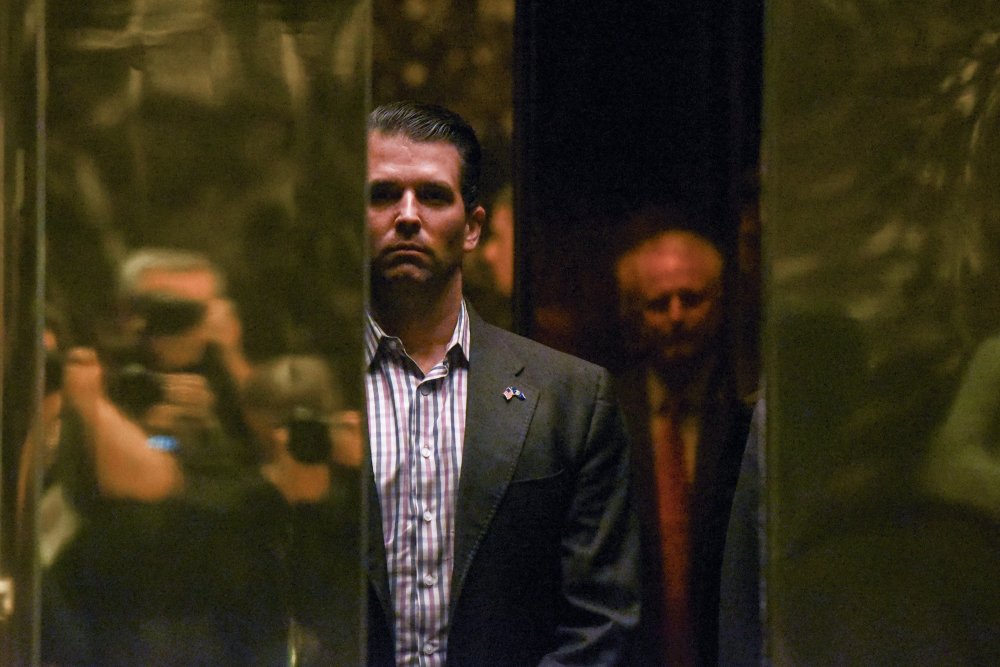
Four months ago, the New York Times published a report that changed the trajectory of the Trump-Russia scandal in a rather dramatic way. As regular readers no doubt recall, we learned that in June 2016, Donald Trump Jr., Jared Kushner, and Paul Manafort had a private meeting with, among others, a Kremlin-linked Russian attorney and a former Soviet counterintelligence officer.
Though Trump World’s explanation for the meeting evolved over time — when those caught up in a scandal change their story, it’s never a good sign — we eventually learned that the Republican team set up the meeting in the hopes of acquiring dirt from Russia on Hillary Clinton, effectively inviting a foreign adversary to cooperate with the Trump campaign.
And while that appears to answer the “collusion” question, there’s still a great deal to be learned about that Trump Tower conversation. Bloomberg Politics moved the ball forward in provocative ways in a newly published report.
A Russian lawyer who met with President Donald Trump’s oldest son last year says he indicated that a law targeting Russia could be re-examined if his father won the election and asked her for written evidence that illegal proceeds went to Hillary Clinton’s campaign.
The lawyer, Natalia Veselnitskaya, said in a two-and-a-half-hour interview in Moscow that she would tell these and other things to the Senate Judiciary Committee on condition that her answers be made public, something it hasn’t agreed to. She has received scores of questions from the committee, which is investigating possible collusion between Russia and the Trump campaign. Veselnitskaya said she’s also ready — if asked — to testify to Special Counsel Robert Mueller.
There’s quite a bit to this, but the latest allegations point to a possible quid pro quo in which Team Trump would receive campaign assistance from Russia while Russia would receive sanctions help from a future Trump administration, with a specific focus on the Magnitsky Act.
In case this isn’t obvious, there’s no reason to take Veselnitskaya’s version of events at face value. On the contrary, under the circumstances, there’s ample reason for skepticism.
That said, it’s still a rather striking development to add to the mix. Indeed, the report added, “Veselnitskaya also said Trump Jr. requested financial documents showing that money that allegedly evaded U.S. taxes had gone to Clinton’s campaign.” That would suggest that the Trump campaign didn’t just welcome information from Russia; it also requested specific materials (which, it turned out, Veselnitskaya did not have). The attorney from Trump Jr. “said the president’s son had no comment about the interview,” which is itself a mild surprise, since I expected a forceful denial. Let’s also note for context that Trump Jr. said in March that he hadn’t met with Russians during the campaign, and when evidence emerged to the contrary, he issued a written statement claiming the meeting was about adoption policy. That misleading statement was reportedly approved directly by the president, suggesting Trump Sr. may have played a role in a cover-up.
Steve Benen is a producer for "The Rachel Maddow Show," the editor of MaddowBlog and an MS NOW political contributor. He's also the bestselling author of "Ministry of Truth: Democracy, Reality, and the Republicans' War on the Recent Past." Recommended


