










For federal policymakers, crisis conditions were already apparent. A deadly pandemic is intensifying. We’re approaching 9/11-level death tolls on a daily basis, and hospitalizations have reached record levels. The economy is struggling, and it’s far from clear whether an aid package will be approved. The deadline for a possible government shutdown is next week. The outgoing president has launched an unprecedented campaign attacking his own country’s democracy, in the midst of a challenging administrative transition process.
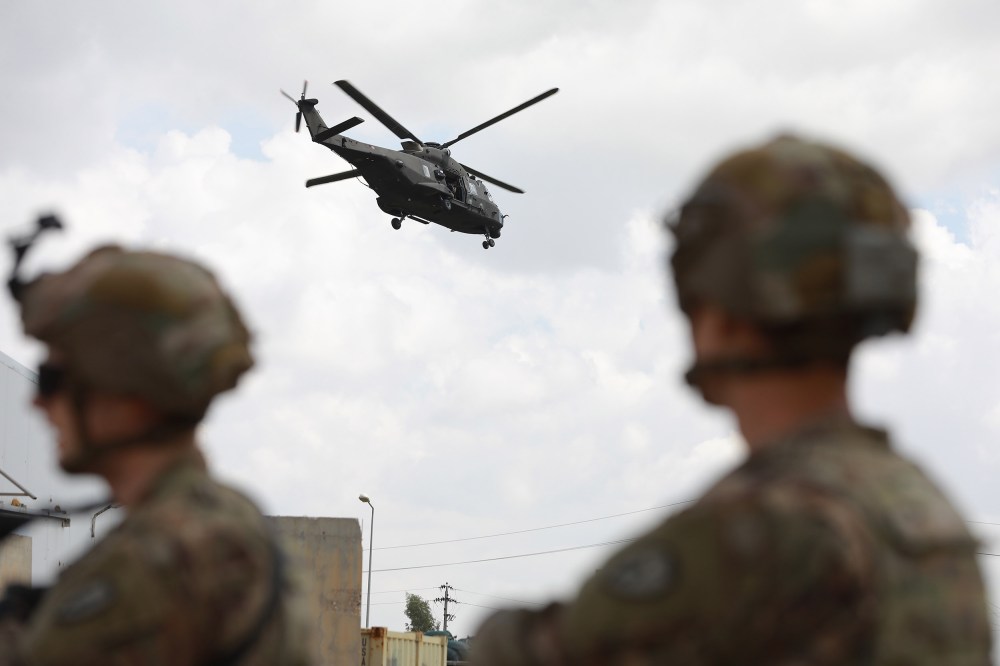
It’s against this backdrop that Congress and the White House are beginning a dramatic fight over the military.
The National Defense Authorization Act (NDAA) is a massive, annual defense spending bill that funds the United States military, but it’s not just a spending bill. As NBC News explained the other day, the NDAA “guides Pentagon policy and cements decisions about troop levels, new weapons systems and military readiness, military personnel policy and other military goals.”
With this in mind, it’s the kind of legislation that takes months to prepare, and last night, House and Senate negotiators finally unveiled their compromise package. As the Washington Post reported, lawmakers agreed on an NDAA that they like, but the president will not.
The final draft of the bicameral, bipartisan-approved defense authorization bill contains a number of rebukes of President Trump’s actions as commander in chief, in addition to defying him over both of the grounds on which he has threatened to veto the legislation.
The finished product is surprising in the degree to which it ignores Trump’s wishes on a variety of fronts. The outgoing president, for example, seems inexplicably eager to reduce U.S. troop levels in Germany and South Korea, and Congress’ new NDAA will prevent him from doing so.
What’s more, Trump deployed unidentified law-enforcement officials in response to social-justice protests over the summer, and the NDAA makes that more difficult to do in the future, too. (The language isn’t as strong as Sen. Chris Murphy’s original Law Enforcement Identification Act, but it’s a good step.)
The NDAA requires the Pentagon to submit a report on possible Russian-sponsored bounties against U.S. troops, which Trump denies happened. The legislation also directs the Defense Department to certify that we’re not seizing Syrian oil, a possible war crime about which Trump has repeatedly bragged.
As much as this reflects the opposite of the president’s wishes, these aren’t even the areas that sparked veto threats. On the contrary, the White House told lawmakers that Trump would reject the military package if it required the military to change the name of bases that honor Confederates. The NDAA nevertheless requires the name changes within three years of passage.
The president this week also said he would “unequivocally” veto the NDAA unless lawmakers agreed to throw in a completely unrelated provision: Trump wants Congress to “completely terminate” Section 230 of the 1996 Communications Decency Act, stripping companies like Twitter and Facebook of their liability shield.
Or put another way, Trump vowed to veto an important military bill because of his ridiculous belief that social-media companies are conspiring against him. Both parties said they’d ignore the threat, and the final NDAA makes clear they’ve done exactly that.
It’s legislation that reflects wholesale, bipartisan indifference to the White House’s preferences.
The president is clearly not pleased. On Twitter this morning, Trump again promised to veto — or as he put it, “VETO!” — the defense package. (He also, incidentally, argued that the NDAA includes a provision that allows for the “desecration” of national monuments in national parks. He appears to have made this up.)
So, what happens now? One of three things will happen: 1. Trump will back down, realize that vetoing the NDAA for dumb reasons is bonkers, and agree to fund the military. 2. Trump will veto the NDAA, the bill will fail for the first time in six decades, the troops will not get a raise, and Congress will have to start over in 2021. 3. Trump will veto the NDAA, and Congress will override the veto. (Trump is the only president from the last half-century not to have any vetoes overridden, so this would be his first. Earlier versions of the NDAA passed the House and Senate by veto-proof majorities.) The trouble for the outgoing president, of course, is that each of these options make him look awful, which is why he shouldn’t have backed himself into this corner for no reason in the first place. And yet, here we are. If we’re making predictions, I’m leaning toward Door #3. Watch this space. Postscript: For what it’s worth, one of the angles to this fight that I find so fascinating is the degree to which it’s different from the usual D.C. fights. For the last four years, in nearly every instance, Americans have seen most Democrats on one side, with Trump and most Republicans on the other. On the NDAA, however, it’s a more classical Congress-vs-the-White-House fight, which is a pleasant change of pace. Indeed, it’s worth pausing to appreciate the fact that one of the most interesting and dramatic legislative fights of Trump’s presidency will be his last — and no matter what, he’s all but certain to lose.
Steve Benen is a producer for "The Rachel Maddow Show," the editor of MaddowBlog and an MS NOW political contributor. He's also the bestselling author of "Ministry of Truth: Democracy, Reality, and the Republicans' War on the Recent Past."
Latest Post
Recommended


