








On Monday, Donald Trump delivered scripted remarks from the White House on his country’s latest mass shootings, and reading from his teleprompter, the president tried to say the right things.
He declared, for example, “Now is the time to set destructive partisanship aside — so destructive — and find the courage to answer hatred with unity, devotion, and love.”
On Tuesday, Trump started tweeting.
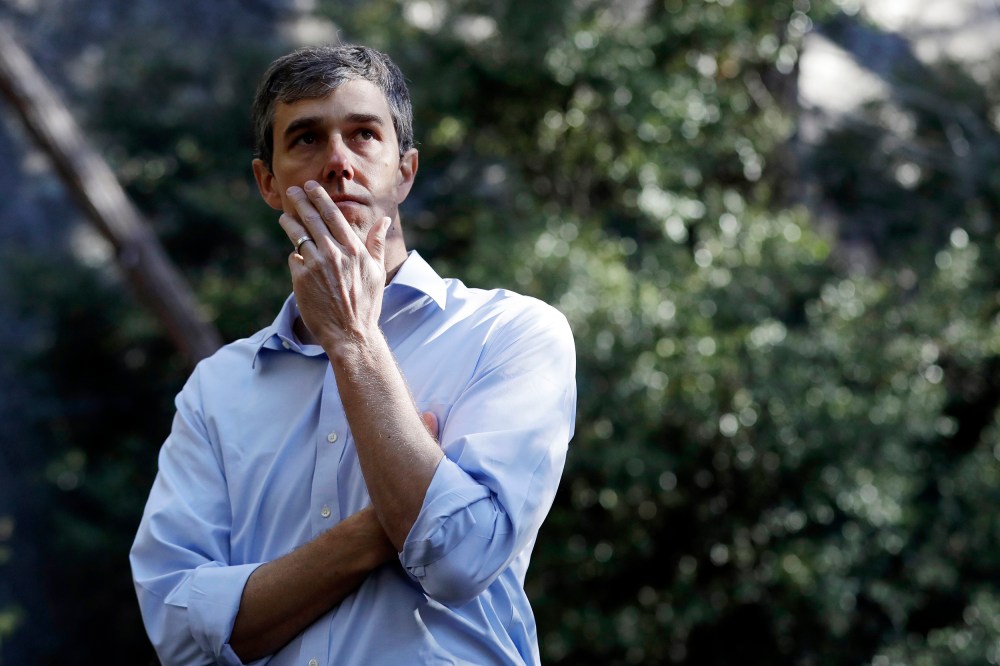
“Beto (phony name to indicate Hispanic heritage) O’Rourke, who is embarrassed by my last visit to the Great State of Texas, where I trounced him, and is now even more embarrassed by polling at 1% in the Democrat Primary, should respect the victims & law enforcement – & be quiet!”
The Republican’s interest in setting destructive partisanship aside — so destructive — and finding the courage to answer hatred with unity, devotion, and love lasted about a day.
Trump knew, of course, that he’s scheduled today to visit El Paso — Beto O’Rourke’s hometown — where he’ll ostensibly try to offer some degree of moral leadership. It’s what presidents are generally expected to do: in the wake of brutal tragedies, the public often looks to national leaders to help guide and heal.
But before Trump can even try to do that in Texas today, he first wanted to take a few shots at the grieving community’s former congressman, his name, and his poll numbers.
All of which brings us to a familiar point: the eternal struggle of Twitter Trump and Teleprompter Trump.
Teleprompter Trump is cautious and largely responsible. When he relies on the words others have carefully prepared for him, the Republican often receives praise from some pundits who are impressed with his capacity for using a “presidential tone.”
But Twitter Trump — which is to say, the real Trump — is never far away. Twitter Trump is unconcerned with appearances. He’s reactive, rude, and impulsive. He doesn’t like being stifled by Teleprompter Trump and he raises his voice when his alter ego gets too much attention. Two days after the deadly violence in Charlottesville in 2017, Teleprompter Trump, reading others’ words from a screen, was largely sensible. The next day, Twitter Trump had a meltdown. After the mass shooting in Las Vegas — the deadliest in American history, Teleprompter Trump was fine. Twitter Trump was not. It’s generally why so much of the public has learned to be skeptical of Teleprompter Trump. It’s not just that he doesn’t sound or feel like the real thing, it’s also because we know it’s only a matter of time before Twitter Trump makes his presence known. Postscript: It’s a minor detail, but when Trump wrote that he “trounced” O’Rourke during the president’s last visit to Texas, what was that a reference to? Evidently, the president was talking about the only metric he really cares about: crowd sizes at campaign rallies.
Steve Benen is a producer for "The Rachel Maddow Show," the editor of MaddowBlog and an MS NOW political contributor. He's also the bestselling author of "Ministry of Truth: Democracy, Reality, and the Republicans' War on the Recent Past." Recommended


