








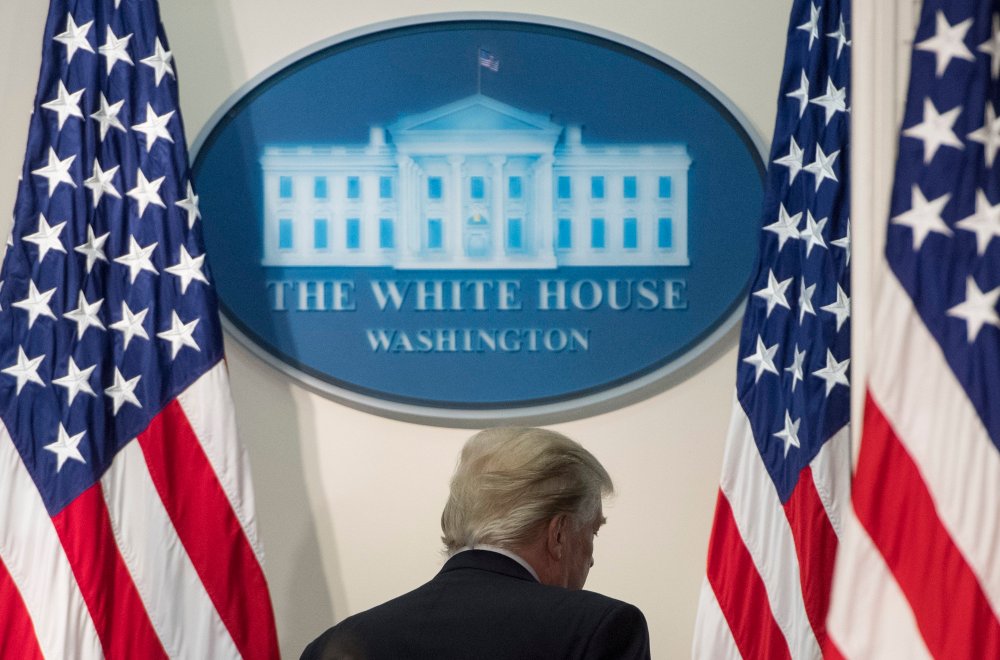
For Donald Trump, winning a second term next year is about more than just power and ego; it’s also about the statute of limitations.
After all, the president has been implicated in a variety of alleged crimes, though Trump appears to be shielded from prosecution so long as he’s in office. If he were to lose in 2020, that shield would disappear, and the prospect of an indictment would become quite real. Indeed, by most accounts, the only way for Trump to ensure he faces no criminal liability is for him to remain president for another four years.
But let’s say he doesn’t. For the sake of conversation, let’s imagine Trump not only loses the popular vote again, but also comes up short in the electoral college. Let’s also say it’s 2021 and the president’s Democratic successor, recognizing the possibility of Trump facing an indictment, has to decide whether to pull a Gerald Ford and issue a pardon for his/her scandal-plagued predecessor.
CNN’s Erin Burnett posed the question to Montana Gov. Steve Bullock (D) late yesterday.
BURNETT: If Trump is charged after he leaves office, would you pardon him?
BULLOCK: Uh, no, I would not.
The Democratic presidential hopeful seemed only too pleased to promote the exchange via social media.
And as it turns out, he’s not the only 2020 candidate who sees value in shining a spotlight on the issue.
In late February, Sen. Elizabeth Warren (D-Mass.) got the ball rolling in a blog post published to Medium. “[L]et me be perfectly clear, in the way that everyone who might be President next should be: If I’m elected President of the United States, there will be no pardons for anyone implicated in these investigations. Everyone who might succeed Donald Trump as president should adopt the same policy.”
Two weeks later, MSNBC’s Chris Matthews sat down with Sen. Cory Booker (D-N.J.) and brought up Ford’s 1974 pardon of Richard Nixon. “Would you consider pardoning Trump if you took the presidency?” the host asked.
Booker didn’t hesitate. “No,” the senator said. To be sure, as 2020 issues go, this one is inherently speculative. No one can say with confidence whether a prosecutor would even want to try to indict Trump after he leaves office. It’s far easier to say, however, that the Republican’s criminal liability is real, and if a Democrat wins the presidency next year, he or she will have to at least consider the possibility of seeing his or her predecessor face criminal charges. Don’t be surprised if every Democratic candidate goes on the record on this issue in the coming weeks and months. Postscript: I’ve highlighted the comments from Booker, Bullock, and Warren because they crossed my radar, but it’s entirely possible that other Democratic candidates have weighed in. If campaign aides for the other Democratic candidates see this post, and they want me to update it with additional statements, I’m happy to do so. Email me.
Steve Benen is a producer for "The Rachel Maddow Show," the editor of MaddowBlog and an MS NOW political contributor. He's also the bestselling author of "Ministry of Truth: Democracy, Reality, and the Republicans' War on the Recent Past." Recommended


